In This Guide
Muscat's top attractions are Sultan Qaboos Grand Mosque (open Sat–Thu, 8–11 AM only), Mutrah Souq and Corniche, Al Alam Palace waterfront, and the Royal Opera House. The city is spread across 80 kilometres — a private car is the most practical way to move between sights. Half-day city tour from OMR 45 per vehicle (~$117 USD). Best months to visit: October to April.
The best things to do in Muscat include visiting Sultan Qaboos Grand Mosque, walking the Muttrah Corniche, haggling gently in Muttrah Souq, touring the Royal Opera House, watching the sun drop behind Al Mirani Fort, and taking a day trip to Wadi Shab or the Daymaniyat Islands. You can fill three days without repeating yourself once.
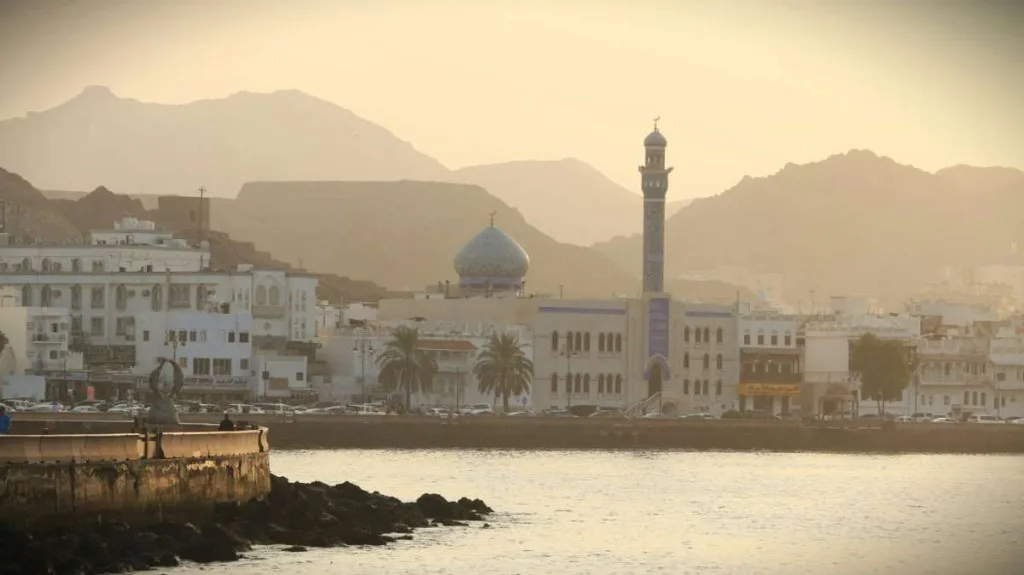
Muscat doesn't try to compete with Dubai. There are no record-breaking towers, no beach clubs with DJs at noon, no manufactured superlatives. What you get instead is a city that moves slowly and deliberately — white-washed buildings pressed between the Al Hajar Mountains and the Gulf of Oman, a harbour that still smells faintly of diesel and dried fish, and a population that will genuinely ask how your day is going without wanting anything from you. That difference matters. It shapes everything you do here.


Start here. Every time. I've taken people to this mosque on their first morning and watched them go quiet the moment they step through the outer gate — not from reverence exactly, but from the sheer scale of it. The prayer hall carpet alone covers 4,343 square metres, hand-woven in Iran over four years. The Swarovski chandelier hanging from the dome weighs eight tonnes and holds 1,122 lights. Standing underneath it, the polished Italian marble floor throws back so much reflected light it takes your eyes a moment to adjust.
Get there before 9am if you can. The tour buses start rolling in around 9:30, and the corridors get crowded fast. Early arrivals get the mosque almost to themselves, the air still cool, the call to prayer from a nearby neighbourhood floating in through the open archways.

Non-Muslim visiting hours: Saturday through Thursday, 8am to 11am. The mosque is closed to non-Muslim visitors on Fridays, and also during prayer times — so don't show up at 11:45am expecting entry. Dress code: Women need to cover hair, arms, and legs. Abayas are available to borrow at the entrance, but they're often a bit large and awkward; bring your own loose clothing if you can. Men need long trousers and covered shoulders. The car park outside hits 40°C by mid-morning — wear shoes you can slip off quickly, because you'll remove them before entering the prayer hall.


Entry is free. Plan for 60 to 90 minutes. Rush it and you'll regret it.

The Mutrah Corniche is the 4km waterfront promenade that lines the old harbour, and walking it early in the morning is one of the better free things to do in Muscat. The light is softer, the heat is manageable, and the fish market at the far eastern end is in full swing from around 6am. Fishermen unload overnight catches, buyers argue prices, cats materialise from every direction. It's loud, it smells exactly like a working fish market should, and it's a side of Muscat that most visitors skip entirely because they don't know to turn up before breakfast.
Mutrah Fort sits above the corniche on a rocky promontory — you'll see it from the waterfront walk. The fort itself has limited interior access, but the viewpoint around its base looks directly down over the harbour and across to the twin Portuguese forts on the Old Muscat side. Come at dusk if you want the best photograph. The harbour diesel scent blends with incense drifting from nearby shops, and the light on the water goes orange and then deep red surprisingly fast.
For a deeper look at the corniche walk, the landmarks, and what to skip, the Muscat Corniche Walk guide covers it properly.
Muttrah Souq sits just off the corniche and is the oldest market in Muscat. The entrance smells of frankincense before you even step inside — the incense smoke from small burners at the stall fronts drifts into the covered alley and stays there. It's atmospheric without being fabricated, which is rarer than you'd think.
What to buy without getting ripped off: Frankincense resin is legitimately good value here — OMR 1 to 3 for a decent bag depending on grade, which is roughly £2–£6 / $2.50–$8 / €2.50–€7 / ₹200–₹650. Omani silver khanjar daggers vary wildly; tourist-grade pieces start around OMR 15 (£30 / $38 / €35 / ₹3,100) and go up fast for anything handmade. Kumma caps — the embroidered Omani men's caps — make solid gifts and cost OMR 3 to 8. Don't buy the first price given for anything. A second or third visit to the same stall after walking away usually unlocks a better number. Avoid the "antique" stalls near the main entrance unless you know what you're looking at.
Omani coffee — kahwa — is served in small handleless cups with dates at several stalls inside. Accept it when offered. It's cardamom-forward, slightly bitter, and nothing like a café latte. That's the point.

Al Alam Palace is the ceremonial residence of Sultan Haitham and is not open to the public — but the approach road and forecourt are accessible, and the façade alone is worth the drive to Old Muscat. It's a striking gold-and-blue structure flanked by date palms, with Al Mirani Fort to the left and Al Jalali Fort to the right across the natural harbour. Standing in front of it on a clear morning with nothing but the sound of gulls and the occasional car feels genuinely historic.

The area around the palace has some excellent street murals referencing the late Sultan Qaboos and Omani cultural symbols. Worth ten minutes of wandering even if you've already photographed the palace gate.
These two Portuguese-era forts guard the entrance to the Old Muscat harbour from opposite clifftops. Al Mirani Fort is on the western side, Al Jalali on the east. Neither is fully open to casual visitors — Al Jalali currently functions as a high-security facility — but you can get close enough to both to appreciate the engineering. The Portuguese built them in the 16th century using rock quarried from the surrounding cliffs, and they're still in better condition than most forts you'll see anywhere in the region. The walk between the two forts along the harbour road, past the palace, takes about 20 minutes and involves very little traffic. Do it in the morning before the heat peaks.

The Royal Opera House Muscat opened in 2011 and remains one of the most beautiful buildings in the city. The exterior combines traditional Omani architectural elements — carved arches, latticed screens — with proportions that feel genuinely grand without being aggressive about it. At night, the courtyard marble reflects the lighting in a way that stops people mid-sentence.

The attached Opera Galleria mall connects via a mashrabiya-inspired glass walkway that's air-conditioned and genuinely pleasant to walk through in the afternoon heat. Guided tours of the opera house interior run most mornings and cost around OMR 5 (£10 / $13 / €12 / ₹1,000). Check the Experience Oman tourism site or the opera house directly for the current performance schedule — international and Arabic productions run through the October–April season, and even a less famous programme is an evening well spent in that hall.
If your hotel asks for a shortlist of things to do in Muscat near the coast, Qurum Beach and the Opera House sit closer to many Shatti Al Qurum stays than Old Muscat does.
Qurum Beach is the most accessible public beach in Muscat, positioned along the Shatti Al Qurum and Qurum coastline and backed by the Qurum Nature Reserve. It's a wide, clean stretch without a cover charge or a beach club selling overpriced drinks — just sand, sea, and an increasingly gentle breeze as the afternoon moves toward evening. The water is warm year-round. Families gather here from around 4pm when the sun softens. There are small snack vendors and a few cafés nearby in Qurum if you need something cold.
Don't swim at midday in summer. Even in the cooler months, the midday glare bouncing off the sand is unpleasant. Late afternoon is the time to be here.
Both are worth your time, but they serve different purposes. Bait Al Zubair Museum in Old Muscat is a converted merchant's house that covers Omani traditional life — weapons, jewellery, costumes, household objects. It's intimate, well-curated, and you can move through it in 45 minutes. The context it gives you for understanding what you'll see in souqs and homes elsewhere is genuinely useful. Entry is OMR 2 (£4 / $5 / €4.50 / ₹400).
The National Museum of Oman in Al Khuwair is newer, larger, and more formal. It covers Omani history from prehistoric times through the present with serious production values and good English labelling. If you have children, come here — the interactive displays hold attention better. If you only have an afternoon and want cultural texture quickly, go to Bait Al Zubair first. If you want to understand Oman's broader history and political geography, the National Museum is the better investment. Budget two hours for it.
The Daymaniyat Islands sit about 18km off the Batinah coast, roughly an hour by speedboat from Muscat. They're a protected marine reserve, which means the coral is intact and the sea life is worth the early start. Hawksbill turtles nest here from May to October. The snorkelling is straightforward — no dive certification needed — and even moderate swimmers can cover the main reef areas comfortably. Most operators depart from Bandar Al Khayran or the marina near Muscat, and a day trip including boat transfer and equipment runs around OMR 25–45 per person (£50–90 / $63–113 / €58–104 / ₹5,200–9,300). Book directly with a local operator or through a guide who knows which boats are properly maintained — this is not the place to book the cheapest option you find.
For something slower and closer to the city, a sunset dhow cruise on the Muscat harbour runs most evenings and covers the Old Muscat coastline, passing the forts and the palace from the water. It's two hours, usually includes kahwa and dates, and costs around OMR 15–20 per person (£30–40 / $38–50 / €35–46 / ₹3,100–4,100). The harbour at sunset smells of salt and engine fuel and occasionally frankincense from a passing wind, and the forts turn amber before going dark. It's one of the better things to do in Muscat if you've already spent the day walking.
For a broader look at harbour and coastal options, the Muscat sunset spots guide covers specific timings and locations.
The Riyam Park incense burner monument on the hill above Muttrah is the most photographed sunset point — you'll recognise it from postcards. The climb takes about ten minutes on foot from the corniche, and the view takes in the harbour, the souq rooftops, and the mountains behind the city. Al Bustan area on the eastern edge of Old Muscat also has an open coastal road where the sun drops behind the Al Hajar Mountains rather than into the sea, which produces a different kind of light — drier, more dramatic.
From the dhow cruise, as mentioned, the fort silhouettes at sunset are hard to beat. Personal preference: go to Riyam on your first evening to orient yourself, then do the dhow cruise on your last.
If you stretch a Nizwa day, Bahla Fort (UNESCO) and Jabreen Castle sit on the same inland circuit — worth it if you leave Muscat by 7am.
Muscat's position gives you access to dramatically different landscapes within a two-hour drive, which is one of the genuinely underrated aspects of the city. These are the trips that make a Muscat visit feel like an Oman visit.
Nizwa Fort is 160km southwest and takes around two hours by car. The fort is enormous — the circular tower is among the largest ever built in the Arabian Peninsula — and the adjacent Nizwa souq sells everything from live goats to frankincense to locally made silver jewellery. Friday morning is the traditional goat market. The Muscat to Nizwa Fort day trip guide covers timing and what to do if you only have half a day.
Wadi Shab is about 150km south of Muscat and requires a short boat crossing and a 45-minute walk through a canyon before you reach the swimming pools and cave waterfall that make it famous. Go early — by 10am the canyon fills with tour groups. Wear shoes you don't mind getting wet. The complete Wadi Shab guide covers exactly what to bring and how to plan the timing.
Bimmah Sinkhole (Hawiyat Najm Park) is 120km south, on the way to Wadi Shab, and can be combined in a single day. It's a natural limestone sinkhole about 40 metres wide filled with turquoise water. You can swim in it. The water is brackish — part seawater, part freshwater — and the fish that live in it are completely unbothered by visitors. Entry is free. Two hours is enough.
Jebel Akhdar — the Green Mountain — is a high plateau in the Al Hajar Mountains sitting at around 2,000 metres. The temperature is 10–15°C cooler than Muscat, the air smells of roses and juniper, and the terraced villages are unlike anything on the coast. A 4WD is required on the final ascent, which rules out standard rental cars. Factor this into your transport planning. See the full Tour in Oman from Muscat guide if you're planning multi-day excursions or want options beyond these four.
Most visitors search for things to do in Muscat and get the same five landmarks. Use this guide as a filter: do the mosque early, Muttrah at dusk, Old Muscat for photos, then pick one museum and one day trip based on your energy.
October through April is when Muscat works best for tourists. Daytime temperatures stay between 20°C and 30°C, evenings are genuinely comfortable, and the corniche and outdoor sites are enjoyable at almost any hour. January and February are the coolest months — some evenings drop below 18°C, which requires a light jacket.
May through September is a different situation. June and July regularly hit 42–44°C with humidity rising from July onward. Outdoor activities are genuinely unpleasant between 9am and 5pm, and the Daymaniyat Islands are rougher sea conditions with reduced visibility for snorkelling. The city doesn't stop — residents adapt — but as a visitor you'll spend most of the day moving between air-conditioned spaces, which limits what you can do. Hotels are significantly cheaper in summer, which is the trade-off.
Getting around Muscat without a car requires planning. The city is spread across a wide coastal corridor — Ruwi to Muttrah to Old Muscat to Qurum to Shatti Al Qurum is around 15km of road — and public buses exist but run infrequently and aren't practical for most tourist routes. Here's how the options compare honestly:
| Option | Cost | Flexibility | Verdict |
|---|---|---|---|
| Private driver (half day) | £40–70 / $50–90 / €46–83 / ₹4,100–7,200 | High — your schedule, your stops | Best overall for most visitors; eliminates parking headaches |
| OTaxi / Mwasalat Maxi app | £3–10 / $4–13 per trip | Medium — metered, reliable for city hops | Fine for individual journeys; not practical for day trips |
| Rental car | £25–45 / $32–57 per day + fuel | High — if you're confident with left-hand traffic | Good for Wadi Shab / Bimmah routes; standard car can't do Jebel Akhdar |
| Group tour / shared transport | £20–40 / $25–50 per person | Low — fixed schedule, fixed stops | Budget-friendly for solo travellers; frustrating if you want more time anywhere |
For full city coverage with a knowledgeable local driver, the Muscat city tour with driver half-day is a practical starting point. If you're considering a luxury car with driver in Muscat, that's also an option for longer itineraries or airport transfers. Book airport transport before you land — the Muscat airport transfer options are straightforward once you know what you're looking for, but the Muscat International Airport arrivals area can be confusing on first visit.
Day 1 — Mosque, Muttrah, Harbour: Sultan Qaboos Grand Mosque first thing (8–9:30am), then drive to the Mutrah Corniche for the fish market, a walk, and lunch near the souq. Spend the afternoon in Muttrah Souq. Evening: sunset dhow cruise or drinks at a hotel overlooking the harbour.
Day 2 — Old Muscat and Museums: Al Alam Palace and the twin forts in the morning when it's cooler. Bait Al Zubair Museum before lunch. National Museum of Oman in Al Khuwair in the afternoon. Royal Opera House Muscat in the evening — either a guided tour or a performance if the schedule lines up.
Day 3 — Day Trip: Wadi Shab and Bimmah Sinkhole combined, departing by 7am and returning by 4pm. Or swap for Nizwa Fort if you'd rather stay inland. Cap the trip at Qurum Beach in the late afternoon. For the full range of day trip options ranked by experience type, the excursions from Muscat guide covers everything in detail. The Muscat city tour packages page lists current prices across operators if you want to compare before booking.
Three days in Muscat comfortably covers Sultan Qaboos Grand Mosque, Muttrah Souq, the corniche walk, Old Muscat and Al Alam Palace, both forts, the Royal Opera House, and one full day trip — either Wadi Shab and Bimmah Sinkhole combined, or Nizwa Fort. Don't try to do all the day trips in three days. Pick one and do it properly.
Yes, without reservation. Muscat is one of the most relaxed and genuinely welcoming capital cities in the Middle East. It rewards slower travel — the city reveals itself through neighbourhood walks and conversations rather than landmark ticking. If you've been to Dubai or Doha and found them exhausting, Muscat will feel like a reset.
Yes. Non-Muslim visitors are welcome Saturday through Thursday between 8am and 11am. The mosque is closed to non-Muslim visitors on Fridays and during daily prayer times. Dress code is strictly enforced — full coverage for women including hair, and long trousers and covered shoulders for men. Modest, loose clothing is better than anything tight-fitting even if it technically covers the right areas.
Three days is the minimum to see the city properly without rushing. Four or five days lets you add a longer day trip — Jebel Akhdar or Sur — and gives you breathing room to revisit places you liked. If you're connecting through Muscat on a 24-hour layover, you can still do the mosque, corniche, and Muttrah Souq in a single long morning.
Muscat sits in the mid-range. Most attractions are free or very cheap — Al Alam Palace forecourt, the corniche, and several forts cost nothing. The mosque is free. Museums charge OMR 2–5 (£4–10). Where costs add up is transport and food at hotel restaurants. A private driver for a half day runs £40–70. Street-level Omani food is excellent value — a full meal with juice at a local restaurant is OMR 2–4 (£4–8). Avoid eating exclusively at hotel restaurants and the budget stays manageable.
October to April is the best time to visit Muscat. The weather is genuinely comfortable for outdoor exploration, the tourism season is active, and Daymaniyat Islands snorkelling conditions are reliable. December and January are peak season and also the coolest months. If you're coming primarily for the city — mosques, museums, markets — November or March give you slightly fewer crowds than the Christmas and New Year period. Avoid June to August unless you're on a tight budget and prepared to work around the midday heat.
If you want to plan a private city tour, a day trip to Wadi Shab or Nizwa, or a full multi-day itinerary from Muscat, get in touch directly. The most straightforward way is WhatsApp at +968 9468 1176, or book through omantaxipro.com. Private drivers, airport transfers, and guided tours across Oman are all available. Response times are fast, and the advice you get before booking is free and honest — they'll tell you if a day trip doesn't suit your schedule rather than just sell you something that won't work.
For detailed itinerary ideas, costs, and operator comparisons, the Muscat destination guide and the Muscat private guides itinerary page are good places to start.
Travelling with children? See our dedicated guide to family tour packages in Muscat for itineraries, costs, and what kids actually enjoy.
Get instant confirmation — WhatsApp reply in 15 minutes