Is 12 Days Enough for Oman?
Yes, for this slower northern and eastern loop. Twelve days gives the coast its own nights, keeps the desert crossing unhurried, and gives Jebel Shams and Jebel Akhdar separate days. It is not a tour of the whole country. Salalah is in southern Oman and needs its own itinerary or a domestic-flight plan. Adding it to this road loop would replace days that this route uses for the east coast and the two mountains.
The shape of the trip is a one-way loop from Muscat. The coast is driven outward, the desert is crossed once, and the mountains are saved for the return toward Muscat. That is why the overnights stay on the coast instead of driving back to the capital each evening. A return to Muscat after Wadi Shab, and again after Sur, would spend the extra days on the highway rather than at the places this route is meant to include.
Three days is a short Muscat and east-coast introduction. Seven days is the essential one-week route. A published 10-day plan that includes Salalah is a different journey. A two-week Muscat-to-Salalah plan is a Dhofar journey. This page is the slower northern and eastern version: both mountains, no Salalah, and no attempt to compress the coast, the desert and the mountains into ten days.
Wadi and mountain access can change after rain or rockfall. Current conditions have to be checked before each of those days. The order can move for a flight time or a Friday, but the route itself stays the same set of places.
Oman Itinerary 12 Days at a Glance
This is 12 days and 11 nights, beginning and ending in Muscat. The vehicle note is the arrangement OmanTour uses for that part of the route. It is not a claim that one vehicle type is driven on every kilometre.
| Day | Route and focus | Suggested overnight | Vehicle note |
|---|---|---|---|
| 1 | Muscat city: Grand Mosque when visitor access is open, Old Muscat, Al Alam Palace exterior, Mutrah Corniche and Souq | Muscat | Standard private vehicle |
| 2 | Muscat to Hawiyat Najm (Bimmah Sinkhole), Wadi Shab and Tiwi | Tiwi or nearby coast | Standard private vehicle on the paved route |
| 3 | Wadi Tiwi according to current access, then Sur and Al Ayjah | Sur | Suitable local vehicle confirmed for the selected Wadi Tiwi route |
| 4 | Sur maritime heritage, then Ras Al Hadd and official Ras Al Jinz turtle viewing | Ras Al Jinz or Ras Al Hadd | Standard private vehicle |
| 5 | Eastern coast, Jalan and Wahiba Sands sunset | Desert camp | 4WD for entering the dunes and for dune activity |
| 6 | Desert sunrise, Wadi Bani Khalid, Ibra and Nizwa | Nizwa | 4WD leaves the desert; a normal road vehicle follows according to the booked arrangement |
| 7 | Nizwa Souq, Nizwa Fort and Al Aqr | Nizwa | Standard private vehicle |
| 8 | Al Hoota Cave, Misfat Al Abriyeen, Al Hamra and Bait Al Safah when open | Al Hamra | Standard private vehicle |
| 9 | Bahla Fort and the old market area | Bahla or Al Hamra | Standard private vehicle |
| 10 | Jebel Shams viewpoints and a walk chosen for the day | Jebel Shams | OmanTour uses 4WD for this mountain day |
| 11 | Jebel Shams to Birkat Al Mouz and Jebel Akhdar | Jebel Akhdar | 4WD; Jebel Akhdar checkpoint rules apply |
| 12 | Jebel Akhdar villages and viewpoints, then Muscat | Muscat or departure | 4WD down the mountain, then the road transfer |
Day 1: Muscat City
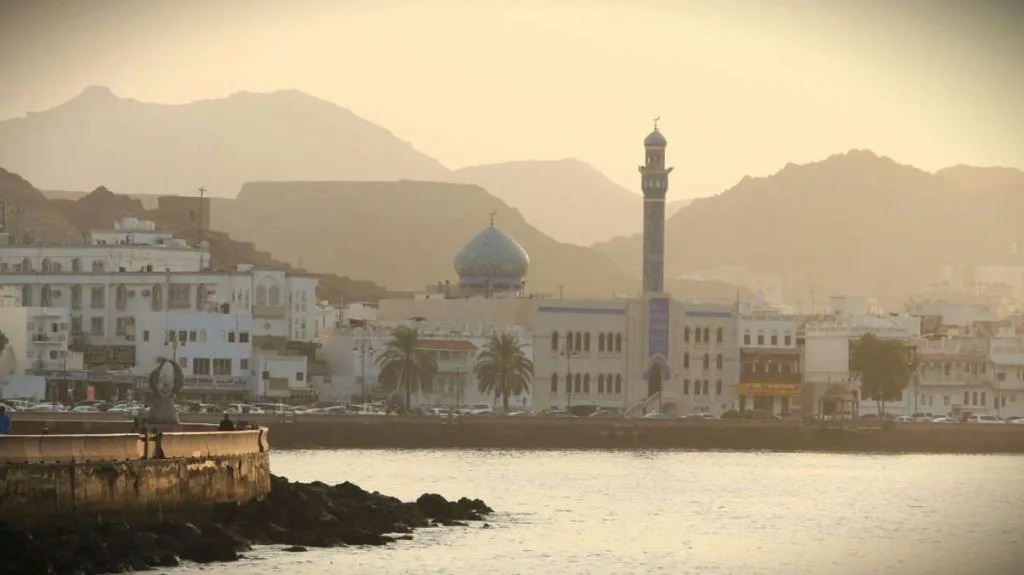
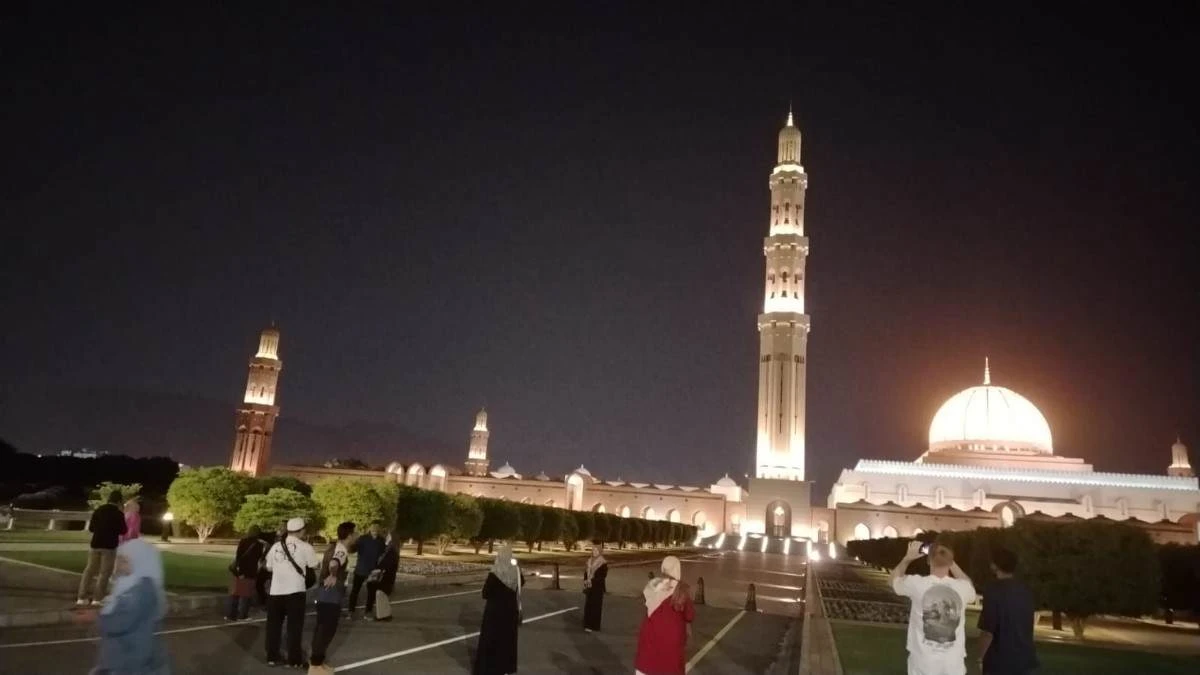
Use the first day in Muscat, and treat an arrival day honestly. If the flight lands late, the city walk can be short or moved. When there is useful daylight, the usual stops are the Sultan Qaboos Grand Mosque when visitor access is open, the Old Muscat area, the exterior of Al Alam Palace, and Mutrah Corniche and Mutrah Souq.
These places sit close enough together for one city day. They are not a tour of every museum in the capital. Prayer times and visitor rules decide whether the mosque interior is possible. If it is closed to visitors, the exterior and the rest of the city still make a complete first day. Stay in Muscat so the next morning can start toward the coast without a hotel change at dawn.
Day 2: Bimmah Sinkhole, Wadi Shab and Tiwi
Leave Muscat on the coastal road. The first stop is Hawiyat Najm, also called Bimmah Sinkhole, then continue to Wadi Shab and overnight in Tiwi or on the nearby coast. Sleeping on the coast is the point of this day. Returning to Muscat after the wadi would undo the reason for a 12-day pace.
Wadi Shab begins with a short local boat crossing and then an uneven walk. Swimming is optional for the general visit. It is necessary only for the final cave section. Life jackets are not promised on this page. Ask for them in the quotation if the group wants them, and treat them as confirmed only when the written reply says so. Children and anyone unsure on uneven ground or in water should decide before the walk, not at the cave.
The sinkhole and the wadi are both water places. Footwear that can get wet, a change of clothes, and a realistic sense of the heat matter more than a long list of extra stops. Do not add another wadi on the same afternoon.
Day 3: Wadi Tiwi and Sur
Wadi Tiwi is the morning, to the extent that current access allows. The suitable vehicle depends on the selected route and on conditions that day. This page does not promise a named swimming pool or a particular village road. If the track is closed or the water is too high, the day still continues to Sur. Forcing a closed wadi is not part of the plan.
After Tiwi, drive to Sur and use the later part of the day at Al Ayjah: the waterfront and the lighthouse area. Stay in Sur. The maritime city is the base for the next morning, so there is no need to rush back along the coast in the dark.
Day 4: Sur and Ras Al Jinz Turtle Reserve
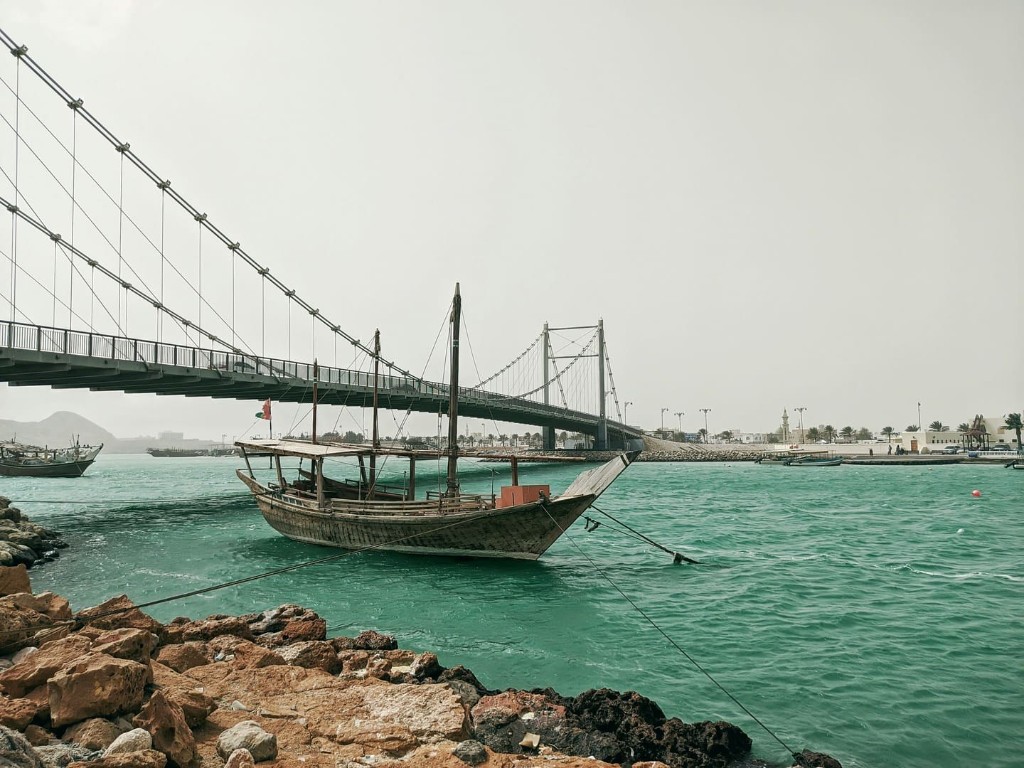
Start with Sur's maritime heritage. The dhow-building area or a museum visit belongs here when it is open. A Sur boat ride, if someone asks for one, is a separate activity. It is not how turtle viewing is done. Turtle viewing on this route belongs to the official Ras Al Jinz reserve.
Continue from Sur along the Ras Al Hadd coast and join the official turtle viewing in the evening. The reserve's schedule and booking have to be reconfirmed for the actual dates. This page does not copy a private booking and does not publish fees that change. Sightings are never guaranteed. A night with no turtle on the beach is still a completed visit to the reserve.
Stay at Ras Al Jinz or Ras Al Hadd so the viewing is not followed by a long night drive. That overnight is why this route does not treat the turtles as a same-night add-on to a Muscat dinner.
Day 5: The Eastern Coast, Jalan and Wahiba Sands
This is a scenic transit day, not a day of long visits in every village. The sequence is Ras Al Jinz, the coastal views at Al Suwaih and Asilah, the fishing coast at Al Ashkharah, the historic domed mosque at Jalan Bani Bu Ali, heritage stops at Jalan Bani Bu Hassan, then Bidiyah and sunset at Wahiba Sands (Sharqiyah Sands). Pause where the light and the group's energy are best. Do not try to turn each name into an hour-long tour.
The historic mosque is described here only as a historic domed mosque. An exact dome count is not published on this page. The villages are part of the drive into the desert, and the destination of the day is the sand.
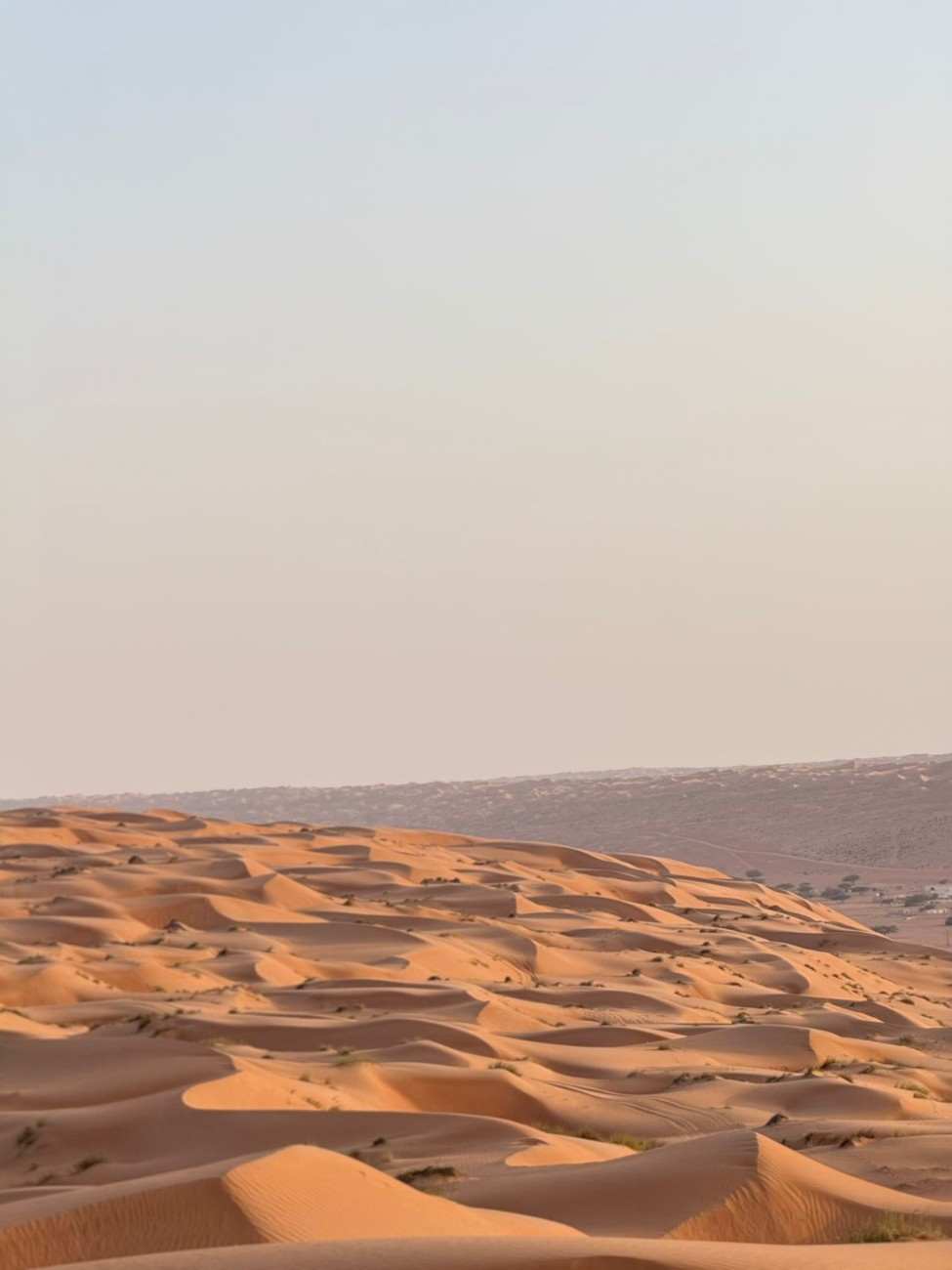
OmanTour uses a 4WD for entering the dunes and for dune activity. Dune driving, a Bedouin-home visit, coffee and dates, camel interaction and camp meals are included only when the written quotation lists them. None of those is automatic because the day ends in the desert. Overnight in a confirmed desert camp, not in a town back on the highway.
Day 6: Wadi Bani Khalid, Ibra and Nizwa
Take the desert sunrise and breakfast at the camp, then leave the sand. The 4WD work ends when the dunes are left behind. The onward vehicle is the normal road vehicle agreed in the booking, unless the quotation says otherwise.
The inland sequence is Wadi Bani Khalid, a heritage stop in Ibra, and then Nizwa for the night. Wadi access here, as on the coast, depends on current conditions. If the pools are closed or the path is unsafe, the day still reaches Nizwa. Two nights in Nizwa start tonight, so the fort and souq can wait for a fresh morning.
Day 7: Nizwa Fort, Souq and Al Aqr
Keep this day inside Nizwa. The souq, Nizwa Fort and the Al Aqr old quarter are enough. The second night in the same town is what makes the visit unhurried. A market is busiest on a schedule that can change, so the quotation should say which morning the group wants in the souq, and that morning can swap with the Muscat day if a Friday conflict appears.
Do not leave Nizwa for a mountain on the same afternoon. Jebel Shams and Jebel Akhdar each need their own day later in the trip. Using the Nizwa day to "start the mountain early" is how this route becomes rushed.
Day 8: Al Hoota Cave, Misfat and Al Hamra
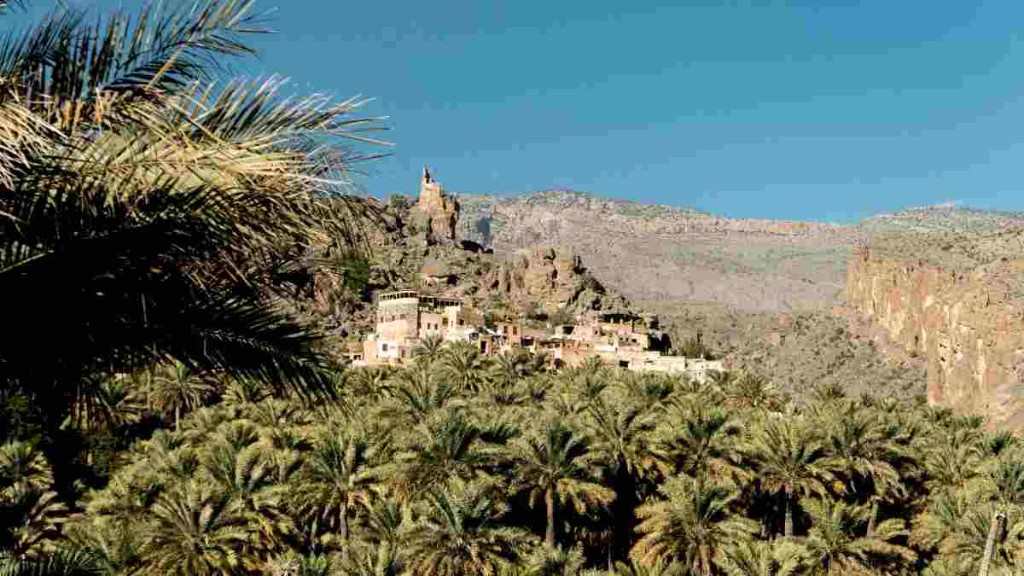
Drive from Nizwa toward Al Hamra. Al Hoota Cave is the first stop only when current opening and ticket availability have been checked. Official information on hours has conflicted, so this page does not publish a fixed opening time. If the cave cannot be entered that day, Misfat Al Abriyeen and Al Hamra still fill the day.
Misfat Al Abriyeen is a walking village. The paths are stone and the visit should stay at a pace the group can enjoy. Bait Al Safah belongs in the plan when it is open, and it is skipped when it is not. Stay in Al Hamra or nearby so Bahla the next day does not start with a long transfer.
Day 9: Bahla Fort and Old Bahla
Give Bahla Fort and the old market area a full, unhurried day. Bahla Fort is a UNESCO World Heritage property. That status does not mean every building around the fort is open to visitors. See what is open, walk the old area, and do not treat a closed door as a failure of the day.
Overnight in Bahla or return to Al Hamra, whichever the quotation confirms. Either base keeps Jebel Shams within reach the next morning. Do not continue to the mountain after dark.
Day 10: Jebel Shams and the Canyon
Jebel Shams is a separate mountain day because the canyon, the drive and the walk need their own daylight. OmanTour uses a 4WD for this day. The walk is chosen for fitness, weather and the hours of light that remain. It is not labelled easy for everyone, and a long hike is not the default.
Agree the turnaround point before leaving the vehicle. Cloud, wind or a late start shortens the walk. Viewpoints that do not require the full trail are a complete visit to the canyon. Stay on the Jebel Shams plateau so the next morning can leave toward Jebel Akhdar without a night drive down the mountain.
Day 11: Birkat Al Mouz and Jebel Akhdar
Leave Jebel Shams for Birkat Al Mouz and then Jebel Akhdar. These are different roads from Jebel Shams. Combining both mountains into one day is the main way a shorter itinerary drops one of them. Twelve days exists so that does not happen.
The ascent to Jebel Akhdar is subject to the checkpoint's vehicle rules. A 4WD is what OmanTour uses for this section. The checkpoint can refuse a vehicle that does not meet the rule in force that day, which is why the mountain car is arranged before the trip rather than borrowed at the gate.
Stay on the Saiq Plateau or at another confirmed Jebel Akhdar property. The night on the mountain is what makes the villages and viewpoints of the last morning possible.
Day 12: Jebel Akhdar to Muscat
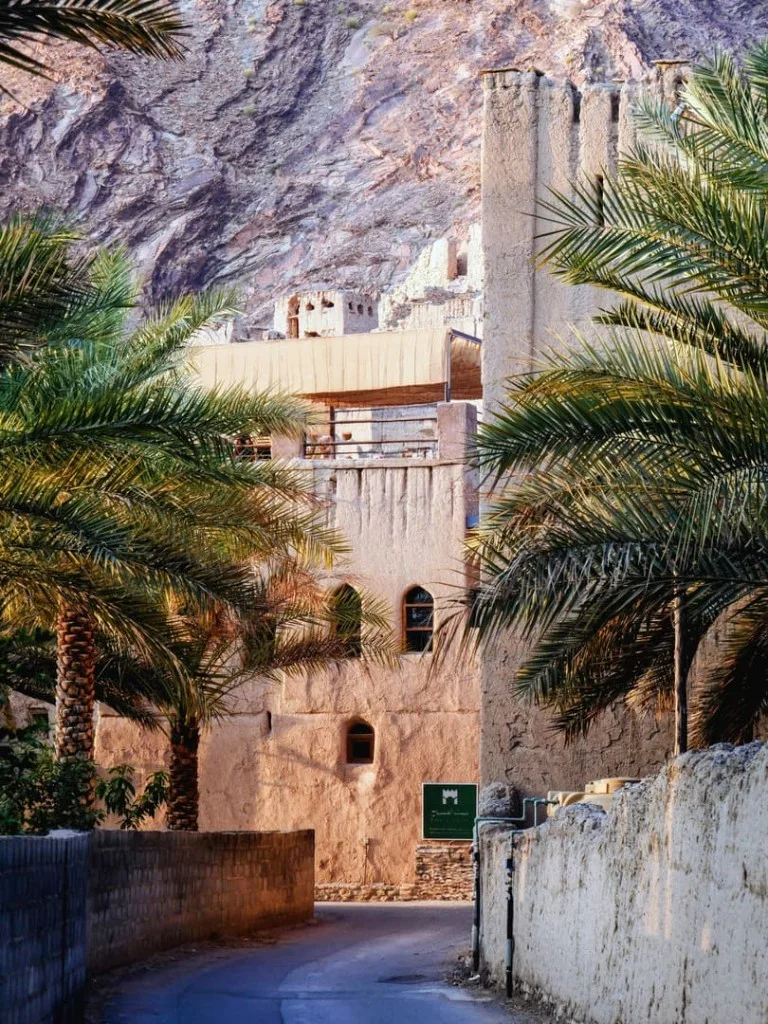
Use the morning for Jebel Akhdar villages and viewpoints, then descend. The 4WD is for the mountain road. After the descent, the transfer back to Muscat is the road vehicle agreed for that last leg.
Build in an airport buffer when the group is flying out the same day. A mountain morning plus a same-day international departure is comfortable only when the flight is late enough. If it is not, the quotation should end the mountain visit the previous afternoon. Salalah is still not added on this last day. It remains a separate plan.
Where Should You Stay During This 12-Day Oman Itinerary?
Ask for areas, not a branded hotel list. Muscat for the arrival night. Tiwi or the nearby coast after Wadi Shab. Sur for the maritime day. Ras Al Jinz or Ras Al Hadd for the turtle-viewing night. A confirmed desert camp in Wahiba Sands. Nizwa for two nights. A heritage stay in Al Hamra or nearby for Misfat Al Abriyeen and Al Hoota. Bahla or Al Hamra after the Bahla day. The Jebel Shams plateau for the canyon night. The Saiq Plateau, or another confirmed Jebel Akhdar property, for the mountain night.
This page does not reserve those rooms and does not say that OmanTour books the hotels. Guest hotels, the desert camp and guest meals are included only when the written quotation lists them. Name the area you prefer, and the reply can say what is actually available for those dates.
When Do You Need a 4WD?
Not for all 12 days. OmanTour uses a 4WD for Wahiba dune access, for Jebel Shams and for Jebel Akhdar. The paved coastal and town sections use a standard private vehicle. Wadi Tiwi is the exception that depends on the selected route: the suitable local vehicle is confirmed for that route, and it is not assumed to be a 4WD for the whole day.
On the desert morning the 4WD leaves the sand, and the booked road vehicle continues. On the last day the 4WD comes down the mountain, and the road transfer completes the return to Muscat. Publishing one vehicle for every day would be inaccurate.
What Is Included in a Private Vehicle Quote?
There is no fixed 12-day price on this page. Ask for a written quotation for the dates and the group. The transport quotation can include a private air-conditioned vehicle, an English-speaking driver, fuel for the agreed route, pickup and drop-off as written in the quotation, parking, drinking water, and the driver's meals and accommodation.
The driver is a local driver with route knowledge. The driver is not a licensed tourist guide. A licensed guide is a separate service and is included only when the quotation writes it in.
Guest hotels, guest meals, attraction tickets, the desert camp, the Ras Al Jinz booking and optional activities are not included unless that same quotation lists them. Dune driving and any camp meal follow the same rule.
How Should the Route Change on a Friday?
If mosque visitor access or a market schedule conflicts with Friday, move the Muscat city day later and begin with the coast. The places stay the same. Only the order changes. Reconfirm the opening arrangement for that Friday rather than relying on a general rule, because access can differ by date.
The same flexibility covers a late-night arrival or an early final flight. Wadi Shab can lead, or the mountain morning can be shortened, while the route remains this northern and eastern loop. Daymaniyat, Masirah, Dubai and Salalah are not swapped in to fill a gap.
Frequently Asked Questions
Is 12 days enough to visit Oman?
Yes, for a slower northern and eastern loop including coast, desert, Nizwa and both mountains. It is not enough to add Salalah without changing the route.
Does this 12-day Oman itinerary include Salalah?
No. Salalah is a separate southern-Oman plan and should not be added to this road loop.
Where should I stay during the route?
Stay in Muscat on arrival, in Tiwi or on the nearby coast after Wadi Shab, in Sur, at Ras Al Jinz or Ras Al Hadd for the turtle-viewing night, in a confirmed Wahiba Sands desert camp, in Nizwa for two nights, in Al Hamra or nearby for Misfat Al Abriyeen and Al Hoota, in Bahla or Al Hamra after Bahla, on the Jebel Shams plateau, and on the Saiq Plateau or another confirmed Jebel Akhdar property. These are areas to request. This page does not reserve the hotels.
Do I need a 4WD for all 12 days?
No. OmanTour uses 4WD for Wahiba dune access, Jebel Shams and Jebel Akhdar; the other paved sections do not automatically require it.
Can the itinerary start with Wadi Shab instead of Muscat?
Yes. The order can change for flight times, Friday access and availability while retaining the same route.
Can I see turtles from a boat in Sur?
No boat turtle viewing is promised in Sur. Turtle viewing is arranged through the official Ras Al Jinz experience. A Sur boat trip, if requested, is a separate activity, and wildlife sightings are never guaranteed.
Is Wadi Shab suitable for children or non-swimmers?
The early walk can suit active visitors, but uneven ground and water require judgment. Non-swimmers must skip the cave swim. Families must confirm ages and swimming ability.
Can I do a long hike at Jebel Shams?
Only when fitness, weather and daylight allow. The final walk and turnaround point must be agreed before departure.
Are the hotels and desert camp included?
Only when the written quotation lists them. Hotels, the desert camp and guest meals are not included automatically.
What does the private vehicle quotation include?
A private air-conditioned vehicle, an English-speaking driver, fuel for the agreed route, pickup and drop-off as written in the quotation, parking, drinking water, and the driver's meals and accommodation. Guest hotels, guest meals, attraction tickets, a licensed guide, the desert camp, the turtle-reserve booking and optional activities are included only when the written quotation lists them.
Is the driver also a licensed tourist guide?
No. The standard service is an English-speaking local driver with route knowledge. A licensed guide is separate and must be written into the quotation.
How does Friday change the itinerary?
If mosque visitor access or a market schedule conflicts, move the Muscat city day later and begin with the coast. Reconfirm current opening arrangements.
What information is needed for a fixed quotation?
Dates, arrival and departure flight times, the number of adults, children and their ages, the pickup point, luggage, requested activities, and any mobility or dietary requirements relevant to the route.
Request a Written Quote for This 12-Day Route
The next step is a written quotation, not a price guessed from this page. Request a written quote for this 12-day Oman route. The same request can go through a custom private Oman tour or by using contact OmanTour.
📱 Book Your Tour Online
Request a written quotation on WhatsApp