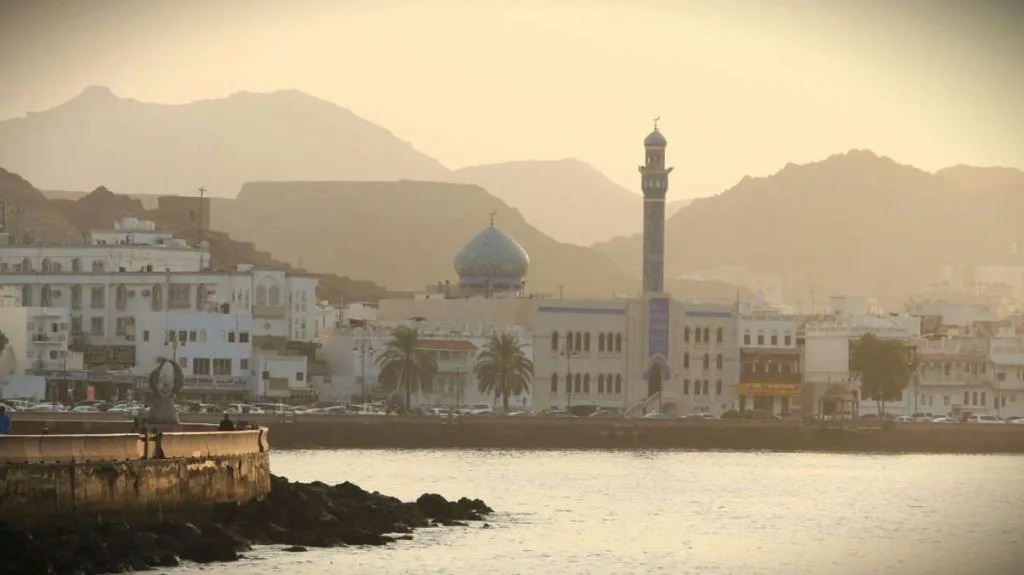
By James Whitfield — Travel Journalist, Muscat resident since 2021 | Published for Condé Nast Traveller readers & independent travellers
The door of the 4x4 opens, and before you've even adjusted to the morning heat, your guide is already pointing across the car park at the Sultan Qaboos Grand Mosque — not at the dome everyone photographs, but at the smaller side arch where the original stonework was laid before the main construction even began in 1995. It's the kind of detail that doesn't exist in any guidebook. That's the moment I understood why serious travellers seek out Muscat private guides rather than walking in with a printed map and good intentions.
I've lived in Muscat for four years. I've done the self-guided wanders through Mutrah Souq at midnight, driven myself out to Wadi Shab on a whim, and sat in group tour minibuses listening to a disengaged commentary aimed at thirty people at once. The difference between those experiences and a well-planned private tour is considerable — but it's not always obvious until you're standing in front of something genuinely ancient with nobody qualified to explain what you're looking at.
This guide covers everything you need to know: what private guides actually do, what a realistic itinerary looks like across different durations, how to judge quality before you book, and what it costs.
What a Muscat Private Guide Actually Does (That You Can't Do Alone)

The honest answer is: access and context. Not exclusive access — almost everything in Muscat is publicly open — but the kind of informed, human context that turns a building into a story.
Take the Grand Mosque. It opens from 8AM to 11AM Saturday through Thursday, and non-Muslims can visit during those hours. You can walk in unguided, admire the 21-tonne chandelier, photograph the hand-knotted Persian carpet (the second largest in the world when it was installed), and leave. Most visitors do exactly this and feel they've ticked a box. A Muscat private guide will have a relationship with the on-site staff, understand which prayer halls are open on which mornings, and — crucially — will tell you the story behind Sultan Qaboos's vision for the mosque as a deliberate act of architectural diplomacy. That changes what you see.
Beyond context, private guides handle the logistics that quietly exhaust self-touring travellers. Muscat is deceptively spread out. The airport sits in Seeb, the Old Town is in Mutrah, the Royal Opera House and Shati Al Qurum are further west, and Qurayat — where some of the best coastal scenery begins — is 60km east. Without local knowledge, you'll spend significant time in a hire car wondering whether you've already missed the right turn for Bait Al Zubair Museum.
A guide also negotiates the social nuances that aren't written down anywhere. Dress expectations, when to hang back and when to engage with shopkeepers, which spots in Mutrah Souq are genuinely old and which are imported tourist stock — these are things you learn through four years of living here, or through spending a day with someone who has.
What guides don't do better: if you're a photographer who needs two hours at a single location to get the light right, a shared or structured itinerary will frustrate you. In that case, discuss this before booking and negotiate a flexible pace. Most experienced guides are happy to adapt.
The Best Muscat Tour Guide Itineraries — By Duration
Half-Day Muscat City Itinerary (4–5 hours)
A half-day works well if you're in transit, on a cruise port stop, or simply want a grounded introduction before exploring independently. A sensible Muscat tour guide itinerary at this length typically runs from around 8AM, starting at the Grand Mosque during the non-Muslim visiting window, then moving to the Al Alam Palace viewpoint and the flanking fortresses of Jalali and Mirani — you can't enter these, but a guide explains their Portuguese-era history in a way that makes the coastal view read completely differently.
From there, Mutrah Corniche and the souq round out the morning. Four hours is enough to see the essential landmarks; it is not enough to understand them. If you have any flexibility, push for the full day.
Full-Day Muscat Itinerary (8–10 hours)
This is the format that suits most first-time visitors. Start early at the Grand Mosque (remember, entry closes at 11AM), then proceed to the Old Muscat quarter — Al Alam Palace, the twin forts, the waterfront. Midday moves to Mutrah Souq before the afternoon heat peaks. After lunch — and your guide will know which small restaurants near the Corniche serve honest Omani food rather than tourist-adjusted versions — there's time for either the Bait Al Zubair Museum (a genuinely impressive private collection of Omani heritage artefacts) or the National Museum of Oman in the Qurum district, which opened in 2016 and deserves at least ninety minutes.
End the day at Qurum Beach or along the Shati Al Qurum strip as the light softens. This is Muscat at its most liveable, and seeing it with a resident guide rather than rushing back to a hotel gives the city an entirely different character.
Multi-Day Muscat + Oman Itinerary
This is where private guiding genuinely earns its cost. Oman's geography rewards those who leave the capital, and the day trips accessible from Muscat are among the best in the region. Nizwa is 165km southwest — about 1 hour 45 minutes by road — and combines a spectacular 17th-century fort with a working livestock market (best on Friday mornings) and direct access onwards to Jebel Akhdar, the Green Mountain, at 2,980 metres elevation. Wadi Shab, roughly 130km east, involves a boat crossing and a short swim into a cave waterfall that most visitors simply cannot find or navigate safely without local knowledge.
A three-day private itinerary typically structures as: Day 1 — Muscat city; Day 2 — Nizwa and Jebel Akhdar; Day 3 — coastal wadis or the Wahiba Sands edge. This is, genuinely, the pace at which Oman makes sense.

What Makes a Good Muscat Private Guide?
After four years here, I've met guides who can explain Ibadi Islam's theological distinction from Sunni and Shia traditions with genuine depth, and guides who've clearly memorised three sentences from a tourism pamphlet. The difference matters enormously over a full day together.
What to look for: guides who ask you questions before the tour starts. A guide who wants to know your interests — history, architecture, food, photography, family travel — is someone building an itinerary around you rather than delivering a fixed script. Ask them specifically what they'll include and why. If the answer is fluent and personalised, that's a good sign.
Language quality is important but not everything. Some of the most knowledgeable guides in Oman speak English as a third language and more than compensate with depth of knowledge and genuine hospitality — an Omani quality that has never felt performative to me in four years of experiencing it.
Verify that they are licensed by the Oman Tourism Authority. This matters both for your safety (particularly on wadi and desert trips) and for the reliability of what you're being told. Unlicensed operators do exist in Muscat, and while some are perfectly capable, you have no recourse if anything goes wrong.
Private Guide vs Group Tour in Muscat — Honest Comparison
| Factor | Private Guide | Group Tour |
|---|---|---|
| Pace | Entirely yours to set | Fixed schedule, 15–30 people |
| Depth of commentary | Tailored to your interests and questions | Generalised, often brief |
| Flexibility | Can change stops, add detours | Route fixed before departure |
| Cost per person | Higher solo; competitive for 3–4 people | Lower per head |
| Local restaurant access | Guide's personal recommendations | Usually pre-arranged group venues |
| Best for | Couples, families, curious travellers | Solo budget travellers, social types |
Real Muscat Tour Guide Itinerary: Sample Day-by-Day

This is a realistic three-day structure that I've seen work well for visitors flying in from Europe or South Asia with limited time but genuine curiosity.
Day 1 — Muscat City: Depart hotel by 7:45AM to reach the Grand Mosque before crowds build. One hour there, then Old Muscat — Al Alam, the Portuguese forts, the coastline walk. Mutrah Souq before noon, when the light inside the covered lanes is atmospheric and the frankincense sellers are setting up. Lunch near the Corniche. Afternoon at the National Museum or Bait Al Zubair depending on interest. Evening at Qurum Beach.
Day 2 — Nizwa and Jebel Akhdar: Early departure (6:30AM recommended). The drive southwest on Route 15 takes 1 hour 45 minutes in clear conditions. Nizwa Fort opens at 9AM; allow 90 minutes. If it's a Friday, the livestock souq runs from dawn — goats, cattle, a genuine Omani market that hasn't been adjusted for tourism. Ascend Jebel Akhdar via the Saiq Plateau road (a 4x4 is mandatory above the checkpoint; your guide's vehicle should be appropriate). The rose gardens around Al Ayn village are reason enough alone. Return to Muscat by early evening.
Day 3 — Wadi Shab or Sur Coast: Wadi Shab is 130km east on Route 17. The trailhead involves a short boat crossing (a fisherman rows you across for 500 Omani baisa — roughly 50p), followed by a 45-minute wadi walk and a swim through a narrow gorge into the cave. Not suitable for non-swimmers or anyone with mobility concerns — a good guide will have established this before suggesting it. Alternatively, the coastal road south towards Sur passes empty beaches and turtle nesting sites that most visitors never reach independently.
How Much Does a Muscat Private Guide Cost?
Pricing in Oman is per vehicle rather than per person, which means costs become considerably more reasonable when split across a couple or small group. The following represents realistic 2026 rates for a licensed, English-speaking guide with a suitable vehicle included.
- Half-day (4–5 hours): £45–70 / $55–87 / €51–80 / ₹14,000–22,000 per vehicle
- Full day (8–10 hours): £75–110 / $93–137 / €86–127 / ₹24,000–35,000 per vehicle
- Day trips (Nizwa, Wadi Shab, Jebel Akhdar): At the higher end of the full-day rate, given distances and 4x4 requirement
Entry fees to sites like Nizwa Fort (roughly £2) and museum tickets are usually paid separately on the day. Lunch is generally not included unless specified — ask when booking.
For bookings and itinerary enquiries, you can reach the team directly:
WhatsApp: +968 9468 1176
Website: omantour.in
Send a WhatsApp message with your travel dates, group size, and what you're most interested in seeing. Response times are generally within a few hours during Muscat business hours (Sunday to Thursday, 8AM–6PM Oman time, which is GMT+4 year-round).
Frequently Asked Questions
Is hiring a private guide in Muscat actually worth it, or can I self-tour?
Depends entirely on what you want from the trip. Muscat's main sites are accessible independently, and several — the Grand Mosque, Mutrah Souq, the Corniche — are easy to navigate alone. Where a guide adds disproportionate value is on day trips outside the city (Nizwa, Wadi Shab, Jebel Akhdar), where road navigation, safety awareness, and local knowledge make a material difference to what you experience. For city-only touring, a guide enriches the experience significantly without being essential. For anything involving wadis or mountain roads, I'd recommend it without hesitation.
Do I need to book a guide in advance, or can I arrange one on arrival?
Book at least 48 hours ahead, ideally more during the peak October–March season when Muscat sees the majority of its international visitors. Good licensed guides fill up quickly, and last-minute arrangements tend to produce whoever is available rather than whoever is best. WhatsApp is the most reliable booking channel here — email response times in Oman can be inconsistent.
What should I tell my guide before the tour?
Your interests (history, food, photography, outdoor activities), any mobility considerations, whether you have children and their ages, dietary requirements if lunch is included, and how much walking you're comfortable with. The more specific you are, the better the itinerary you'll receive. A guide who doesn't ask any of these questions before the day is a guide who's delivering a generic script.
Can female travellers hire private guides comfortably in Muscat?
Yes. Oman has a well-deserved reputation as one of the most welcoming and respectful destinations in the Arab world for solo female travellers. Female visitors regularly tour with male guides without issue; the social environment is notably relaxed compared to some neighbouring countries. Standard modest dress — shoulders and knees covered — is appropriate at religious sites and expected at the Grand Mosque regardless of gender.
Can a guide take me somewhere genuinely off the beaten track, or is it just the standard circuit?
The best guides can, and should, be asked this directly. Beyond the well-documented Muscat highlights, there are fishing villages along the Qurayat coast, inland frankincense estates in the Dhofar region (a longer trip), and small falaj irrigation systems in the Batinah plain that almost no visitors seek out. An experienced guide who has lived in Oman long-term — rather than one delivering a packaged route — is the route to these places. Ask specifically what they'd show someone who has already done the standard itinerary. The answer will tell you everything you need to know about their depth of knowledge.
📱 Book Your Tour Online
Get instant confirmation — WhatsApp reply in 15 minutes