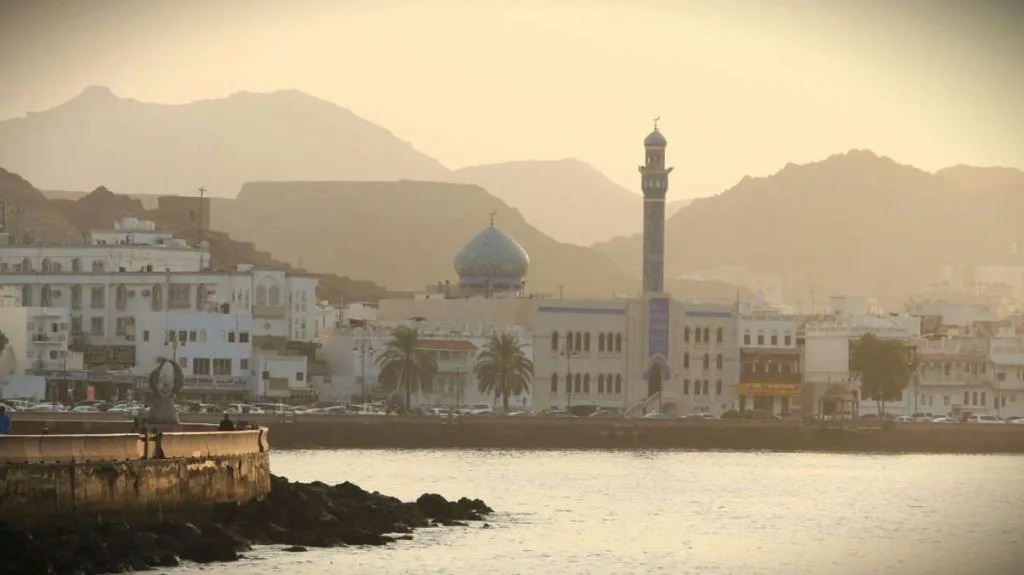
The boat appeared from nowhere — a battered fibreglass skiff piloted by a teenage boy who said nothing, simply held out his hand for two rials and gestured upstream. Without him, the entrance to Wadi Shab was just a river crossing with no obvious far bank. With him, it became the beginning of one of the most extraordinary walks I've ever done: two hours through slot canyons, past turquoise pools, until a hidden cave revealed a waterfall thundering into an underground chamber you had to swim through to reach. I would never have found it alone. That, in a single moment, is the case for exploring Oman with a guide.
Why Guided Tours Work Better in Oman Than Anywhere Else
Oman is a country that punishes the underprepared and rewards those who understand its geography. The sultanate covers roughly 309,500 square kilometres — nearly twice the size of the United Kingdom — and its landscapes shift from granite mountains to empty desert to fjord-like coastline within hours of driving. The road network, while vastly improved over the last decade, still delivers you to dead ends, unsigned forks, and wadis that flash-flood without warning between October and March.
Then there's the legal dimension. The Hajar Mountains, including Jebel Akhdar, require a 4WD vehicle with low-range capability. This isn't a suggestion — there's a checkpoint at the base where rangers will turn back any standard saloon car or crossover. Wahiba Sands demands proper tyre deflation, sand-driving technique, and ideally a second vehicle. Attempting either without experience is genuinely dangerous.
But the strongest argument for a guided excursion isn't safety — it's depth. Oman's culture is layered and sometimes opaque to outsiders. A good Omani guide explains why the falaj irrigation system running through Birkat Al Mawz represents 3,000 years of engineering genius. They know which vendor at Nizwa's Friday market sells the best halwa. They take you to the overlook above Wadi Nakhr that appears on no map. These are not details you find on a travel forum.

The Best Oman Guided Tours by Experience Type
Wadi Tours — Canyon, Swimming & Adventure
The wadis are Oman's greatest secret. Carved over millennia by seasonal rivers, these dry gorges fill with improbably clear water that ranges from pale jade to deep emerald depending on the light and season.
Wadi Shab, located roughly 140 kilometres south of Muscat along the coastal highway, is the most dramatic. The excursion begins with a short boat crossing, then a 45-minute walk along canyon walls before the valley narrows and the real swimming begins. Guides earn their keep here — the route to the cave waterfall at the far end requires local knowledge of which passage to take through the rock. Most visitors who come independently turn back before reaching it.
Wadi Bani Khalid, about 220 kilometres south of Muscat near the town of Sur, offers something different: permanent pools you can swim in year-round, surrounded by date palms and terracotta rock. It's more accessible than Wadi Shab and better suited to families. Many half-day excursions combine it with the Bimmah Sinkhole — a 50-metre-wide limestone collapse filled with blue-green water, sitting improbably beside the coastal highway just 100 kilometres from Muscat. Worth an hour of any itinerary.
Mountain Tours — Jebel Akhdar & The Green Mountain
Jebel Akhdar — Arabic for "the Green Mountain" — rises to 2,980 metres above sea level in the Western Hajar range, and the climate at the top is genuinely startling. While Muscat bakes at 38°C on the coast, the plateau sits at around 20°C. In April, the terraced rose gardens bloom and the air smells of the damask roses used to make Oman's famous rose water.
The checkpoint at the base of the mountain, located near the town of Birkat Al Mawz, enforces the 4WD requirement without exception. A tour operator in a properly equipped vehicle is your only option unless you rent a capable 4WD yourself and are confident driving steep switchback roads with sheer drops and no barriers. Most travellers, sensibly, choose a guided day trip.
The reward is the Wadi Nakhr viewpoint — often called Oman's Grand Canyon — where a crack in the earth reveals a gorge 1,000 metres deep with a village clinging to the far wall. Nothing I'd read prepared me for the scale of it. On the same circuit, the ancient falaj channels of Birkat Al Mawz village, a UNESCO-listed irrigation system, show a side of Omani heritage that no fort or museum quite captures.
Desert Tours — Wahiba Sands
The Wahiba Sands — officially the Sharqiyah Sands — begin roughly two hours' drive from Muscat and extend 180 kilometres south. The dunes here reach 200 metres in height, with a colour that shifts from amber at noon to deep copper at golden hour. Camel riding is available through most desert camps, and the Bedu families who still live within the sands occasionally welcome visitors for coffee and dates.
The overnight option — staying in a tented desert camp — is the most popular choice, and genuinely worthwhile. The silence after the camp generators switch off, the density of stars at 2am, the cold desert air: these are things a day trip cannot give you. A guided excursion with a reputable operator will handle the tyre deflation, the dune driving, and the navigation between camps — skills that take years to develop and that, without them, lead to stuck vehicles and expensive recoveries.
Heritage & History Tours — Nizwa, Bahla & Jabrin
Nizwa, 165 kilometres from Muscat, was the capital of Oman's interior for centuries and its Friday livestock market remains one of the most authentic in the Arab world. Arrive before 9am — the goat trading is largely done by 10am. The adjacent Nizwa Fort, with its enormous 17th-century circular tower, opens daily from 8am to 6pm (Fridays from 8 to 11am and 1:30 to 6pm). Entry costs 5 Omani rials.
Bahla Fort, 45 kilometres beyond Nizwa, is a UNESCO World Heritage Site of impressive scale — a 13th-century mud-brick citadel that stretches across a hilltop for nearly 200 metres. Many visitors rush through it. A good guide slows you down and explains why the construction technique, still visible in the unfired brick sections, hasn't fundamentally changed in 700 years. Jabrin Castle, another 10 kilometres further, is arguably more beautiful — its painted ceilings and carved stucco date to the 17th century and the detail is extraordinary.

Coastal & Marine Tours
The Daymaniyat Islands, a nature reserve 18 kilometres off the coast near Barka, offer some of the best snorkelling in the Arabian Sea. Green and hawksbill turtles nest here between May and October, and reef fish density is high. Boat trips depart from Barka harbour and typically run four to five hours. Marine guides are particularly valuable here for navigating reserve regulations and identifying species.
Sur, 330 kilometres south of Muscat, houses one of the last working dhow yards in the Arab world — boats are still built by hand using traditional methods, and the craftsmen are largely unbothered by visitors. A day trip to Sur often combines the dhow yard with Wadi Bani Khalid and a stop at Ras Al Jinz, the protected headland where nesting green turtles come ashore between June and October (and occasionally year-round). Night turtle watches at Ras Al Jinz require advance booking through the official reserve — a guide who has done this dozens of times will dramatically increase your chances of a close encounter.
Private Guide vs Group Tour — An Honest Comparison
| Factor | Private Tour | Group Tour |
|---|---|---|
| Flexibility | Itinerary adjusts to your pace and interests | Fixed schedule, fixed stops |
| Cost per person | Higher solo; comparable for 3-4 people sharing | Lower — shared vehicle cost |
| Cultural depth | Guide focussed entirely on your questions | Commentary shared across 8-16 people |
| Social experience | Ideal for families, couples, solo travellers wanting privacy | Good for solo travellers who enjoy meeting others |
| Logistics | Pick-up from your hotel; fully customisable | Set departure points, shared transfers |
| Best for | Families, specific interests, multi-day routes | Budget-conscious travellers, single-day excursions |
How to Choose the Right Guided Tour in Oman
Check the vehicle. For any mountain or desert itinerary, the guide should be operating a genuine 4WD with low-range capability — a Land Cruiser, Patrol, or equivalent. Ask specifically. Some operators cut costs with crossovers that cannot legally access Jebel Akhdar and are dangerous in the sands.
Verify the guide's language and knowledge depth. Oman has a significant expatriate workforce in tourism, and not all guides have deep roots in Omani culture. Where possible, ask for a guide who has grown up in the region you're visiting — the difference in contextual knowledge is substantial.
Clarify what's included. Entry fees to Nizwa Fort, Bahla, and nature reserves are not always bundled into tour prices. Lunch arrangements vary widely. Ask for a written breakdown before confirming.
Match the tour length to the destination. Wadi Shab is genuinely a full day from Muscat — allow eight to nine hours. Operators selling it as a half-day are cutting corners somewhere, usually at the cave waterfall end where the experience peaks.
Read recent reviews, not aggregate scores. Oman's tour scene has grown rapidly since 2022 and quality varies. Look for reviews from the past six months that mention specific guides by name. Consistency of individual guides matters more than company-wide star ratings.
Best Time for Guided Tours in Oman
October to March is the sweet spot. Temperatures across the interior sit between 20°C and 30°C — warm enough for wadi swimming, comfortable enough for mountain hiking, and pleasant in the desert at night. December and January are peak season; book at least three to four weeks in advance for popular routes.
April brings the rose harvest to Jebel Akhdar — the terraced gardens above Al Ain village fill with damask roses picked at dawn, and the rose water distilleries run through the month. It's one of Oman's most distinctive seasonal experiences, and April temperatures are still manageable at altitude, if warm on the coast.
May through September on the Muscat coast and interior is genuinely brutal — 40°C to 46°C with high humidity near the sea. Most oman guided tours still run, but the wadi swimming becomes the only comfortable outdoor activity. Serious sightseeing becomes a pre-7am and post-4pm affair.
The exception is Salalah, Oman's southern capital, which experiences the khareef monsoon from June through September. The city transforms into a green, mist-covered landscape utterly unlike the rest of the country — waterfalls appear on cliff faces, cattle graze on lush hillsides, and the beaches empty of summer heat. A guided tour of Dhofar during the khareef is a distinct and underrated experience.
A Sample 5-Day Guided Tour Itinerary
Day 1 — Muscat orientation. Morning: Mutrah Souq and the old harbour corniche, followed by the Sultan Qaboos Grand Mosque (open to non-Muslims Saturday to Thursday, 8am to 11am). Afternoon: the hilltop forts of Mutrah and Al Jalali overlooking the bay, and the new National Museum for context before the wider journey begins.
Day 2 — Wadi Shab and the coast. Depart Muscat by 7am, stop at Bimmah Sinkhole for a 45-minute swim, then continue 140 kilometres south to Wadi Shab. Allow three hours for the full walk and cave waterfall. Return along the coastal highway. Full day.
Day 3 — Nizwa, Bahla and Jabrin. The 165-kilometre drive inland takes around two hours. Morning at Nizwa Fort and the souk; if it's a Friday, arrive by 8am for the livestock market. Afternoon: Bahla Fort, then Jabrin Castle before the return journey. A long but enormously rewarding day.
Day 4 — Jebel Akhdar. Pass through the Birkat Al Mawz checkpoint and ascend to the plateau. Morning: Wadi Nakhr viewpoint and the village of As Sah. Afternoon: the rose gardens and terraced farms above Al Ain village, falaj system walk, and the drive back down as the valley colours change in evening light.
Day 5 — Wahiba Sands overnight. Depart mid-morning for the two-hour drive east. Afternoon dune driving, camel riding, and sunset from a high ridge. Overnight in a desert camp. The following morning: sunrise from the dunes, then return to Muscat by noon.

Practical Pricing Guide
Private tours in Oman are priced per vehicle, not per person — which changes the maths considerably for groups of three or four. A private full-day excursion with a driver-guide in a 4WD typically starts from around £55 / $68 / €63 / ₹17,000 per vehicle per day for standard wadi and heritage routes. Mountain routes requiring specialist off-road driving command a modest premium. Desert overnight packages, which include the camp accommodation, are priced separately and typically run from £120 / $150 / €140 / ₹37,000 per vehicle per night inclusive of dinner and breakfast.
Group tours — shared vehicles with other travellers — start from roughly £30 to £55 / $38 to $68 / €35 to €63 / ₹10,000 to ₹17,000 per person for a full day, depending on the destination and group size. These are significantly better value for solo travellers and pairs, and perfectly adequate for popular single-destination excursions like Wadi Shab or the Nizwa heritage circuit.
Entry fees are usually additional: Nizwa Fort costs 5 OMR, Bahla and Jabrin combined around 3 OMR, and Ras Al Jinz night turtle watches approximately 7 OMR per person. Always confirm what's included in writing before booking.
Frequently Asked Questions
Do I need a guided tour in Oman or can I self-drive? Self-driving is entirely viable for the main highways, Muscat, and coastal routes — Oman has excellent signage on trunk roads and rental cars are affordable. But for anything involving mountains or desert, either join an organised excursion or rent a properly equipped 4WD and do serious research first. The terrain is genuinely hazardous without the right vehicle and knowledge.
Is Jebel Akhdar accessible without a guide? Yes — if you have a 4WD with low-range capability. The checkpoint at Birkat Al Mawz will verify your vehicle before allowing access. There is no legal requirement for a guide. However, the mountain roads are steep, unmarked in places, and navigating to the best viewpoints without local knowledge leads most self-drivers to miss the highlights entirely. A guided day trip represents good value here.
How far in advance should I book an Oman guided tour? For travel between November and February, book two to four weeks ahead, particularly for desert overnight packages and Ras Al Jinz turtle experiences which have limited capacity. Outside peak season, a week's notice is usually sufficient, and some operators accommodate next-day bookings for standard excursions.
Are guided tours in Oman suitable for families with children? Overwhelmingly yes. Wadi Bani Khalid, the Bimmah Sinkhole, and Wahiba Sands are particularly good with children. Wadi Shab involves a longer walk and swimming through narrow cave passages — manageable for confident swimmers aged ten and above, but less suited to young children. Guides are generally experienced with family groups and will adjust pacing accordingly.
What's included in a private guided tour price? Typically: vehicle and fuel, driver-guide services, hotel pick-up and drop-off, and bottled water. Usually excluded: entry fees, meals, gratuities, and in some cases tolls or reserve access charges. Read the booking confirmation carefully and ask for clarity on any line item that isn't explicitly listed. A reputable operator will answer these questions without hesitation.
📱 Book Your Tour Online
Get instant confirmation — WhatsApp reply in 15 minutes