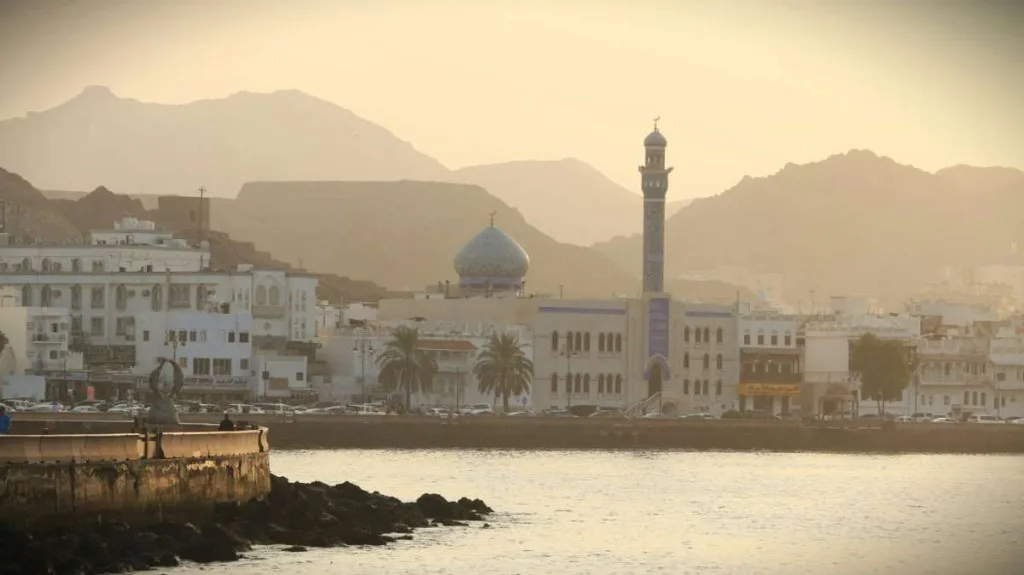
You've never been to Oman. Your first question: Can I just drive across the UAE–Oman border, or do I need paperwork? Answer: You need a visa on arrival (free for most nationalities, takes 5 minutes). Your second question: How much is a transfer from Dubai to Muscat? Answer: OMR 120 (USD 310) for a sedan; about 4 hours drive. This article answers the anxieties first-time visitors actually have—before you book, before you panic, before you waste money on guesswork.
Do I Need a Visa? What's Required at the Border?
Most Western travelers—UK, Germany, France, Australia, Canada, USA—qualify for visa on arrival. You do not need to apply in advance. At the Muscat or Sohar border crossing (coming from the UAE), immigration will issue a tourist visa valid for 10 or 30 days, depending on your nationality. The process takes 3–5 minutes and costs nothing. Keep your passport accessible and ensure at least 6 months validity remaining.
What you must have: A valid passport, proof of onward travel (flight or return booking), and ideally evidence of accommodation (hotel confirmation or Airbnb booking). You do not typically need travel insurance for entry, but comprehensive insurance covering medical evacuation is highly recommended—Oman's interior deserts can be remote.
If you're driving a rental car from the UAE into Oman, ensure your hire agreement permits cross-border travel. Most standard UAE rental agreements do; check the fine print or ask your rental company. Your UAE car insurance does not automatically extend to Oman—you must purchase Oman third-party insurance at the border (contact us for current rates or arrange via your rental company). Budget roughly OMR 15–25 for a week's coverage.
Visa on arrival applies to tourism only. If you're entering for work or residence, you will need a sponsored visa arranged in advance—outside the scope of this article.
How Do I Get from Dubai or Abu Dhabi to Muscat? Cost & Duration?
The UAE–Oman border crossing is straightforward, and the drive is straightforward. From Dubai to Muscat is approximately 450 km (280 miles), taking 4–5 hours depending on traffic and border delays. From Abu Dhabi, it's slightly shorter: around 410 km, also 4–5 hours.
If you're renting a car yourself: Expect fuel costs of roughly OMR 40 per day (USD equivalent). You'll pass through UAE toll gates (Salik system), so ensure your rental car is Salik-enabled or you face fines later. The drive is smooth, well-signposted, and safe. Bring water and snacks; service stations are reliable but spacing can vary in the desert sections.
If you prefer a private transfer (our recommendation for first-timers):
- Dubai to Muscat sedan: OMR 120 (USD 310 / AED 1140)
- Dubai to Muscat SUV: OMR 150 (USD 390 / AED 1430)
- Dubai to Muscat minivan: OMR 165 (USD 430 / AED 1570)
- Dubai to Muscat luxury Mercedes: OMR 180 (USD 470 / AED 1720)
- Abu Dhabi to Muscat sedan: OMR 110 (USD 285 / AED 1045)
These prices are per vehicle (not per person), so if you're traveling with friends or family, the per-person cost drops significantly. A driver handles border documentation, knows the route, and can advise on Oman etiquette. For families or groups of 3+, this is often more economical than self-drive.
Alternative: Dubai to Sohar. If you're heading to Sohar (Oman's second-largest port city, en route to Muscat) or the northern coast, a sedan costs OMR 95 (USD 245 / AED 900).
Returning to the UAE? Muscat to Dubai costs the same as Dubai to Muscat: OMR 120 (USD 310) for a sedan.
What's the Real Daily Budget for Food, Attractions & Activities?
Oman is not cheap, but it's not Dubai-expensive either. A first-time visitor should budget realistically, especially if booking attractions and activities.
Meals: A mid-range restaurant meal (not fine dining, not street food) costs OMR 35 (USD equivalent). Breakfast in a good cafe: OMR 5–8. Street shawarma or casual lunch: OMR 3–5. Fine dining in Muscat: OMR 50–100+. If you're self-catering via a villa or Airbnb, groceries are comparable to UAE prices.
Attraction entry fees: Most museums, forts, and natural sites charge OMR 15–20 (USD equivalent) per person. For example:
- Al Jalali Fort (Muscat): OMR 20
- Royal Opera House guided tour: OMR 20
- Nizwa Fort: OMR 15
- Jebel Akhdar terraces: included in guided tour
- Wadi Shab: OMR 20 (includes boat crossing)
Guided tours (our packages):
- Muscat city half-day tour: OMR 45 (USD 45) per person
- Nizwa day trip: OMR 69 (USD 69) per person
- Wahiba Sands day trip: OMR 129 (USD 129) per person
- Wadi Shab day trip: OMR 25 per person / about USD 65 (subject to availability)
- Jebel Akhdar day trip: OMR 119 (USD 119) per person
- Jebel Shams day trip: OMR 125 (USD 125) per person
- Salalah city half-day: OMR 65 (USD 65) per person
- Oman 3-day package: OMR 115 (USD 299) per person
- Oman 5-day itinerary: OMR 220 (USD 572) per person
Accommodation: Budget hotels in Muscat start at OMR 40–60 per night; mid-range (3-star) runs OMR 80–150; upscale resorts OMR 200–400+. Camping in the desert costs OMR 50 per night. Airbnb villas and apartments offer good value if you're staying 3+ nights.
Private driver (if you want flexibility without self-driving):
- Full day (sedan): OMR 75 (USD 195)
- Full day (SUV): OMR 90 (USD 234)
- Half day: OMR 55 (USD 143)
- Hourly rate: OMR 30 (USD 78)
This covers the driver and vehicle; fuel is extra (roughly OMR 40/day for a full day trip). A private driver is cheaper than self-renting if you want hassle-free navigation and local expertise.
Sample 5-day budget (mid-range traveler, per person):
- Transfer (Dubai–Muscat): OMR 120
- Accommodation (3 nights mid-range): OMR 300 (OMR 100/night)
- Meals (5 days casual): OMR 140 (OMR 28/day average)
- Guided tours (2 × day tours): OMR 210 (e.g., Nizwa + Wahiba Sands)
- Attractions: OMR 50
- Total: OMR 820 (USD ~2130)
Or book an all-in 5-day package for OMR 220 (USD 572) per person, which includes transport, accommodation, meals, and most activities—far more economical if you want simplicity.
Is Oman Safe? What Should I Know About Local Culture & Rules?
Safety: Oman is one of the safest countries in the Middle East. Violent crime against tourists is exceptionally rare. Petty theft exists but is uncommon. Police presence is visible and professional. Women travelers report feeling safe, though modest dress (covered shoulders and knees) is respectful and expected in public spaces. You can walk around Muscat, Nizwa, and coastal towns without fear.
Dress code: Beachwear is acceptable at resorts and beaches, but in towns and when visiting forts or religious sites, cover shoulders and knees. Many women wear loose linen or cotton trousers and long-sleeved tops. Men should avoid shorts in formal settings (though beach/resort wear is fine).
Photography: Always ask permission before photographing people or their property. Avoid photographing government buildings, military installations, and police. Photography in forts and museums may be restricted; check signage.
Ramadan: During Ramadan, eating, drinking, and smoking in public during daylight hours is illegal, even for non-Muslims. Many restaurants close during the day. If you're visiting during Ramadan (2025: March–April; 2026: March–April), plan meals carefully and be respectful.
Religion: Oman is an Islamic country. Friday is a holy day; many sites close or have limited hours. Respect mosque etiquette—do not enter if you're not Muslim unless explicitly invited on a tour.
Currency & payments: The Omani Rial (OMR) is pegged to the USD. Visa and Mastercard are widely accepted in Muscat and resorts; outside cities, carry cash. ATMs are common in urban areas. There is no tipping culture, but rounding up or leaving 5–10% for good service is appreciated in restaurants.
Road safety: Drive defensively. Some Omani drivers speed, and standards vary. Seat belts are mandatory. Speed limits are enforced via radar. Fuel up before remote routes. Mobile signal is good across the country (Omantel, Ooredoo networks are reliable).
What's the Best Time to Visit? Weather & Seasons?
Winter (October–March): This is peak season for good reason. Temperatures range 20–28°C (68–82°F), sunny, minimal rain. Ideal for desert activities, trekking, and beach time. November–February is perfect; March can begin warming up.
Summer (April–September): Extremely hot, 35–50°C (95–122°F). Most tourists avoid this period. Tourist facilities scale back. Heat is relentless, especially in interior deserts. If you must visit: stay hydrated, avoid midday outdoor activities, book air-conditioned transport.
Khareef season (June–August, southern Oman): The monsoon brings greenery and cooler temperatures to Salalah and the southern mountains (25–30°C), while the rest of Oman remains scorching. Salalah becomes lush, waterfalls flow, and vegetation is dramatic. If you're considering summer travel, focus on Salalah: a 3-day Salalah Khareef package costs OMR 250 (USD 650).
2026 recommendation: Visit November–February for classic Oman. Book accommodation 2–3 months ahead. If you're visiting in summer, prioritize Salalah and water activities (Wadi Shab) to stay cool.
Frequently Asked Questions
How many days should a first-time visitor spend in Oman?
A bare minimum is 3 days (Muscat + one day trip, e.g., Nizwa or Wahiba Sands). Five days allows Muscat, two day trips, and breathing room. A week (7 days) lets you explore Muscat, mountains (Jebel Akhdar or Jebel Shams), desert (Wahiba Sands), and either the southern coast (Salalah) or more relaxed pace. Our oman 3-day package costs OMR 115 (USD 299) per person; our 5-day itinerary costs OMR 220 (USD 572) per person.
Do I need a car rental or can I use tours and taxis?
For first-timers, we recommend guided tours + private driver instead of self-drive. Guided tours eliminate navigation stress and include insider knowledge. A Muscat city half-day tour costs OMR 45 (USD 45); a full day trip to Nizwa costs OMR 69 (USD 69). A private driver for a day costs OMR 75 (USD 195) for a sedan or OMR 90 (USD 234) for an SUV. Taxis (
📱 Book Your Tour Online
Get instant confirmation — WhatsApp reply in 15 minutes