In This Guide
European visitors (UK, Germany, France, Italy, Netherlands) all receive Oman visa on arrival — OMR 5 (~€12), no pre-application. Most European hubs connect to Muscat via Dubai, Doha, or Abu Dhabi in 6–9 hours. Best months November to February — European winter aligns with Oman's peak season. Private 5-day tour from OMR 220/vehicle (~€506).
Most Europeans land in Muscat expecting something like Dubai with sand dunes. What they get instead is a country that still feels genuinely itself — unhurried, courteous, and quietly extraordinary in ways that no travel brochure quite captures. I've lived here for three years now. I've watched hundreds of visitors from the UK, Germany, France, the Netherlands, and Scandinavia arrive wide-eyed and leave transformed. The observation that surprises almost all of them? Oman does not perform for tourists. It simply exists, and you are welcome to join in.
If you are visiting Oman from Europe for the first time, treat this as the briefing I give friends before they book flights — not a brochure checklist.
That distinction matters more than it sounds. It shapes everything from how locals greet you in a souq to why a fort in a small inland town can feel more affecting than anything you've seen in Europe. This guide is what I tell friends before they fly. Not the polished version. The honest one.

Let me be specific, because "hidden gem" means nothing at this point. Here is why Oman is genuinely well-suited to European travellers in a way that other Gulf destinations simply are not.
First, the scale. Oman is large — roughly the size of France — but the main tourist circuit is entirely driveable. From Muscat you can reach the Hajar Mountains, the Wahiba Sands, and the coast of Sur in a logical loop without retracing a single kilometre. Europeans who are used to road-tripping through Provence or the Scottish Highlands take to this naturally.
Second, direct flights. From London, Amsterdam, Frankfurt, Paris, and several other European hubs, you can reach Muscat in six to eight hours without a layover. For a winter escape that feels genuinely foreign rather than just sunny, that flight time is hard to beat. An Muscat city tour on day one eases jet lag beautifully — the pace is gentle, the distances short, and the stimulation is visual rather than physical.
Third, and this is the one most travel sites skip: Omani hospitality is not transactional. When a shopkeeper invites you for coffee, he is not softening you for a sale. When a local family waves you over at a rest stop, they genuinely want to talk. For Europeans who have been to over-touristed parts of North Africa or Southeast Asia and felt permanently like a walking wallet, this comes as a relief that borders on disorientation.

Everyone wants a clean answer. Here it is: October through March is the best time to visit Oman for the vast majority of Europeans. But the details matter.
October–November: Temperatures drop from brutal to bearable. Muscat sits around 28–32°C. Wadis are at their greenest after the tail end of any late monsoon moisture. Crowds are thin. This is underrated — book now before everyone else figures it out.
December–February: Peak season, and deservedly so. Daytime temperatures of 22–26°C in Muscat, genuinely cool nights in the mountains (Jebel Akhdar can drop to 5°C at night in January — bring a fleece, seriously). The Wahiba Sands are perfect for sleeping under stars. This is when the country is at its most comfortable and most populated with European visitors.
March: Still very good. Temperatures begin climbing toward 30°C by the end of the month. Flowers bloom on the Green Mountain. Book wadis early in the day before it warms up.
April–May: Transitional. Inland heat is significant. Coastal areas remain tolerable. Not ideal for first-timers, but experienced travellers who want low prices and empty roads find value here.
June–August: Salalah in the south has its famous Khareef monsoon — green hillsides, waterfalls, cool mist. Muscat is 40°C+ and not what you came for. These are not the same trip. If you are visiting Oman from Europe in summer, go to Salalah specifically, not Muscat.
September: The tail end of monsoon in Salalah. Muscat remains hot. The least recommended month for a general Oman trip.

I have watched the same mistakes happen repeatedly. None of them ruin a trip, but all of them cost time or comfort. Here are the three that come up constantly.
I understand the impulse. You've had a grim November in Manchester or Berlin and you want sun and a lounger. Oman has beautiful beaches, full stop. But the visitors who come purely for resort time leave feeling they missed something. The country's real identity is in its interior — forts, mountain villages, desert camps, and wadi walks. Plan at least four nights away from the coast. You can always add beach days at the end. Never put them first.
On a map, Muscat to Salalah looks manageable. It is over 1,000 kilometres on a single highway through largely uninhabited terrain. Europeans routinely look at Oman's road map and plan itineraries that would require eight-hour driving days. The roads are excellent, the scenery is dramatic, but the distances are relentless. A day that looks like "just two stops" on paper frequently means four hours of driving. Build rest time into every day. Your body will thank you by day three.
I have met people who spent ten days in Oman and missed Wadi Shab because it was not in their initial plan and they thought it would be touristy. It is arguably the single most memorable day available from Muscat. A short boat crossing, a two-hour walk through towering canyon walls, a hidden cave you swim into — it is genuinely dramatic. The fact that some tour groups go there does not diminish the experience when you are standing inside that cave. Do not skip it.

The most common question I get from European visitors planning an Oman trip is simply: how long do I actually need? The answer depends entirely on your pace and what you want. Here is a direct comparison.
| Duration | What You Can Cover | Best For | What You'll Miss |
|---|---|---|---|
| 7 Days | Muscat, Nizwa, Wahiba Sands, Sur, Wadi Shab | First-timers wanting a highlight reel without rushing | Jebel Akhdar, Musandam, slower wadi exploration |
| 10 Days | All of the above + Jebel Akhdar or Musandam + extra rest days | Most European travellers — the sweet spot | Salalah (a separate trip entirely), deep south |
| 14 Days | Full north–south circuit, Dhofar, Salalah, coastal villages, mountain passes | Repeat visitors, slow travellers, people who want Oman rather than Oman's highlights | Nothing significant — this is the right amount of time for the whole country |
My honest recommendation for most Europeans flying from the UK or northern Europe: ten days. It removes the rushing without requiring three weeks of annual leave. Seven days works if you are decisive and energetic. Fourteen days is a genuine treat.

This debate is more nuanced than most guides admit. Let me give you the unvarnished version.
Oman is one of the most driver-friendly countries in the Arab world. Roads are well-signed in English and Arabic, drivers are generally calm, and a 4WD opens up mountain tracks and desert crossings that are simply inaccessible otherwise. If you are comfortable with long distances, confident navigating unfamiliar terrain, and travelling with someone who can share driving duties, self-drive is genuinely brilliant. The specific thing most guides do not tell you: fuel is cheap (under 0.30 OMR per litre) and petrol stations on main routes are frequent enough — but on Jebel Shams and certain interior tracks, you should fill up before you leave the main road. Running low on fuel at 2,000 metres with no signal is avoidable with ten minutes of planning.
The downside of self-drive is context. You will drive past a falaj irrigation system, a watchtower, a carved mountainside village, and not know what any of it means. Oman's history is dense and mostly not explained on roadside signs.
A good Omani guide changes the entire texture of the trip. You stop at places that are not on any map. You understand what you are looking at. You do not waste two hours looking for a wadi entrance that a local could point to in thirty seconds. The cost is higher than self-drive, but the efficiency of your time is dramatically better. For first-time visitors to Oman, especially those coming for ten days or fewer, I consistently recommend Oman private tour packages over going it alone. The experience is simply richer.
A middle path: hire a private driver-guide for the interior days (Nizwa, Jebel Akhdar, the desert) and self-drive or use taxis in Muscat. That combination suits a lot of European travellers well.

I am going to give you real numbers. These are based on what I see visitors actually spending, not what looks good in a table. One Omani Rial is roughly 2.40 EUR as of 2026 — always check before you travel. If that is a daily habit, it will noticeably shift your budget upward. There is no off-licence culture for tourists. Factor this in honestly.

Oman is one of the most relaxed countries in the Gulf for tourists. That does not mean anything goes. Here is the practical version.
In Muscat and resort areas, light Western clothing is fine. Shoulders and knees covered when entering mosques, forts, and souqs — not a suggestion, a basic courtesy. Women do not need to cover their hair outside of mosques. In smaller inland towns, modest dress (covering shoulders and knees) is appreciated even in non-religious spaces. I have seen Europeans in tiny shorts walk through the Nizwa souq. Locals are polite about it. That politeness does not mean it was appropriate.
If your trip overlaps with Ramadan — check the dates for 2026, as it shifts annually — expect restaurants to be closed during daylight hours and a noticeably quieter daytime atmosphere. Evenings come alive after iftar. Do not eat, drink, or smoke in public during daylight. This is law, not custom. The experience of Ramadan in Oman is actually extraordinary if you approach it with openness rather than inconvenience. The post-iftar energy in Mutrah Souq is something else entirely. Not available in souqs, local cafes, or anywhere not specifically licensed. The rules are clear and enforcement is real.
Oman is visually astonishing and most of it is freely photographable. The specific rules that catch Europeans out: do not photograph military installations, police checkpoints, or government buildings. Never photograph Omani women without explicit permission — and in practice, the answer will usually be no, and that is entirely their right. Photographing men, landscapes, forts, markets, and animals is generally welcomed and often actively encouraged.

Most European nationalities — UK, EU, Schengen — qualify for an e-visa on arrival or via the Royal Oman Police portal. As of 2026, a single-entry tourist visa is valid for 30 days. Apply online before you travel rather than queuing at the airport. The process takes minutes and costs around 20 OMR (approximately €48). Check the official ROP website for your specific nationality; the list of eligible countries has expanded significantly in recent years.
In three years living here and hundreds of guided visitors, I have not had a single serious safety incident to report. Oman consistently ranks as one of the safest countries in the Middle East. Petty crime against tourists is genuinely rare. Solo female travellers from Europe visit regularly without issues, though the same common sense that applies anywhere — do not walk alone in completely deserted areas at 2am — applies here too. The bigger practical risks are driving (fast roads, occasional camels after dark) and sun exposure. Neither is unique to Oman.
If you want to lie on a sun lounger and do nothing else, Tenerife is cheaper and closer. Oman is worth it for people who want warmth plus genuine cultural texture, varied landscapes, and the experience of travelling somewhere that does not feel purpose-built for tourism. It costs more than Morocco and slightly less than Jordan for a comparable trip. The value is not purely financial — it is in what the country gives you that cheaper alternatives cannot.
The currency is the Omani Rial (OMR). Cards are accepted widely in hotels, larger restaurants, and most shops in Muscat. In smaller towns, rural areas, and traditional souqs, cash is expected. Withdraw rials from ATMs in Muscat or at the airport on arrival. Do not rely on finding a working ATM in Nizwa on a Friday morning when banks are closed — it has ruined more than one morning I have witnessed.
Technically, desalinated tap water in Oman meets safety standards, but locals and long-term residents almost universally drink bottled water. It has a flat, slightly chemical taste that most Europeans find off-putting. Bottled water is inexpensive everywhere. Buy a large bottle each morning, refill when you can, and do not worry about ice in restaurants — that is filtered.
Yes, but you need to structure it properly. The flight is around seven hours from London, which means you lose half a day each way. A focused seven-day Oman trip from the UK can realistically cover Muscat, one wadi, Nizwa, and one night in the desert if you move with purpose. What it cannot do is also include Jebel Akhdar, the coast of Sur, and Musandam. Choose your priorities before you book, not after you arrive. The temptation to squeeze everything in results in an exhausting loop that does justice to nothing.

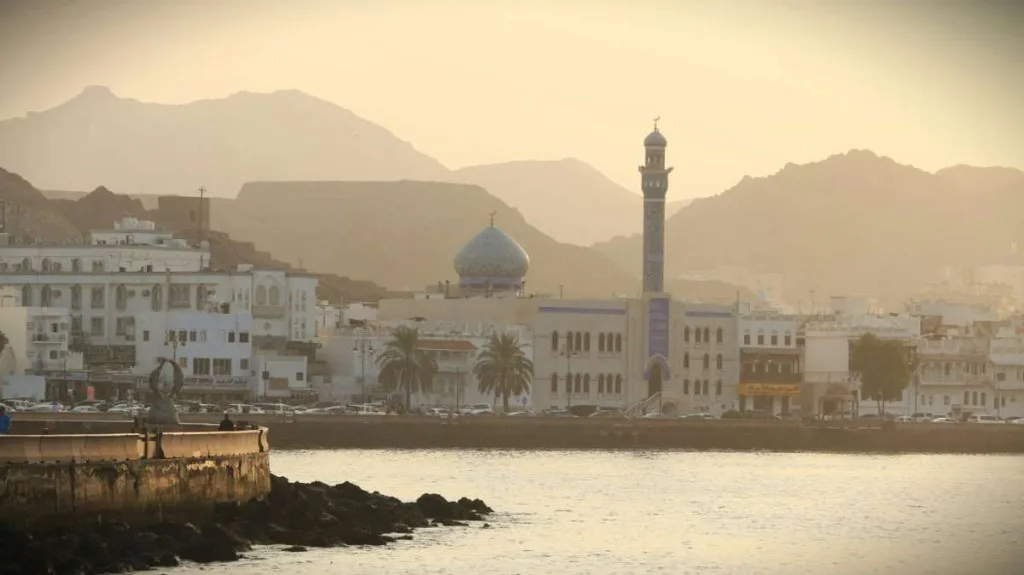
After three years here and more repeat conversations with returning visitors than I can count, the pattern is clear. The people who love Oman most are not the ones who ticked every sight on a list. They are the ones who slowed down enough to notice things: the smell of frankincense drifting from a doorway in the old souq, the sound of water moving through a falaj channel that has been running for eight hundred years, the specific colour of the Hajar Mountains at four in the afternoon when the light goes sideways and everything turns amber.
If I were advising a friend right now — and that is exactly what this is — I would say: book ten days minimum, go between November and February, do not skip the interior for the sake of beach time, and seriously consider a private guide for at least the first few days. The country rewards preparation and punishes the assumption that you can improvise your way through it efficiently.
For anyone who wants help building a proper itinerary rather than piecing it together from forum posts, the team at OmanTour are the people I point visitors to. You can reach them on WhatsApp at +968 9468 1176 — they are responsive, they know the country properly, and they will tell you honestly what fits your time rather than selling you something that doesn't.
Oman is one of those places that changes slightly how you see travel. Not dramatically, not overnight, but in the way a good meal changes how you think about ordinary food. Give it the time it deserves. You won't come back the same traveller who left.

That is the practical version of visiting Oman from Europe in 2026: arrive in winter if you can, leave room for empty roads, and book the hard logistics before you romanticise the dunes.
Get instant confirmation — WhatsApp reply in 15 minutes