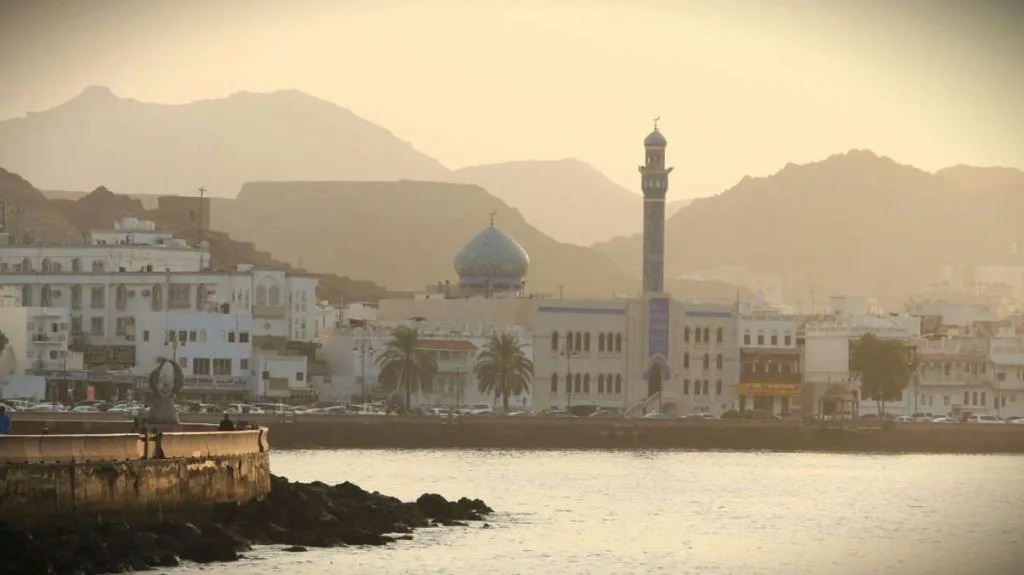
Between June and September, Salalah transforms into a lush monsoon landscape unlike anywhere else in the Arabian Peninsula. But getting there from Muscat isn't one-size-fits-all. A private sedan transfer costs OMR 120 (USD 310) one-way, while hiring a self-drive car averages OMR 40 daily in fuel alone—yet the actual salalah khareef season what to expect experience hinges on which route method you choose. This guide cuts through the noise with direct cost comparisons, weather realities, and transportation trade-offs to help European and GCC visitors plan the journey that fits their budget and comfort level.
Why Transport Choice Matters During Salalah Khareef Season
The 900-kilometre drive from Muscat to Salalah is not a casual weekend jaunt. During khareef season (June to September), visibility can drop suddenly, road surfaces become slick from overnight rain, and mobile signal in remote sections is patchy. The salalah khareef season what to expect in terms of road conditions means that your transport mode—whether private transfer, self-drive, or shared taxi—determines not just your cost but your safety margin and flexibility.
European visitors arriving via Muscat International Airport (or transiting through Dubai) often underestimate the physical demand of the journey. A full day of self-driving, navigating unfamiliar roundabouts in Muscat, then 12 hours of coastal and mountain road, leaves many travelers exhausted. Conversely, booking a private transfer means handing over the wheel to a local driver who knows the route's moods—but at a premium.
This article strips away marketing speak and presents the real comparison: what you pay, what you get, and what salalah khareef season what to expect actually looks like under each transport scenario.
Private Transfer: Muscat to Salalah Cost & Comfort Breakdown
A private sedan transfer from Muscat to Salalah on a dedicated route typically runs OMR 120 (USD 310 / AED 1140) for one-way travel, with rates for larger vehicles scaling upward: SUV at OMR 150 (USD 390 / AED 1430), minivan at OMR 165 (USD 430 / AED 1570), or luxury Mercedes at OMR 180 (USD 470 / AED 1720). These prices assume a single one-way trip.
Cost breakdown for a family of four (mid-range):
- Sedan transfer (4 passengers): OMR 120 ÷ 4 = OMR 30 per person
- Minivan transfer (4 passengers): OMR 165 ÷ 4 = OMR 41.25 per person
- Luxury Mercedes (4 passengers): OMR 180 ÷ 4 = OMR 45 per person
The appeal is straightforward: a trained driver navigates Muscat's traffic, manages the coastal descent into Salalah, and handles any weather surprises. During khareef season, when unexpected fog or heavy rain can obscure the road, this peace of mind carries real value.
Pros of private transfer:
- No navigation stress in unfamiliar terrain
- Driver familiar with seasonal road hazards
- Luggage handling included
- Can depart and arrive at specific hotels without detours
- Ideal if you've landed tired from a long-haul flight
Cons of private transfer:
- Fixed schedule—departure delays cost you money if rebooking
- No flexibility for unplanned stops (though premium services can negotiate)
- Higher per-person cost if traveling solo
- Language barrier possible if driver speaks minimal English
Self-Drive: Fuel, Rental, and Freedom Trade-Offs
Self-driving from Muscat to Salalah appeals to independent travelers and those wanting to explore at their own pace. Road conditions during salalah khareef season what to expect include fresh vegetation, occasional landslides on exposed mountain sections, and surface water pooling on certain descents—all manageable for alert drivers, but not for the casual.
Actual cost of self-drive (Muscat–Salalah return):
- Rental car (3–4 days economy): Contact us for a quote
- Fuel (round trip ~1,800 km, ~7 L/100 km): OMR 40 daily × 2 days = OMR 80
- Tolls (minimal on main highway): OMR 5–10
- Accommodation en route (optional Muscat night before departure): OMR 35 (budget mid-range meal)
- Total (fuel & tolls only): ~OMR 85–95 before car rental
The car rental cost itself is not in the fixed price list provided by Oman Tour, so contact us for a quote directly. However, the fuel expense alone (OMR 40 daily road trip) makes self-drive competitive if you're renting a car anyway for exploring Salalah's khareef sites (wadis, plateaus, coastal caves).
Pros of self-drive:
- Complete autonomy—stop for photos, hikes, or meals on your schedule
- Potential cost savings if sharing vehicle with 2+ travelers
- Ability to explore remote khareef sites unreachable by scheduled taxi
- No dependency on driver schedules or language barriers
Cons of self-drive:
- International driving permit required (UK/EU licenses valid, but IDP recommended)
- Khareef season rain reduces visibility and grip on mountain bends
- Fuel consumption on long haul adds up across 4–5 day trip
- Unfamiliar roundabouts in Muscat cause delays and frustration on day one
- No insurance or breakdown support if accident occurs (rental excess typically OMR 100–200)
- Physical fatigue over 12-hour drive affects enjoyment of arrival
Shared Taxi (Collective) vs. Private Transfer: A Direct Price Comparison
Shared taxis operate from Ruwi bus station in Muscat and run regularly to Salalah. Cost per seat is typically OMR 20–25 (USD 50–65), making it the cheapest option. However, they depart only when full (often a 2–3 hour wait), make multiple stops, and lose the salalah khareef season what to expect flexibility you'd get with a private arrangement.
Direct cost comparison for a family of four:
| Transport Method | Cost per Person (One-Way) | Total for 4 Passengers | Travel Time | Flexibility |
|---|---|---|---|---|
| Private Sedan Transfer | OMR 30 | OMR 120 | 10–11 hours direct | High (custom stops) |
| Private Minivan | OMR 41.25 | OMR 165 | 10–11 hours direct | High (custom stops) |
| Shared Taxi (Collective) | our current OMR rate (WhatsApp for quote) | OMR 88 | 12–14 hours (waiting + stops) | Low (fixed route) |
| Self-Drive (Fuel Cost Only) | OMR 20 | OMR 80 | 12 hours driving | Highest (but risky in khareef) |
The shared taxi wins on price but loses on speed and comfort. A private transfer costs 36% more than the collective option but saves 2–3 hours and eliminates the wait at the station. For European travelers arriving tired or traveling with children, the private transfer's predictability is worth the extra our current OMR rate (WhatsApp for quote)–77 (USD 80–200).
What to Expect During Khareef Season: Weather, Road Conditions, and Timing
Understanding salalah khareef season what to expect on the road means preparing for conditions that differ dramatically from the rest of Oman. Between June and September, the southwest monsoon brings moisture-laden winds that drench the Dhofar region while Muscat remains scorching and dry.
Road hazards during khareef season:
- Visibility: Fog and mist settle on mountain passes (Jebel Samhan, Wadi Darbat approaches) from dawn until 10 a.m., reducing sight distance to 50–100 metres. Headlights are essential; high-beam reflections in mist can cause disorientation.
- Surface water: Overnight rain pools on low-lying sections of the coastal road between Thumrait and Salalah. Driving through water deeper than 30 cm risks engine flooding; avoid after heavy rain unless using a high-clearance SUV.
- Landslides: The descent from the Dhofar plateau has experienced small rockfalls and debris scatter in previous khareef seasons. Avoid late afternoon travel if rain is forecast; morning departures clear slopes before evening storms.
- Temperature and grip: Cooler air (22–26°C vs. 45°C in summer) improves tire grip, but wet tarmac after rain is slippery. Braking distances increase; reduce speed on coastal bends.
- Closure risk (rare): Extreme khareef events occasionally close short road sections for 2–4 hours. Check local news (Oman Times, Muscat Daily) the morning of departure.
Private transfer drivers know these hazards intimately. They adjust departure times to avoid peak fog (recommending 6–7 a.m. starts), take proven-safe routes, and carry communication equipment. Self-drivers and shared taxi passengers must navigate the same risks with less local knowledge—a factor that tips the cost-benefit analysis in private transfer's favour for first-time visitors.
Best time to depart from Muscat: 6:00–7:00 a.m., arriving Salalah 4:00–5:00 p.m. Afternoon departures (after 11 a.m.) risk night driving on mountain sections, where fatigue and reduced visibility compound danger.
Hybrid Option: Private Driver with Flexible Stops—Cost & Reality
A middle-ground choice exists: hire a private driver without pre-booking a fixed transfer. Oman Tour offers full-day private driver hire at OMR 75 (USD 195) for a sedan or OMR 90 (USD 234) for an SUV. If you rent a car and hire a professional driver separately, you combine the flexibility of self-drive with the safety and expertise of local navigation—though total cost climbs.
Cost of hybrid model (Muscat–Salalah, single day):
- Private driver, sedan, full day: OMR 75
- Fuel (estimated OMR 40): OMR 40
- Meals (driver + passenger, mid-range OMR 35): OMR 35
- Total per person (single traveler): OMR 150 (USD 390)
This setup is actually pricier than a direct private transfer but offers unparalleled autonomy—you stop when you want, explore wadi entrances, photograph fog-wrapped cliffs, and the driver waits without incurring hourly charges. For photography-focused khareef trips, this is superior. For straightforward hotel-to-hotel transport, the fixed private transfer at OMR 120 is better value.
Salalah Khareef Season What to Expect: Final Transport Decision Checklist
After weighing all options, here's a practical checklist for deciding which transport suits your khareef journey:
Choose private sedan transfer (OMR 120) if:
- You're traveling in a group of 4+ (cost per person drops to OMR 30)
- You arrive tired from an international flight
- You want guaranteed safety in khareef weather
- Your hotel/accommodation is pre-booked and fixed
- You have limited time and want zero navigation stress
Choose shared taxi if:
- You're solo or in a pair traveling on a tight budget (our current OMR rate (WhatsApp for quote) per seat)
- You don't mind 2–3 hour station waits
- You speak Arabic or travel with someone who does
- You're adventurous and view the collective as part of the Oman experience
Choose self-drive if:
- You're an experienced driver comfortable in unfamiliar conditions
- You hold an International Driving Permit (IDP recommended for UK/EU licenses)
- You want to explore remote khareef wadis unreachable by scheduled transport
- You're traveling for 5+ days and a rental car amortizes over multiple excursions
- You're staying in Salalah 3+ nights and want vehicle access for day trips
Choose hybrid private driver if:
- Budget allows OMR 75–90 for professional driving
- You want stops for photography, wadi exploration, or cultural immersion
- You're comfortable with variable daily costs but prioritize experience quality
Real Example: Three Traveler Profiles and Their Best Route
Profile 1: Emma and Michael, UK couple, first Oman visit, 4 nights Salalah
Recommendation: Private sedan transfer (OMR 120 one-way). They arrive in Muscat mid-afternoon from a UK flight, too tired for driving. Hotel is confirmed. Cost per person (divided two ways) is OMR 60 each. They book return transfer for day 4 morning (OMR 120 return) = OMR 240 total transport. Savings vs. self-drive car rental + fuel: roughly OMR 100–150. Plus: zero risk of night mountain driving in unfamiliar terrain.
Profile 2: François (solo), Paris-based, photography focus, 10 days Oman including 5 in Salalah
Recommendation: Rent a car and hire a private driver (hybrid model, OMR 90 SUV daily). This gives him access to remote khareef photography locations (Wadi Darbat, Marjan Cave, Mughsail Beach) on his schedule. Total transport cost ~OMR 450–500 over 5 days in Salalah (driving + driver), but he captures images impossible from scheduled transport. Worth it for a specialist.
Profile 3: Fatima (solo), Saudi Arabia resident, budget conscious, 3 days Salalah khareef
Recommendation: Shared taxi from Muscat (our current OMR rate (WhatsApp for quote) one-way), return on day 3 afternoon (our current OMR rate (WhatsApp for quote)). Total OMR 44, savings of OMR 76 vs. private transfer. She books a local khareef day trip (OMR 99 for salalah khareef day trip) instead, covering all highlights with an English-speaking guide. Transport + tour = OMR 143 total, optimal value for budget travelers.
Frequently Asked Questions
What's the safest way to travel from Muscat to Salalah during khareef season?
A private transfer with an experienced local driver is safest for most travelers. Drivers trained for khareef conditions know fog timing, road hazards, and safe speeds on mountain passes. If you're an experienced self-driver, departing at 6–7 a.m. to complete the journey before afternoon storms is your best practice. Avoid shared taxis during heavy khareef weather unless absolutely necessary, as they sometimes take riskier shortcuts to maintain schedules.
Is salalah khareef season what to expect in terms of temperature different from driving conditions in summer?
Yes, significantly. Khareef season brings cooler air (22–26°C vs. 45°C in July), reducing engine strain and improving tire grip. However, wet roads from overnight rain are slippery—more dangerous than dry summer tarmac for unfamiliar drivers. Visibility is the real challenge: fog on Dhofar plateau often reduces sight distance to 50–100 metres in early morning. Prepare for slower speeds and longer travel times than you'd expect on a dry summer route.
Can I cancel or reschedule a private transfer if weather looks bad?
Most professional transfer services allow 24–48 hour rescheduling with notice. Cancellations on the day of travel typically forfeit payment or charge a penalty (usually 50% of fare). Weather closures are rare in Oman—complete road blockage occurs fewer than three times per khareef season on the Muscat–Salalah route. Check conditions with your transfer provider the morning of departure; they have real-time information and can advise if delay is wise.
Do I need an International Driving Permit (IDP) to self-drive in Oman?
UK, German, French, and most EU licenses are valid in Oman without an IDP, but carry one as a backup. It costs £5.50 in the UK and ensures no complications if stopped by police. US licenses are also recognized. Always carry your passport, original license, and rental documents. Insurance is mandatory; decline optional excess coverage only if you're confident in your driving on unfamiliar mountain roads during khareef rain.
How much money should I budget for fuel if self-driving Muscat to Salalah round-trip?
Budget OMR 40 daily for road trip fuel consumption. A round-trip (Muscat–Salalah–Muscat, ~1,800 km) typically costs OMR 80–100 in fuel, depending on vehicle size and driving style. Petrol is subsidised in Oman, so costs are lower than Europe. Keep receipts if your rental car requires refueling on return; most agencies charge a penalty if you don't top up the tank.
What's included in the private transfer price of OMR 120 from Muscat to Salalah?
The OMR 120 (USD 310 / AED 1140) sedan transfer covers one-way transport, the driver's expertise, air-conditioned vehicle, and luggage handling. It does NOT include meals, tolls (minimal, ~OMR 5), or stops for sightseeing. Premium services can arrange stops if agreed in advance, but this may incur a time-based surcharge. Confirm inclusions when booking to avoid surprises.
Need help planning your trip? Contact us on WhatsApp for instant assistance.
Book on WhatsApp📱 Book Your Tour Online
Get instant confirmation — WhatsApp reply in 15 minutes