In This Guide
After designing well over 300 seven-day itineraries for visitors arriving from Europe, North America, Australia, and across Asia, I can tell you with complete confidence that one week in Oman is not a compromise — it is the sweet spot. You see the capital, you swim in a wadi canyon, you stand on a mountain at 2,000 metres, and you wake up inside a desert the size of Switzerland. That is four completely different worlds in seven days, and none of them feel rushed if you plan the route correctly.
What follows is the exact itinerary I use with my own clients at OmanTour — with real drive times, honest costs, the timing mistakes that quietly ruin trips, and the one or two things every day that most generic guides simply leave out. Read this before you book anything.

A perfect 7-day Oman itinerary covers Muscat, the coast at Wadi Shab, the historic interior at Nizwa, the Green Mountain at Jebel Akhdar, and Wahiba Sands desert — five distinct landscapes connected by one logical clockwise loop. Seven days is the ideal length because it gives you enough nights outside Muscat to actually experience Oman's interior without the brutal compression of a five-day trip or the aimless padding of a ten-day one. This is the itinerary I recommend to almost every international visitor who arrives with one week to spare.
Oman is a large country — roughly 310,000 square kilometres — but the highlights that matter most to first-time visitors cluster within a manageable arc south and west of Muscat. That arc covers roughly 600 kilometres of road, and all of it is excellent tarmac with the exception of the last stretch up to Jebel Akhdar, which requires a 4WD. In seven days, you can drive that arc without ever feeling like the trip is a highway marathon.
Muscat deserves two nights minimum, not because it takes two full days to see everything, but because arriving at night and exploring the following morning gives your body time to adjust and gives you the flexibility to catch the Grand Mosque before it closes at 11 AM. From Muscat, Highway 17 south takes you to Wadi Shab and the Bimmah Sinkhole in under two hours. From there, the road to Nizwa cuts inland through limestone valleys that most visitors simply cannot believe are real. Nizwa to Jebel Akhdar is 45 kilometres but takes a full hour because of the 4WD climb. And Wahiba Sands sits roughly 150 kilometres from Nizwa across the Sharqiyah plains.
What makes seven days work logistically is that the route flows in one direction. You leave Muscat heading southeast on Day 3, swing west to Nizwa on Day 4, climb to Jebel Akhdar on Day 5, drop back down and head east to the desert on Day 6, and return to Muscat on Day 7 with a three-hour straight drive. No backtracking. No wasted mornings retracing roads you already drove. That efficiency is what makes the week feel generous rather than exhausting.
One of the best things about committing to a seven-day itinerary is that it forces you to skip Salalah. I know that sounds counterintuitive — Salalah is genuinely beautiful, especially during the khareef monsoon season — but Salalah is 1,000 kilometres from Muscat. Flying down and back eats at least two days of your week, and you see Salalah only briefly. Every client who has tried to squeeze Salalah into seven days has regretted it. The clients who save Salalah for a separate trip come back for exactly that trip.
Seven days also lets you skip the overcrowded parts of Muscat that honestly are not worth your time. Al Seeb, the modern shopping malls, the generic beach resorts north of the city — none of that belongs in a first-time visitor's week. A well-designed seven-day itinerary concentrates your Muscat time on Mutrah Corniche, the Grand Mosque, and Al Alam Palace. That is one full day. Not three.
Skipping the Musandam Peninsula is also entirely justified at seven days. Musandam is spectacular — it is often called the Norway of Arabia for good reason — but it requires a separate visa process for most nationalities, a drive or flight that takes half a day each way, and at least one full overnight. It belongs on a ten-day or twelve-day itinerary, not a seven-day one. The good news is that seven days in Oman's core gives you such a complete picture of what the country is that you will leave already planning the return trip for Musandam and Salalah.
Most international flights into Muscat International Airport arrive in the evening or late at night — that is by design from the airline scheduling, and it actually works perfectly for this itinerary. Clear immigration, collect your bags, and head straight to your hotel in the Mutrah or Old Muscat area. Do not book a hotel in Al Seeb near the airport just because it seems convenient. The 30-minute drive to Mutrah is worth it, and you will thank yourself on Day 2 morning when you are already in position for the Grand Mosque.
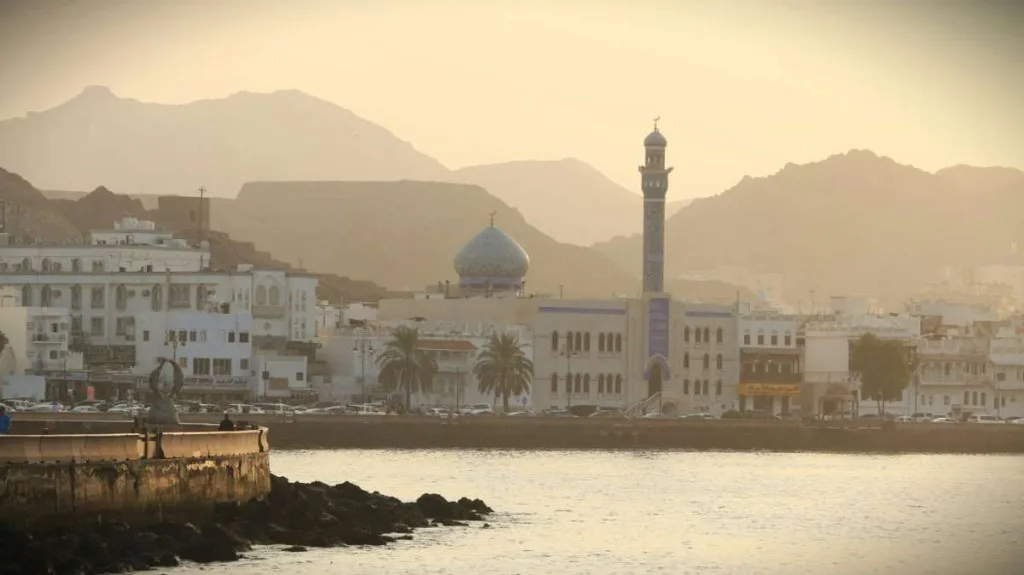
If you land before 9 PM and you have any energy at all, walk to Mutrah Corniche for an hour. The waterfront at night is one of the most quietly beautiful things Oman offers — the old fort lit up above the harbour, the dhow boats rocking at anchor, the smell of frankincense drifting from the souq. You are not trying to tick attractions tonight. You are arriving. The Corniche at night is Muscat at its most honest and unhurried, and that atmosphere sets the right tone for everything that follows.
Dinner on Day 1 belongs at one of the small Mutrah restaurants along the corniche road. Try Kargeen Caffe if it is still open when you arrive, or walk into the lanes behind the souq and find a Omani home-cooking restaurant serving harees or shuwa. Prices are extremely reasonable — a full meal for two will run OMR 8 to OMR 12. Sleep early. Day 2 starts at 8 AM.
Local tip: Mutrah Souq is better after 8 PM than at any other time of day. The crowds thin, the lighting inside the old covered lanes goes golden, and the shopkeepers are in conversation mode rather than sales mode. Even if you do not buy anything, walk through it on your first night.

Arrive at Sultan Qaboos Grand Mosque at 8:30 AM. This is non-negotiable timing. The mosque opens to non-Muslim visitors at 8 AM Saturday through Thursday and closes at 11 AM sharp. The main prayer hall contains the second-largest hand-knotted carpet in the world — a single piece measuring 70 metres by 60 metres, woven by 600 women over four years. Give yourself 90 minutes minimum here. Dress code is strict: women need a full abaya and head covering, which can be rented at the entrance for OMR 1. Men need long trousers and covered shoulders. Morning light through the courtyard between 8:30 and 9:30 AM is exceptional for photographs.
From the mosque, drive 15 minutes to Al Alam Palace and the old Muscat fortifications. You cannot enter the palace itself — it is the Sultan's ceremonial residence — but the exterior courtyard and the twin forts of Mirani and Jalali flanking the harbour make for a striking 45-minute stop. This area is the historic core of the city, and understanding it changes how Muscat feels for the rest of your visit. For lunch, the Royal Opera House area has several good options including Bait Al Luban on Muttrah street for traditional Omani food at around OMR 6 to OMR 9 per person.
The afternoon belongs to Mutrah Souq properly — you saw it by night, now walk it in daylight to actually shop. Silver khanjar daggers, Omani frankincense in all its varieties, hand-embroidered textiles, and rose water are the genuine local products worth buying. Avoid the tourist-grade camel toys. If you have cultural energy left, the Bait Al Zubair Museum near Mutrah is one of the finest private heritage collections in the Gulf and takes 60 to 90 minutes. Evening is free — and this is your last evening in Muscat, so the sunset from the Mutrah Corniche promenade is worth sitting down for.
Local tip: For frankincense, skip the souq shops near the entrance where prices are inflated for tourists and walk deep into the covered section to the permanent incense merchants. Ask for hojari frankincense — the clear, pale variety from Dhofar — not the darker varieties. It smells completely different and it is what Omanis actually burn at home.
Depart Muscat at 7 AM. This timing is important — you want to reach Wadi Shab by 8:45 AM, before the day heats up and before tour groups arrive from Muscat around 10 AM. Highway 17 south is one of the most scenic drives in Oman, hugging the coast through the Al Hajar foothills with the Gulf of Oman visible to your left for much of the journey. Your first stop, approximately 120 kilometres from Muscat and reached in about 90 minutes, is the Bimmah Sinkhole — a collapsed limestone cavern that has filled with teal-blue water. It costs OMR 0.5 to enter, takes 20 minutes, and is genuinely remarkable. Swim if you want. Carry on by 9:15 AM.
Wadi Shab is 30 kilometres further south. Park at the roadside car park, pay the boatman OMR 0.5 to cross the narrow channel at the wadi mouth, and start walking. The canyon trail takes about 45 minutes to reach the first deep pools, where the water is cold, turquoise, and clean enough to drink. Continue past the pools for another 20 minutes to reach the waterfall cave — a hidden chamber inside the cliff face where you swim through a narrow gap to find a waterfall pouring into a dimly lit grotto. It is one of the most extraordinary natural spaces I have ever shown a visitor, and the reaction is always the same: complete silence followed by disbelief. For the full Wadi Shab day trip from Muscat experience, plan 4 to 5 hours total in the wadi.
For the overnight decision: if your priority is seeing Sur and the coast, stay overnight in Sur (60 kilometres further south from Wadi Shab, around OMR 25 to OMR 45 per night for a decent hotel). If your priority is getting to Nizwa with maximum time the next day, return to Muscat by early evening and depart for Nizwa first thing on Day 4. Most of my clients on a standard seven-day schedule return to Muscat or stop midway at a coastal guesthouse near Tiwi, then head directly west to Nizwa on Day 4 morning.
Local tip: Bring water shoes. The wadi floor inside the canyon is a combination of slippery rock, pebbles, and submerged boulders. Flip flops will come off in the water and good trainers will be destroyed. Water shoes cost OMR 3 to OMR 5 at most petrol station shops on Highway 17.

Nizwa sits 165 kilometres southwest of Muscat — 90 minutes on Highway 15 through the Al Hajar mountain range. If you are visiting on a Friday morning, the drive needs to start by 5:30 AM to reach Nizwa in time for the famous livestock market, which runs from approximately 7 AM to 11 AM and is one of the most atmospheric traditional markets in the entire Arabian Peninsula. Goats, cattle, and camels change hands in a rapid-fire auction system that has not changed in generations. Even if livestock is not your interest, the energy of it is extraordinary. For non-Friday visits, a 7:30 AM departure from Muscat puts you in Nizwa by 9 AM with the whole day ahead.
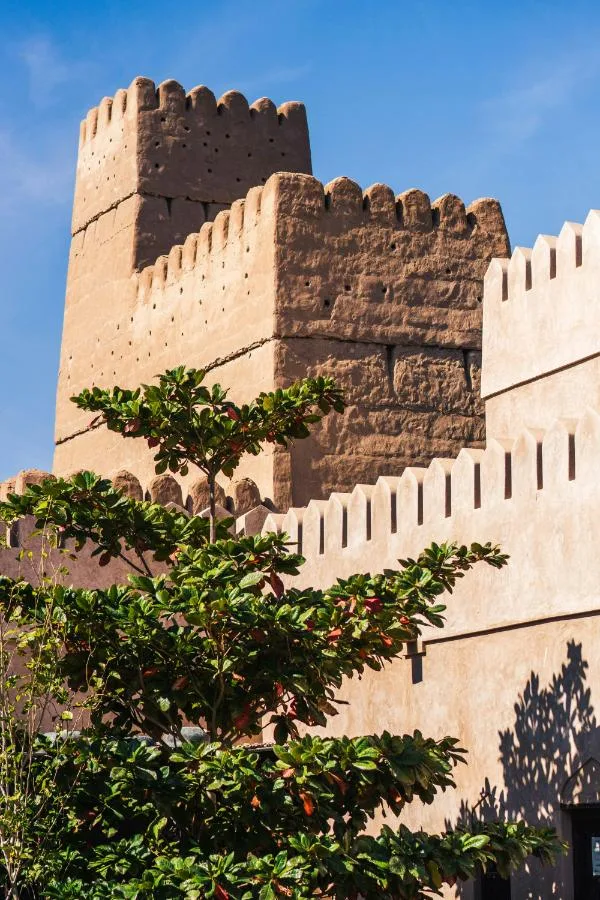
On your way into Nizwa, stop at Birkat Al Mouz — a 400-year-old falaj irrigation system that still waters an enormous date palm plantation visible from the road. Walk into the plantation for 20 minutes. The silence, the dappled light through the palm canopy, and the sound of water running through ancient stone channels is one of those Oman moments that no photograph does justice. From Birkat Al Mouz it is 12 kilometres to Nizwa Fort, which opens at 8 AM and costs OMR 5 per person. Climb to the top of the round tower for the best view of the date palm valley stretching south toward the Hajar range. Budget 90 minutes for the fort and the adjacent souq, which sells the finest silverwork in Oman and where you should absolutely buy a bag of Nizwa's famous halwa. For more detail on structuring this visit, see the full Nizwa day tour from Muscat guide.
For the afternoon, you have a genuine choice: Bahla Fort is 45 kilometres west of Nizwa and is a UNESCO World Heritage Site currently undergoing extensive restoration — access inside is limited but the exterior mud-brick walls are impressive. Jabreen Castle, 10 kilometres further, is the better option for interior detail — its painted ceilings are extraordinary and restoration is complete. Either fits in a two-hour afternoon stop. Overnight in Nizwa at one of the guesthouses near the fort. Budget options start at OMR 20 per night; the Anantara Al Jabal Al Akhdar Resort is 45 minutes away on the mountain if you want to base yourself higher.
Local tip: The Nizwa date souq, separate from the craft souq, operates early morning only and sells over 200 varieties of Omani dates. The best buying time is between 7 and 9 AM. Khlas and fardh dates from this area are considered the finest in the country and cost a fraction of what airport shops charge.
Jebel Akhdar — the Green Mountain — rises to 2,980 metres above sea level and sits 45 kilometres north of Nizwa. At the checkpoint on the approach road, a police officer will check that your vehicle is a 4WD before allowing you through. This rule is enforced without exception, and there are no car rentals on the mountain. If you are self-driving, your rental must be a 4WD from Muscat. If you are on a private tour, your guide handles this. The drive from the checkpoint to the Saiq Plateau takes approximately 45 minutes on a steep, dramatic mountain road. The temperature at the top is typically 8 to 12 degrees Celsius cooler than Nizwa below — pack a fleece or light jacket regardless of what season you are travelling in.
At the Saiq Plateau, your first stop should be Diana's Point — named after Princess Diana's 1986 visit and offering a vertiginous view down a sheer 1,000-metre cliff into the wadi below. The Three Village Hike connects the ancient terraced villages of Ash Shirayjah, Al Ayn, and Al Aqr along a centuries-old path that traverses rose gardens, apricot orchards, pomegranate trees, and the falaj water channels that have kept these cliff-edge communities alive for a thousand years. The hike is 2.5 kilometres one way, takes 90 minutes at a gentle pace, and is genuinely one of the finest short walks in the Arabian Peninsula. Rose season in Jebel Akhdar is April, when the Damask rose harvest produces rose water and rose jam sold by village women at small roadside stalls.
An overnight at the mountain lodge is the right call here. The Anantara Al Jabal Al Akhdar Resort is the most famous option — rooms start at approximately USD 350 per night — but there are perfectly comfortable guesthouses on the plateau for USD 70 to USD 120 per night. Staying overnight means you catch the sunset from Diana's Point, which is extraordinary, and the morning light on the terraced villages before the day tour groups arrive from Nizwa. Waking up above the clouds at 2,000 metres with the smell of rose gardens below is the single experience most of my clients mention first when they describe their Oman trip.
Local tip: The Alila Jabal Akhdar resort's cliff-edge infinity pool is open to non-guests for a day pass fee of approximately USD 50, which includes food and beverage credit. The view from that pool is categorically one of the most dramatic in Oman. Worth it for at least one hour on Day 5 afternoon.
Depart Jebel Akhdar by 8 AM, drive back through Nizwa, and head east on Route 23 toward the Sharqiyah region. The total drive from Jebel Akhdar to the northern edge of Wahiba Sands is approximately three hours including a fuel and coffee stop in Nizwa. You want to arrive at the desert by 1 to 2 PM — not because afternoon is the best light (it is not) but because arriving with three hours before sunset gives you time to check into your camp, take a 4WD dune drive, and be positioned on a high dune ridge in time for the 5:30 to 6 PM sunset. Wahiba Sands is also called the Sharqiyah Sands, and the dune field is roughly 180 kilometres long by 80 kilometres wide. The northern edge near the village of Al Wasil is where most camps concentrate.
Camp selection is the most important decision of Day 6. At the budget end, USD 40 to USD 60 per person, you get a fixed camp with traditional barasti palm-frond huts, shared bathrooms, a bonfire, and basic dinner. These are perfectly comfortable and the desert experience is identical regardless of your camp category. Mid-range camps at USD 80 to USD 120 per person offer private en-suite tents with air conditioning or desert coolers, better food, and smaller groups. Luxury tented camps at USD 200 to USD 400 per night include private plunge pools in some cases — the 1000 Nights Camp is the most established in this category. The honest truth is that Wahiba Sands is beautiful at any price point because the sky is the same sky for everyone.
After dinner, walk 10 minutes from your camp and lie on your back on the cold sand. The Milky Way over Wahiba Sands on a clear night is one of the darkest skies accessible from any capital city in the Middle East. Muscat's light pollution reaches roughly 150 kilometres, and Wahiba sits just beyond that edge. Set an alarm for 5:15 AM for the sunrise experience of Day 7.
Local tip: Every camp will offer a camel ride. Do it in the late afternoon, not the morning — the camel handlers take you to a better dune position in the afternoon light, and the shadows at low sun angle make the dune textures far more photogenic.

Wake at 5:15 AM. Walk or have a camp vehicle take you to a dune ridge — most camps know the best position for sunrise viewing. The first 20 minutes of desert light in Oman are unlike anything you will have experienced unless you have been to the Sahara or Rub al-Khali. The colour moves through amber, orange, rose, and gold in about 15 minutes, and the shadows thrown by the dune crests are so deep and sharp they look digitally processed. They are not. This is the last real experience of the trip, and it earns its place as a finale.
After breakfast at camp, pack and depart by 8 AM for the three-hour drive back to Muscat on Route 23 via Nizwa. If your departure flight is in the evening — as most international flights from Muscat are — you have a comfortable buffer. An optional stop worth considering: the Amouage factory and visitor centre is located on the industrial outskirts of Muscat and offers a guided tour of Oman's most famous luxury fragrance house. It costs nothing to visit, and the shop sells full collections including the original Gold perfume at Omani retail prices significantly below what duty-free charges internationally. The tour takes 45 minutes and the factory visit adds real depth to understanding the frankincense-to-luxury-fragrance supply chain that runs through Oman.
Arrive back in Muscat by midday. This gives you time for a final lunch at a corniche restaurant — Automatic Restaurant on the Mutrah waterfront is reliable, affordable, and open all day. If your flight departs after 9 PM, a final evening walk along the Mutrah Corniche closes the loop on the trip exactly as it opened it: harbour light, frankincense smoke, the sound of the Gulf. Muscat Airport is 40 minutes from Mutrah. Allow 90 minutes before departure for check-in and security.
Local tip: The Amouage factory tour books up on weekdays — call or email 48 hours in advance if you want a guided walk-through rather than a self-guided shop visit. The guide explains the distillation process from raw frankincense resin to finished fragrance, which is genuinely fascinating even if perfume is not your usual interest.
| Route | Distance | Drive Time |
|---|---|---|
| Muscat → Wadi Shab | 150 km | 1h 45m |
| Muscat → Nizwa | 165 km | 1h 30m |
| Nizwa → Jebel Akhdar | 45 km | 1h (4WD section) |
| Nizwa → Wahiba Sands | 150 km | 2h 30m |
| Wahiba Sands → Muscat | 220 km | 3h |
The reason this itinerary works so well geographically is that it follows a single clockwise loop from Muscat without ever requiring you to retrace a road. Day 3 takes you southeast down the coast. Day 4 swings you west inland to Nizwa. Day 5 lifts you north onto the mountain. Day 6 carries you east to the desert. Day 7 brings you straight back west to the capital. Draw it on a map and it looks like a rounded triangle with the mountain and desert at opposite corners and Muscat at the apex.
The only section that feels slightly against the grain is the Jebel Akhdar to Wahiba Sands leg — you descend from the mountain, pass through Nizwa, and head east rather than continuing south or north. But that crossover at Nizwa is only 30 minutes out of your way, and it provides a fuel stop, a coffee stop, and the opportunity to pick up any last-minute supplies for the desert overnight. It is not a problem. It is a natural midpoint.
What this route avoids entirely is the two-cities mistake — spending two nights in Muscat, driving all the way to Nizwa, driving all the way back to Muscat, then driving all the way to Nizwa again to reach Jebel Akhdar. I see that error in roughly one in four self-planned itineraries. The clockwise loop eliminates all backtracking and makes the 600 cumulative kilometres feel effortless rather than exhausting.
At the budget level, self-driving is essential. A 4WD rental in Oman for seven days costs approximately USD 350 to USD 450 total including basic insurance — shop Toyota Fortuner or Mitsubishi Pajero class vehicles. Petrol is inexpensive in Oman at roughly OMR 0.17 per litre for 95 octane, so fuel for the full loop costs under OMR 25 total. Accommodation in budget guesthouses in Muscat, Nizwa, and on Jebel Akhdar runs OMR 15 to OMR 25 per night. The Wahiba desert camp at budget level adds approximately USD 45 per person for a full-board overnight.
Entrance fees across the entire itinerary are modest: Grand Mosque is free, Nizwa Fort is OMR 5, Bimmah Sinkhole is OMR 0.5, Wadi Shab boat crossing is OMR 0.5, Jabreen Castle is OMR 3. Total entry fees for the seven-day route come to under OMR 15 per person. Food at local Omani restaurants averages OMR 3 to OMR 6 per meal. A realistic all-in daily budget including accommodation, transport, food, and activities is USD 65 to USD 90 per day for a solo traveller, somewhat less per person for two people sharing costs.
The budget version delivers the complete Oman experience — the same wadis, the same mountain, the same desert. What you sacrifice is private comfort during the driving and the higher-end camp experience in Wahiba. For many travellers, that trade-off is completely acceptable. The landscapes do not change based on your hotel category.
Mid-range opens up the option of a private driver-guide for the full seven days, which significantly improves the quality of the experience particularly on Jebel Akhdar and in Wahiba Sands where local knowledge matters enormously. A private driver with 4WD vehicle for seven days costs approximately USD 700 to USD 900 total from operators like OmanTour, which when shared between two people works out to USD 50 to USD 65 per person per day for transport and guidance. Accommodation in mid-range hotels — Radisson Blu in Muscat, Al Diyar Hotel in Nizwa, a good guesthouse on Jebel Akhdar — runs USD 80 to USD 130 per night.
The Wahiba desert camp at this level means a private en-suite tent, proper beds, better food, and smaller groups. Budget USD 100 to USD 130 per person for a full-board desert night at a mid-range camp. Total daily expenditure including accommodation, driver, food, and entry fees averages USD 130 to USD 175 per person per day for two people travelling together.
This is the tier I recommend for most international visitors on a first trip to Oman. The combination of private transport and comfortable but not extravagant accommodation hits the sweet spot between value and quality. You are not spending money on things that do not improve the experience — you are investing it in the things that do, specifically local guidance and comfortable overnight rest between active days.
At the luxury level, Oman offers some of the finest boutique hotel experiences in the Middle East. In Muscat, The Chedi Muscat or Shangri-La Barr Al Jissah sets the tone at USD 280 to USD 450 per night. The Anantara Al Jabal Al Akhdar Resort on Jebel Akhdar — perched on the cliff edge at 2,000 metres — runs USD 350 to USD 600 per night and is genuinely worth the premium for the cliff-edge villa rooms. The 1000 Nights Camp in Wahiba Sands offers tented luxury at USD 350 to USD 500 per person full board.
A luxury private tour vehicle with an experienced bilingual guide runs approximately USD 1,200 to USD 1,500 for seven days. Fine dining in Muscat at restaurants like Ubhar or the Chedi's dining room runs USD 60 to USD 90 per person for dinner. Total daily expenditure at the luxury level is USD 350 to USD 600 per person per day, depending primarily on accommodation choices.
What separates the luxury experience in Oman from luxury travel in most countries is that the landscapes themselves are free. You are paying for the physical comfort around the landscapes — the cliff-edge pool, the private camp tent, the driver who speaks your language and anticipates your questions. The wadi, the mountain, the desert: they cost nothing and they belong to everyone equally.
Sur is a coastal city 290 kilometres south of Muscat and the historic centre of Oman's dhow-building tradition. The Al Kamil dhow yard still builds wooden ocean-going vessels by hand using techniques unchanged for centuries, and watching a master shipwright work is one of those experiences that contextualises the maritime history of this region in a way that no museum can. Sur city itself has a beautiful corniche, working fishing harbour, and a small but interesting fort. Drive time from Muscat is approximately three hours on Highway 17 past Wadi Shab.
Ras Al Jinz, 80 kilometres south of Sur, is one of the most important green turtle nesting sites on Earth. Between 600 and 1,000 green turtles come ashore to nest every single night of the year, with peak numbers between July and October. The Ras Al Jinz Scientific Reserve manages strictly controlled nighttime tours led by trained rangers — bookings must be made in advance at approximately OMR 7 per person. Watching a turtle the size of a dining table haul itself up the beach in the darkness, dig her nest, lay eggs, and return to the sea is an experience that will outlast every other memory of the trip for many visitors.
Two nights in the Sur region — one at Sur city and one at the Ras Al Jinz Turtle Reserve guesthouse — makes for a perfect extension that adds the coastal dimension to a trip already rich in mountain and desert. This extension pairs best added between Day 3 and Day 4, inserting two coast days before heading inland to Nizwa rather than bolting on at the end when you are tired and need to be back at Muscat airport.
Musandam is a geographically detached Omani exclave at the tip of the Arabian Peninsula, separated from the rest of Oman by UAE territory. The landscape is extraordinary — sheer limestone cliffs rising 1,500 metres directly from the Strait of Hormuz, with narrow inlets called khors that have been compared to the Norwegian fjords, though they are hotter and considerably more dramatic in their scale. Khasab is the main town and the base for dhow cruise day trips into the fjords.
The visa situation requires attention. If you enter Oman on a standard tourist visa, crossing into Musandam requires exiting Oman, transiting through the UAE, and re-entering Oman — a border crossing that most nationalities can do without a UAE visa under transit rules, but which needs to be researched specifically for your passport. Some nationalities need a UAE visa in advance. Flying from Muscat to Khasab with Oman Air avoids the border issue entirely and takes 45 minutes.
Musandam deserves a minimum of two nights — one night on the water in a traditional dhow if possible, or at a guesthouse in Khasab. The dolphin population in the Musandam fjords is one of the densest in the world, and a half-day dhow cruise almost guarantees encounters with spinner dolphins surfing the bow wave. Add Musandam as Days 9 and 10 on an extended trip, arriving by flight from Muscat on Day 9 morning and returning by flight on Day 10 afternoon.
The single most common error I see in self-planned Oman itineraries is allocating three full days to Muscat. I understand the logic — it is the capital, it is comfortable, the hotels are good, and it feels like the safe choice when you do not know a country. But Muscat's core highlights — the Grand Mosque, Mutrah Corniche, Al Alam Palace, and Mutrah Souq — take one full day to see properly. Maybe one and a half. Not three.
Three days in Muscat means one day in the desert. Or no mountain. Or skipping Wadi Shab entirely. The travellers who come back most disappointed from Oman are almost always the ones who spent too many nights in the capital and not enough nights in the interior. The real Oman — the landscape that makes people come back — is not in Muscat. It is in the wadis and the mountains and the desert beyond the city's edge.
Two nights in Muscat is correct. The first night is arrival and Corniche orientation. The second day is the city tour. By morning of Day 3, you should already be on the road south. Any Muscat-specific curiosity you have left over can be satisfied on the final afternoon of Day 7 when you return from the desert. Muscat will still be there and it rewards a second, shorter look once you have context from the rest of the country.
Salalah is magnificent. The southern coast of Oman during the khareef monsoon season — July through September — is the most atmospherically unique place in Arabia: green, misty, cool, with waterfalls running off the Dhofar mountains into the Arabian Sea below. I take clients there gladly. But I refuse to put Salalah in a seven-day itinerary, and here is exactly why.
Salalah is 1,040 kilometres from Muscat by road — an 11-hour drive. Flying takes 90 minutes plus airport time on both ends, meaning you spend a minimum of four hours in transit per round trip. To see Salalah properly, you need at least two nights there. That consumes three full days of a seven-day trip: fly down Day 3, Day 4 exploring, fly back Day 5. You have just used 43 percent of your trip moving to and from a single location, leaving only Muscat and one more destination.
Every client who has tried to make this work has come back telling me the same thing: they wished they had not rushed Salalah, and they also wished they had seen Jebel Akhdar and Wahiba Sands. The answer is to keep Salalah for a dedicated short break — four to five days in Dhofar works perfectly, ideally timed for the khareef season.
That said, if Salalah is genuinely on your bucket list, the solution is not to squeeze it into a longer Oman trip — it is to plan a dedicated Dhofar itinerary separately. Four to five days in Salalah gives you time for Wadi Darbat, the blowholes at Mughsail, the frankincense city of Sumhuram, and the slow pleasure of driving the coastal road with the mist hanging low over the mountains. That trip deserves its own space, not a borrowed day or two carved out of a journey that was always meant to be somewhere else.
For a seven-day trip built around Muscat, the interior, and the desert, Salalah is a distraction that costs you far more than it gives. Protect your itinerary from the temptation, and Salalah will still be there waiting for you on your next visit to Oman.
The Sultan Qaboos Grand Mosque is one of the genuinely unmissable experiences in Muscat, and yet a surprising number of visitors miss it entirely — or see only the exterior — because they did not check the visiting hours before planning their day. The mosque is open to non-Muslim visitors only in the morning, typically from nine until eleven, Saturday through Thursday. It is closed on Fridays. If your Muscat day happens to fall on a Friday, or if you plan a late morning and arrive at half past eleven expecting to walk in, you will find the gates closed. This is not a minor inconvenience. The Grand Mosque is the kind of place that shapes how you remember Muscat, and losing it to a scheduling error is entirely avoidable.
The Nizwa Friday market creates the opposite problem. Nizwa is on almost every seven-day itinerary, and most people plan to visit the souk without realising that the famous livestock market — the part that makes Nizwa genuinely extraordinary — happens only on Friday mornings. Arrive on a Tuesday afternoon and you will find a pleasant but relatively quiet market. Arrive at seven in the morning on a Friday and you will find the old fort ringed with traders, goats, camels, frankincense, silverware, and a noise and colour that you will not forget. The difference between the two experiences is enormous, and it is determined entirely by which day you schedule your drive to Nizwa.
The fix for both of these timing mistakes is to build your itinerary around the experiences rather than the geography. Decide that Friday morning belongs to Nizwa, that Grand Mosque morning in Muscat happens on a Thursday before eleven, and then arrange your accommodation and driving accordingly. This kind of sequencing is exactly where a well-planned itinerary earns its value. When the days are structured around what is actually open and at its best, the trip flows naturally. When they are not, you spend money on petrol to visit things that are closed, and you drive home wondering what all the fuss was about.
Oman is one of the more accessible self-drive destinations in the Middle East. The roads are well-maintained, signage has improved considerably over the past decade, and driving standards are generally reasonable outside of Muscat's busier junctions. For visitors who are comfortable navigating in unfamiliar countries and who value the freedom to stop whenever something catches their eye, self-driving has genuine appeal. You are not waiting on anyone else's schedule, you can linger at a wadi longer than planned, and you have the quiet pleasure of the road entirely to yourself on long desert stretches.
The complications arrive in the details. A standard rental car is fine for Muscat and the highway to Nizwa, but Jebel Akhdar requires a 4WD — and not all rental companies make this easy to arrange at short notice or at a price that feels reasonable when you discover it on collection day. Wahiba Sands requires either a high-clearance 4WD with someone who knows how to drive on soft sand, or a pre-arranged camp transfer. Wadis that look accessible on Google Maps have become impassable after rain. Without local knowledge, you will spend more time than you expect making decisions about routes, and some of those decisions will cost you hours. Navigation apps work in Oman but they do not know which mountain track washed out last March.
The honest accounting of self-drive costs also surprises many visitors. A 4WD rental for seven days from a reputable company in Muscat runs to between USD 80 and USD 130 per day depending on the vehicle and the season, before fuel and the mandatory local insurance. Accommodation you book independently at short notice — especially in the Jebel Akhdar area, where good options are limited — tends to be priced higher than what a tour operator can access through established relationships. Add the mental overhead of planning every logistical detail yourself across a country you have never visited, and the freedom of self-drive starts to feel more like a part-time job. It suits experienced independent travellers who have done their research thoroughly. For most people visiting Oman for the first time in seven days, it is not the most efficient use of limited time.
A private driver-guide for a seven-day Oman itinerary typically costs between USD 110 and USD 140 per day, inclusive of the vehicle, driver, fuel, and all road tolls. For a couple travelling together, that works out to roughly USD 55 to USD 70 per person per day — which compares favourably to a rental 4WD once you factor in fuel, insurance, and the hours you save not managing logistics. For a family of three or four, the per-person cost drops further and the value case becomes very strong. You are travelling in a comfortable, air-conditioned vehicle with someone who knows exactly which viewpoint is worth the detour, which roadside spot makes the best shuwa, and how to reach the top of Jebel Akhdar without getting the vehicle stuck.
The less obvious advantage is what a good driver-guide does for the quality of your experience rather than just the efficiency of your movement. The difference between seeing Wahiba Sands through a car window and being taken to a dune that a local family has been watching sunsets from for three generations is not something you can find on any map. A driver who has been working these routes for years knows the name of the falconer at the Nizwa market, knows which section of Wadi Shab is worth the extra hour of walking, and knows when to leave Jebel Shams to catch the light over the canyon. That accumulated knowledge cannot be replicated by a week of planning at home, and it transforms a competent itinerary into a memorable one.
At omantour.in, all seven-day private tours are operated with experienced English-speaking driver-guides in well-maintained 4WD vehicles. The full seven-day Muscat, Nizwa, Jebel Akhdar, and Wahiba Sands itinerary is available as a complete package with accommodation included, or as a driver-only arrangement for travellers who prefer to book their own hotels. Enquiries are handled directly and personally — not through a call centre — and the itinerary can be adjusted based on your travel dates, interests, and pace. If you are comparing options, the honest answer is that private driver wins on value, local knowledge, and peace of mind for almost every first-time visitor to Oman. Self-drive has its place for the experienced and the adventurous; private transport has its place for anyone who wants to actually enjoy the journey rather than manage it.

Seven days is enough to see Oman's highlights well, provided the itinerary is focused and realistic. Muscat, Nizwa, Jebel Akhdar, and Wahiba Sands can all be done comfortably without rushing. The mistake is trying to add Salalah or multiple wadis on top of this core route, which turns a meaningful trip into a schedule of transfers.
The itinerary that works best for most first-time visitors runs: two nights in Muscat, one night in or near Nizwa, two nights on Jebel Akhdar, and two nights combining Wahiba Sands with the return to Muscat. This sequence follows a logical geographic loop, avoids backtracking, and gives each location the time it deserves.
Yes, if your itinerary includes Jebel Akhdar or Wahiba Sands — both of which require a 4WD by road regulation and practical necessity. A standard saloon car is adequate for Muscat city driving and the main highway to Nizwa, but it will not be permitted on the mountain road to Jebel Akhdar and should not be taken onto desert sand. Most private tour operators include a 4WD as standard.
October through March is the most comfortable window for a seven-day interior and desert itinerary, with temperatures in the mountains and desert reaching pleasant daytime highs and genuinely cool evenings. April and September are transitional and manageable with early starts. July and August are extremely hot across the interior, though this is peak season in Salalah. For a full seasonal breakdown, see our guide to the best time to visit Oman.
A privately guided seven-day trip with accommodation, a driver-guide, and a 4WD vehicle typically costs between USD 1,400 and USD 2,200 for two people travelling together, depending on accommodation choices and the season. Budget accommodation options keep costs toward the lower end; mid-range lodges on Jebel Akhdar push the figure higher. International flights and personal spending are additional.
Yes, and combining both is one of the most rewarding things you can do on a first visit to Oman. Jebel Akhdar and Wahiba Sands sit on a natural route between Muscat and Nizwa, so including both adds minimal extra driving. Two nights on Jebel Akhdar and one night in a desert camp at Wahiba Sands is the minimum that makes each location worthwhile.
If you have read this far, you already know more about planning a seven-day Oman itinerary than most visitors who arrive hoping for the best. The next step is straightforward: let us put that knowledge to work for you.
At omantour.in, we operate private seven-day tours from Muscat with experienced English-speaking driver-guides, well-maintained 4WD vehicles, and accommodation options across every budget. Our full seven-day Muscat, Nizwa, Jebel Akhdar, and Wahiba Sands package starts from USD 110 per day for the vehicle and driver, with accommodation added based on your preferences. There are no group departures, no fixed schedules you did not agree to, and no call centres — just a direct conversation about what you want from your time in Oman.
The best Oman trips are the ones built around the traveller rather than a template. Tell us your travel dates, how many people are in your group, what you are most looking forward to, and whether there is anything you would rather avoid. We will come back to you with a realistic, day-by-day plan and a clear price before you commit to anything.
We are based in Oman, we know this country in every season, and we want your seven days here to be the kind of trip you describe to everyone who asks where they should go next. Reach out whenever you are ready.
Get instant confirmation — WhatsApp reply in 15 minutes