In This Guide
Is Oman safe for international visitors in 2026? After guiding solo women, retired couples, young families, and first-time Middle East travelers through this country for well over a decade, my honest answer is: yes — with context. Oman is one of the most genuinely low-crime destinations I know anywhere in the world, but "safe" is never a single-variable question. Heat kills more tourists than crime. Roads claim more lives than anything else. And a few legal realities matter deeply for certain travelers. This guide covers all of it, plainly.

Oman is one of the safest countries in the world for international tourists, ranking consistently in the top tier of the Global Peace Index and experiencing extremely low rates of violent crime against visitors. The real safety risks here are environmental — road accidents, flash floods, and extreme summer heat — not street crime or political instability. Come prepared for the landscape and climate, not for the threat of personal harm.

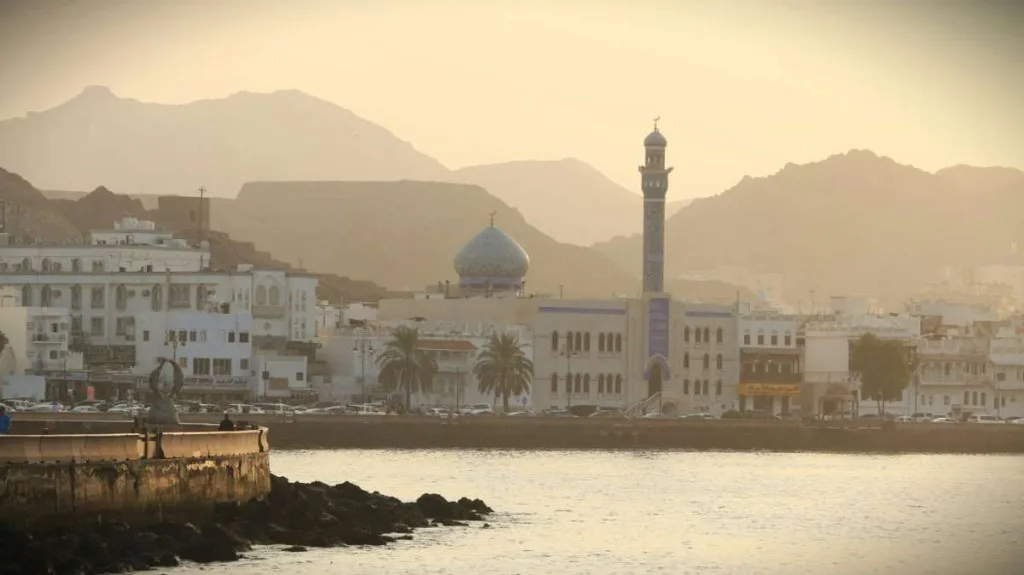
Oman has ranked inside the top 15 countries globally on the Global Peace Index in recent years, placing it well ahead of most Western European nations and virtually every other country in the Middle East. Violent crime against tourists is rare to the point of being almost a non-event in any practical travel planning sense. I have guided hundreds of clients through Muscat's Mutrah Souq after dark, through remote wadis with no mobile signal, and across empty desert highways — serious personal safety incidents simply do not feature in my experience here the way they might in comparable destinations elsewhere.
Petty theft exists, as it does everywhere, but it is genuinely uncommon by global standards. I would be more cautious about pickpockets in Rome or Barcelona than in any Omani market. That said, opportunistic theft from unlocked rental cars at trailheads has increased slightly as tourist numbers have grown, so locking your vehicle and not leaving valuables visible is standard sense rather than paranoia. The crime that does occur tends to be non-confrontational and non-violent.
Within the Middle East, Oman is consistently rated the safest destination for international tourism. It outperforms the UAE, Jordan, and Egypt on most crime and personal safety indices, and it sits in a completely different category from neighboring Yemen or parts of Saudi Arabia's less-developed regions. The country has maintained political stability through considerable regional turbulence, and that stability has a tangible, daily effect on how safe ordinary public spaces feel.
Compared to popular European destinations, Oman compares favorably or comparably on almost every personal safety metric. Cities like Paris, Barcelona, and Amsterdam report significantly higher rates of theft and tourist-targeted crime than Muscat or Nizwa. What Oman has that most European cities do not is a combination of genuine community-level hospitality toward guests and a cultural norm of non-confrontation that most visitors remark on within their first day. The safety gap between "popular Europe" and "unfamiliar Oman" is far smaller than most travelers expect — and on some measures, it runs in Oman's favor.

The honest answer, based on feedback from hundreds of women I have guided or helped plan independent trips: Oman is one of the best solo female travel destinations in the entire Middle East, and competitive with almost anywhere globally. Harassment is uncommon in a way that genuinely surprises many women arriving from other Arab countries or even from Southern Europe. Omani cultural norms around respect for guests — particularly women traveling alone — are not just formal courtesy; they shape everyday interactions at petrol stations, in souqs, and at guesthouses. I regularly hear from solo female travelers that they felt more comfortable walking alone in Muscat at night than they do in parts of London or New York.
That said, I want to be accurate rather than promotional. Staring does happen, particularly in smaller towns and more conservative interior regions. It is almost always curiosity rather than aggression, but it can feel uncomfortable if you are not expecting it. Unwanted conversation from men is occasional rather than constant. Physical harassment is rare, but dismissing it entirely would be dishonest. The experience is dramatically better than neighboring countries and better than many "safe" Western destinations — but it is not zero-friction.
Dress modestly outside of resort and beach environments — loose trousers or a long skirt, shoulders covered, and a scarf you can drape over your hair when entering mosques or more conservative areas. This is not about fear; it is about fitting naturally into local context, which makes your entire experience smoother and interactions warmer. You do not need an abaya. You do not need to cover your face. A respectful general approach is enough, and it pays dividends. I always tell my female clients: the less you stand out as an obvious tourist, the more genuinely hospitable the country feels.
Book your first night in Muscat in advance and have confirmed transport from the airport — do not arrive late at night planning to figure things out. Use licensed taxis or apps like Mwasalat or Careem rather than informal arrangements. In hotels and guesthouses, do not hesitate to ask for your room to be switched if something feels off. Trust local women: Omani women working in hotels, restaurants, and tourism offices are generally very willing to help solo female travelers and often go out of their way to do so. Their instincts about specific areas or situations are worth more than any generic travel advisory.
The Mutrah Souq area in central Muscat is overwhelmingly safe but can involve persistent and occasionally pushy sales approaches from shopkeepers — not dangerous, just mildly wearying after a while. Late-night walking in very isolated areas of any city is common sense to avoid, as it would be anywhere in the world. Certain low-cost guesthouses catering mainly to male migrant workers in port areas of Muscat are not environments I would recommend solo female travelers stay in — not because of risk of assault, but because they are simply not set up for mixed or female-solo travelers.
The Salalah region in Dhofar is generally very safe but is more socially conservative than Muscat, and female travelers there sometimes report more sustained attention from men, particularly during the Khareef monsoon season when domestic tourism peaks. This is manageable with standard awareness, but worth knowing before you arrive. Overall, no region of Oman is genuinely unsafe for solo female travelers — the variation is in comfort level and the frequency of unwanted attention, not in physical risk.

Oman is an excellent family destination and is in many respects ideally suited to traveling with children. Omani culture places enormous social value on children and families, and you will find that having kids with you often opens doors and conversations that traveling alone does not. Families are welcomed warmly at heritage sites, local restaurants, and in smaller towns throughout the country. Crime targeting tourists with children is essentially unheard of. In well over a decade of guiding family groups, I have never dealt with a crime-related incident involving a family.
The infrastructure for families has improved significantly in recent years. Most four and five-star hotels have dedicated children's facilities, kid menus are widely available, and medical care for children in Muscat is genuinely good. The practical safety considerations for families are the same ones that apply to everyone — roads, heat, wadi swimming — but with children, those considerations simply require more active management.
Heat is the number one concern for families, full stop. Children dehydrate and overheat faster than adults, and they are often less vocal about warning symptoms. Between April and October, daytime temperatures in most of Oman regularly exceed 40°C (104°F) in inland areas, and even coastal Muscat sits above 38°C (100°F) for extended periods. Plan all outdoor activities for before 9am or after 4pm, carry significantly more water than you think you will need, and watch children for signs of heat exhaustion — irritability, pale or flushed skin, stopping sweating — as these can progress rapidly in young children.
Wadi swimming is one of the great family highlights in Oman, but the pools at places like Wadi Shab, Wadi Bani Khalid, and Wadi Tiwi involve slippery rocks, uneven depths, and — critically — flash flood risk. Never enter a wadi when there is rain visible on surrounding mountains, even if the sky above you is clear. Children should wear water shoes, not flip-flops, for the approach hikes. Wadi Bani Khalid is generally the most accessible and easiest wadi for younger children. Life jackets are not standard equipment at these sites, so assess your children's swimming ability honestly before committing to deeper pool areas.

I will be direct about this because road incidents are the most statistically significant safety risk for tourists in Oman. The road accident rate per capita in Oman is among the highest in the world, and it is a genuine concern, not something to bury in a footnote. The main highways — particularly the Muscat to Nizwa road, the coastal highway to Sur, and the Muscat to Dubai highway through Sohar — are well-maintained and clearly marked. The problem is speed and fatigue. Omani drivers are often extremely fast on open roads, overtaking is aggressive by Western standards, and long empty stretches encourage both locals and tourists to lose focus on speed.
Tourists self-driving face a specific set of risks. Unfamiliarity with road layouts in Muscat's complex interchange system causes incidents. Mountain roads in the Hajar range — particularly the descent into Wadi Ghul near Jabal Shams and the Jebel Akhdar approach roads — are genuinely challenging even for experienced drivers and are entirely unsuitable for standard 2WD vehicles. Off-road desert driving without proper preparation and a second vehicle is dangerous and has resulted in fatalities. Camels on roads after dark are a real and serious hazard that catches many first-time visitors completely off guard.
Hire a 4WD vehicle if you plan any off-road or mountain driving — this is not optional advice. Set a personal speed limit well below the posted maximum, particularly on highways; 120 km/h feels reasonable until it doesn't. Never drive after dark in rural areas if you can avoid it, specifically because of animals on the road. Download offline maps before you travel, as connectivity drops significantly in mountain and desert regions. Carry emergency water — a minimum of four liters per person — in your vehicle at all times, not just when you plan to hike.
Watch your fuel carefully. Petrol stations on routes between Nizwa and Salalah, and through the Wahiba Sands region, can be separated by distances that will strand an unprepared driver. Fill your tank whenever it drops below half in remote areas. If you have a collision, remain calm, do not move vehicles until police arrive, and call 9999 — moving vehicles after an accident can complicate the insurance and legal situation significantly.
Booking private tours in Oman with a professional local driver removes the single biggest safety variable for most tourists visiting the country. An experienced Omani driver knows the roads intimately, understands the rhythm of local traffic, knows exactly which mountain tracks require 4WD and which do not, and can respond appropriately in the rare event of an incident. For first-time visitors and families especially, this is one of the most practically sensible decisions you can make — and it frees you to look at the scenery rather than white-knuckling an unfamiliar road.
The cost difference between self-driving a rental car and hiring a private driver is often smaller than people assume once you factor in rental vehicle costs, fuel, insurance excess, and the mental overhead of navigation. Many of my clients who intended to self-drive for flexibility switch to private drivers after their first mountain road experience and do not look back. Beyond safety, a local driver provides context, translation, and access to places that simply do not appear on any map — which is its own form of journey insurance.

Flash floods are the most underestimated environmental hazard in Oman, and they kill people every single year — including tourists. A wadi can go from a dry rocky riverbed to a raging torrent in minutes, triggered by rainfall on mountains many kilometers away that you cannot see from your position. The speed and force of these floods is extraordinary; they carry boulders, not just water. The October to March period carries the highest flood risk, but freak events can occur at other times of year too.
The rules are simple and non-negotiable: never camp in a wadi floor. Never enter a wadi when rain is visible anywhere on surrounding ridgelines. Do not ignore darkening skies or distant thunder. If you see water beginning to move or hear a low rumble upstream, move immediately to higher ground — do not wait to confirm what is happening. I have personally seen the aftermath of two flash flood incidents at popular wadi sites. The damage is total and the speed is shocking. This is the one natural hazard in Oman I treat with genuine seriousness every single time.
Between May and September, temperatures in inland Oman routinely reach 45°C to 48°C (113°F to 118°F) in areas like Nizwa, the Wahiba Sands, and the interior valleys. Even coastal Muscat regularly exceeds 40°C (104°F) during this period, with humidity making conditions feel considerably worse. Heat exhaustion and heatstroke are genuine medical emergencies, and they can escalate from uncomfortable to dangerous in under an hour of unprotected outdoor exposure during peak daytime hours.
The practical response is simple: visit between October and March for outdoor-heavy itineraries, carry water obsessively, wear a sun hat and lightweight long-sleeved clothing rather than shorts and a vest (counterintuitively, covering up slows fluid loss and sun exposure), and take the midday heat seriously even in the cooler months. November through February is when temperatures in Jabal Akhdar drop to 5°C to 10°C (41°F to 50°F) at night, so pack layers if you plan to stay in mountain areas — the temperature swing catches many tourists completely unprepared.
Oman has venomous snakes — including the Arabian cobra and several species of viper — and scorpions are common in rocky and sandy terrain throughout the country. The honest assessment: encounters are uncommon for tourists who stay on marked paths and exercise basic camp hygiene, but they do happen occasionally in rural and desert environments. Shake out your shoes every morning if camping. Do not put your hands into rock crevices without looking first. At night in camp settings, use a torch rather than walking barefoot in darkness.
If bitten by a snake, remain calm, immobilize the affected limb, and get to medical care as quickly as possible — do not cut, suck, or apply a tourniquet. Scorpion stings are painful and occasionally serious, particularly for children and elderly travelers, but rarely fatal in healthy adults with access to medical care. Oman's hospital system can treat both effectively. The wildlife picture is genuinely manageable with awareness — I camp regularly in Omani desert and have had no serious wildlife encounters — but acknowledging it honestly is better than pretending it doesn't exist.

Medical care in Muscat is genuinely good — Khoula Hospital, Sultan Qaboos University Hospital, and several well-equipped private hospitals provide care at a standard that compares favorably with many Western countries. The Royal Hospital is arguably the best public medical facility in the Gulf for specialist treatment. English is widely spoken by medical staff in Muscat, which removes one major barrier for international patients in an emergency. If something goes wrong health-wise in the capital, you are in a reasonably good position.
Outside Muscat, the picture changes. Regional hospitals in Nizwa, Sur, and Salalah are functional and can handle emergencies, but specialist capability and equipment availability drops significantly compared to the capital. In remote areas — particularly mountain regions, the Wahiba Sands, or the Musandam peninsula — you may be a very long drive from any medical facility. This is not a reason to avoid these areas, but it is a strong argument for comprehensive travel insurance with evacuation coverage, and for carrying a basic first aid kit with prescription pain relief, antihistamines, rehydration salts, and blister treatment as a minimum.
Oman does not require proof of vaccination for most international visitors in 2026, though entry requirements should always be verified closer to your travel date as these can change. The standard recommended vaccinations for most travelers include hepatitis A, typhoid, and ensuring your routine vaccinations (tetanus, measles) are current. Hepatitis B is worth considering for longer stays or travelers who anticipate any medical procedures. Rabies vaccination is worth discussing with your travel health clinic if you plan extensive rural or wildlife areas.
Malaria is not a risk in Oman for the vast majority of tourist itineraries. Dengue fever has been recorded in some rural areas, so mosquito repellent with DEET is sensible if you are camping or spending significant time outdoors in humid coastal regions, particularly around the Salalah area during the Khareef season. Consult a travel health clinic or your GP at least four to six weeks before departure — not because Oman is high-risk, but because preparation removes unnecessary variables.
Tap water in Oman is technically treated and meets safety standards, but most residents and experienced travelers use bottled water for drinking, and I recommend the same. The taste is often noticeably different from bottled water and it is not worth the risk of stomach upset on a short trip. Bottled water is cheap and universally available — typically around OMR 0.20 to OMR 0.30 per 1.5-liter bottle. Carry significantly more than you think you need in hot weather.
Food safety standards at licensed restaurants, hotels, and established restaurants in Muscat and major towns are generally good. Street food and smaller local eateries are usually fine — Omani food hygiene culture is reasonably strong. The risk of stomach illness increases in very remote rural areas or with unverified food sources during extreme heat, when food spoils faster. Basic precautions: avoid raw salads at lower-end establishments, check that meat is properly cooked, and treat any signs of persistent stomach issues seriously rather than hoping they resolve without medical attention.

Same-sex relationships are illegal under Omani law, and this is a non-negotiable legal reality that LGBTQ+ travelers must factor honestly into their decision. The law exists and carries real penalties. I am not going to soften this with vague language: if you are a same-sex couple, the legal framework is genuinely hostile, and that matters regardless of how tolerant daily culture in tourist areas may feel. No amount of local hospitality changes the legal position, and travel advisories from the UK, US, and Australian governments all flag this clearly.
The practical day-to-day reality for most LGBTQ+ tourists — particularly those traveling discreetly — is that Oman is not an environment of active surveillance or routine harassment of foreign tourists. Many LGBTQ+ travelers visit Oman each year without incident, and the country is not comparable to destinations with violent street-level anti-LGBTQ+ activity. However, "low risk of incident if discreet" is fundamentally different from "safe," and I will not present it as the latter. Same-sex public displays of affection should absolutely be avoided. Any legal involvement, even minor, carries the risk of the law being applied. For LGBTQ+ travelers weighing whether to visit, this is a personal risk assessment that only you can make — with full information.

Oman's defining foreign policy characteristic is neutrality, and it has maintained that position with impressive consistency throughout decades of regional turbulence. The country maintained diplomatic relations with Iran when other Gulf states severed ties. It facilitated back-channel talks between the US and Iran. It avoided the factional splits of the Arab Spring. Sultan Haitham bin Tariq, who took power in 2020 following the death of Sultan Qaboos, has continued this pragmatic non-alignment approach, and there is no credible indication of that changing in 2026. Oman shares a border with Yemen, and the Yemen conflict is ongoing — but this has not produced any spillover security incidents in Omani territory, and the border region is not a tourist destination.
For practical travel planning, Oman's political stability translates directly into a low terrorism risk (no credible international terror threat to the country's territory), an absence of civil unrest, and consistent, predictable entry and movement for tourists. This is genuinely unusual in the broader Middle East context. The government actively wants tourism to grow as part of the national Vision 2040 economic diversification strategy, which means the infrastructure, safety frameworks, and official attitude toward international visitors are all oriented in a positive direction. Political risk is not a factor that should feature heavily in your safety planning for Oman in 2026.

The single emergency number for police, ambulance, and fire in Oman is 9999. Save it in your phone before you leave the airport on day one. Operators generally speak English, though the quality of that English can vary significantly depending on who answers. Speak slowly and clearly, state your location using a landmark or GPS coordinates if you have them, and confirm the type of emergency explicitly. For medical emergencies in Muscat, stating the nearest major roundabout or hotel often speeds response times significantly more than a street address.
A Tourist Police unit operates in Muscat and is specifically trained to assist international visitors with complaints, scams, disputes with service providers, and situations where a language barrier would otherwise be an obstacle. Their presence is most reliable in high-traffic tourist areas of Muscat including Mutrah Corniche and near major heritage sites. In the event of a theft or other incident, obtain a police report reference number — this is essential for any subsequent travel insurance claim. Do not leave a police station without it written down.
The British Embassy Muscat is located in the Jawharat Al Shati Complex, Shati Al Qurm, Muscat, and can be reached on +968 2422 0600 during business hours. For emergency consular assistance outside office hours, British nationals should call the Foreign, Commonwealth and Development Office helpline at +44 207 008 5000. Register your trip with the FCDO's travel registration service (LOCATE) before departure so the embassy can reach you in the event of a national emergency.
The US Embassy Muscat is located at Jameat A'Duwal Al Arabiya Street, Al Khuwair, Muscat, and the main number is +968 2464 3400. American citizens can also register their travel with the Smart Traveler Enrollment Program (STEP) at travel.state.gov, which is strongly recommended. The Australian Embassy covering Oman is based in Abu Dhabi, UAE, at +971 2 508 7100 — Australian travelers should register through the Smartraveller service at smartraveller.gov.au before departure, which allows consular staff to contact you in an emergency. Keep these numbers in your phone and in a separate printed document in your bag.
Yes. Oman is one of the safest countries in the Middle East for tourists, with very low violent crime against visitors. The bigger day-to-day risks are heat, road fatigue, and wadi flash floods — not street crime.
Yes, with normal common sense. Solo women visit Muscat, Nizwa, and wadis regularly without incident; dress modestly in souqs and mosques and avoid empty remote trails after dark. Harassment is far less common than in many popular Mediterranean destinations.
Both are very safe by global standards. Dubai feels more policed and urban; Oman feels quieter and more traditional, with similar low tourist crime rates and different risks — mainly heat and driving outside the capital.
The main risks are road accidents on high-speed highways, extreme summer heat, and flash floods in wadis after rain. Petty theft and violent crime against tourists are rare.
Highways are well built, but speeds are high and night driving with camels or fatigue is a real hazard. First-time visitors often prefer a private driver for desert and mountain days — see our private tours in Oman.
Yes. American tourists face no special security restrictions and are warmly received. Standard travel insurance, modest dress at religious sites, and heat awareness are the practical priorities.
Choose travel dates with our best time to visit Oman guide, ease in with a Muscat city tour, and use private tours in Oman when you want local drivers who know wadi weather and mountain roads.
WhatsApp +968 9468 1176 with your dates and group type — solo, couple, or family — and we will build a route that matches your comfort level.
So: is Oman safe in 2026? For the vast majority of international visitors, yes — provided you respect the heat, the roads, and the wadis.
Get instant confirmation — WhatsApp reply in 15 minutes