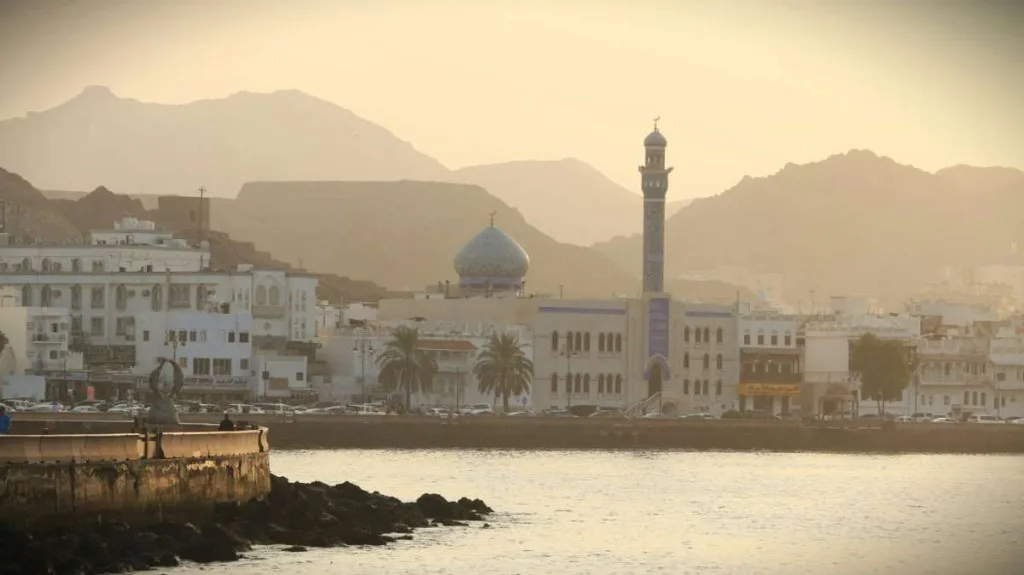
Visa on arrival takes 10 minutes at Muscat airport. October through March is peak season—expect midday heat still above 25°C but cool evenings, zero rain, and perfect visibility for mountain hiking. If you're flying from Europe in 2026, book your Muscat City tour (OMR 45 / USD 45) immediately after landing; crowds peak December–February. This guide answers the anxieties first-time visitors actually have: when to go, what to pack, whether to drive yourself, and how to avoid the brutal summer heat (May–September reaches 45°C+).
When Is Oman Actually Safe and Comfortable? Season Breakdown for 2026
Oman's climate divides into two travel worlds. The cool season (October–March) is when you should visit. Here's why: sunrise temperatures sit around 18–22°C in the mountains, humidity is low, and you can hike Jebel Shams or Jebel Akhdar without collapsing. The Muscat coast stays 22–28°C during the day—perfect for wadi exploration and beach stops.
October 2026: Shoulder season opener. Humidity drops sharply after September. Daytime highs 32–35°C in Muscat, but mornings and evenings are crisp. Tourist numbers pick up mid-month. Hotel availability is still good; you won't face the January premium pricing yet. This is the budget sweet spot for first-timers.
November 2026: Ideal window. Daytime highs 28–32°C, nights 18–20°C in the mountains. Zero rainfall. Every major attraction—Wahiba Sands (OMR 129 / USD 129 day trip), Wadi Shab (from OMR 60 / about USD 156), Nizwa Fort (OMR 69 / USD 69 tour)—is at full operating capacity. Crowds exist but are manageable outside Friday holidays.
December 2026 – February 2027: Peak season. Daytime 24–28°C, evenings 12–16°C in mountains. School holidays in Europe mean Lufthansa, BA, and KLM flights fill fast. Hotel rates jump 30–50%. Wahiba Sands overnight (OMR 129 / USD 129) books weeks ahead. But visibility is crystal clear—perfect for photography and first impressions. If you're visiting mid-January, expect busy parking at major sites and book tours 72 hours ahead.
March 2026: Still viable. Daytime highs 30–34°C, mornings 20–22°C. Fewer crowds than January–February. Wind picks up slightly—not a problem for most visitors, but affects desert camps. Easter holidays (April 2026) bring a small surge, then the destination empties.
April–September (avoid for first visits): April hits 35°C+. May–September is brutal—45–50°C, 60%+ humidity on the coast, and many small tour operators close. Salalah is the lone exception: the Khareef monsoon (June–August) brings green mountains and rain, but roads can flood. Only visit Salalah in peak Khareef (July–August) if you're specifically chasing that experience.
Do You Need to Rent a Car, Hire a Driver, or Join a Group Tour?
This is where many first-timers feel anxious. Oman's roads are excellent—recently upgraded—but driving customs differ from Europe. Here's what you actually face:
Self-drive rental: Possible but not recommended for first visits. International licenses are valid; insurance is straightforward. But Oman's road signs switch between Arabic and English, mountain passes have no barriers (genuinely vertiginous), and police actively enforce speed limits (120 km/h on highways). You'll fuel at OMR 40 per day (rough estimate for a sedan covering 200 km). If you've driven in the Swiss Alps or Scottish Highlands, you'll adapt. If you haven't, skip it.
Private chauffeur (our recommendation for first-timers): Hire a sedan full day at OMR 75 / USD 195. The driver knows routes, speaks English, and handles the mountain switchbacks. You sit back, navigate with your phone, and ask questions. Half-day hire (OMR 55 / USD 143) works for Muscat City exploration or a single day trip. For airport arrival, a sedan standard transfer is OMR 18 / USD 47; luxury Mercedes is OMR 30 / USD 78. This is the stress-free entry.
Guided group tours: Perfect for solo travelers or couples without driving confidence. The Muscat City half-day tour (OMR 45 / USD 45) departs most mornings; you'll meet other first-timers and visit Sultan Qaboos Grand Mosque, Mutrah Souq, and Muscat's corniche in 4–5 hours. A Wadi Shab day trip is from OMR 60 / about USD 156 per vehicle and includes transport. The tour guide is on request for OMR 80 total per vehicle. A Jebel Akhdar day trip (OMR 119 / USD 119) includes transport, guide, and lunch. Multi-day packages start at OMR 299 / USD 299 (3 days) and scale to OMR 999 / USD 999 (8 days).
Transfers between cities: Flying Dubai–Muscat? A sedan transfer costs OMR 110 (~$286 USD); SUV is OMR 150 / USD 390 / AED 1430. Abu Dhabi–Muscat: OMR 110 / USD 285 / AED 1045. These are fixed rates; book 24 hours ahead via WhatsApp.
What Does a First-Timer Budget Actually Look Like in 2026?
Let's build a real week. You're staying in Muscat, visiting 3–4 major sites, eating well but not lavishly, and traveling smart.
Accommodation: Budget 3-star hotel in Muscat: OMR 40–60 per night. Mid-range 4-star: OMR 70–100. Luxury international chains: OMR 120+. For 7 nights, assume OMR 300–500 (USD 780–1300).
Transport: Airport sedan transfer (arrival): OMR 18 / USD 47. Private driver, half-day Muscat City (morning): OMR 55 / USD 143. One full-day mountain trip (e.g., Jebel Shams, OMR 125 / USD 125 tour, or private sedan OMR 75 / USD 195 + attractions). Day trip to Nizwa: OMR 69 / USD 69 (guided) or private OMR 75 / USD 195. Return transfer to airport: OMR 18 / USD 47. Week total transport: OMR 260–350 / USD 675–910.
Meals: Mid-range restaurant (mezze, grilled fish, coffee): OMR 35 per person. Budget breakfast (coffee + flatbread): OMR 3–5. Street food (kebab, shawarma): OMR 2–4. Assume OMR 25–35 daily for comfortable eating. Week total: OMR 175–245 / USD 455–637.
Attractions: Muscat City Tour included (OMR 45). Fort Nizwa: OMR 15 entry. Wahiba Sands camp overnight: OMR 129 / USD 129. Wadi Shab: from OMR 60 / about USD 156. Jebel Akhdar: OMR 119 / USD 119. Week total attractions: OMR 397–450 / USD 1031–1171.
Grand total, 7-night first-timer week in Oman (October–November 2026): OMR 1132–1495 / USD 2941–3885 per person (excluding flights). That's roughly USD 420–555 per day all-in. December–February pricing jumps 20–30%.
Visa, Border, and Practical First-Timer Logistics
Visa: EU passports (UK, Germany, France, Netherlands, etc.) get 30-day visa on arrival, free, at Muscat airport. Processing takes 5–10 minutes at the eGate or counter. Just have your passport, return flight proof, and hotel booking confirmation on your phone. GCC residents (Saudi, UAE, Kuwait) do not need a visa for 14 days.
Driving if renting a car: International Driving Permit (IDP) is recommended. Your EU license is valid but police may ask for IDP. Seat belts are mandatory; speeding fines are steep (OMR 100–300). Traffic is calm compared to India or the Levant; accidents are rare.
Border crossing from UAE: If driving from Dubai or Abu Dhabi, the Hili border (6 km south of Al Ain) is the main entry. Omanis and GCC residents use the eGate; EU visitors queue at the counter (10–15 min). Your rental car's third-party insurance doesn't automatically cover Oman—buy local coverage (OMR 50–80 for one month). Or simply hire a chauffeur and skip the hassle entirely.
Flights to Muscat (October–November 2026 pricing as reference): Lufthansa Munich–Muscat: roughly EUR 350–500 return. BA London–Muscat: GBP 280–420 return. KLM Amsterdam–Muscat: EUR 320–480 return. Prices drop in October; peak rates hit December–January. Book 8–10 weeks ahead for October departures.
SIM card: Oman has two carriers (Oman Mobile, Ooredoo). Buy a local prepaid SIM at the airport (OMR 20–30 credit) for calls and 4G data. Roaming from EU providers costs EUR 8–10/day—not worth it for a week-long trip.
Why October–November Beat December–February for Nervous First-Timers
Yes, December–February are "peak," but they're also the most expensive and crowded months. For your first Oman trip, October–early November offers:
- Lower prices: Hotels 20–30% cheaper than January. Tour groups smaller. Private driver bookings more flexible.
- Fewer crowds: Wahiba Sands, Jebel Akhdar, and Wadi Shab are busy but not packed. You'll genuinely explore, not queue.
- Better food freshness: Summer produce lingers; autumn harvest hasn't fully arrived, but restaurant quality is consistent.
- Manageable heat: November daytime max is 28–32°C—warm but not exhausting. You can hike 2–3 hours in midday without collapsing (bring water).
- Clear skies: Zero rain risk; visibility for mountain photography is excellent.
If you must visit December–February, go in early December (still shoulder pricing) or late February (rates drop, heat ticks up but remains manageable).
Frequently Asked Questions
Is Oman safe for first-time visitors traveling alone?
Yes. Oman ranks among the safest Middle Eastern destinations. Violent crime against tourists is virtually nonexistent. Petty theft is rare compared to European cities. Women travelers report feeling safer than in many EU capitals. Police presence is visible but low-key. Your main practical risks are: heat exhaustion if you hike in summer (don't), getting lost on mountain roads without a guide (hire a driver), and underestimating desert cold at night (bring a jumper for November–February). Hospitals in Muscat are excellent. Travel insurance is cheap and recommended. For solo travelers, joining group tours (Muscat City, OMR 45 / USD 45) or hiring a private driver (OMR 75–195 / USD 195–507 full day) removes isolation anxiety.
Can I do Oman in 3 days, or should I stay a full week?
Three days is the minimum to avoid regret. A 3-day package (OMR 115 / USD 299 or our 3-day tour at OMR 299 / USD 299) typically covers Muscat, Nizwa, and either Wahiba Sands or Wadi Shab. You'll see iconic sights but won't feel the rhythm of the place. Five days (OMR 572 / USD 572) lets you add a second mountain site or a leisurely return to Muscat. Seven days (OMR 832 / USD 832) is the sweet spot: Muscat, Nizwa, Wahiba Sands overnight camp, Wadi Shab, Jebel Akhdar, and breathing room. Ten days (OMR 1170 / USD 1170) lets you add Salalah or Musandam (far north)—genuinely different ecosystems. For first-timers, I recommend 5–7 days. You'll not feel rushed and have time for spontaneous detours (lunch in a wadi village, sunset at a fort).
What's the difference between November and February visits for weather?
November: daytime 28–32°C, mornings 18–20°C, zero rain, lower crowds, lower prices. February: daytime 24–28°C (slightly cooler), mornings 12–16°C (not
📱 Book Your Tour Online
Get instant confirmation — WhatsApp reply in 15 minutes