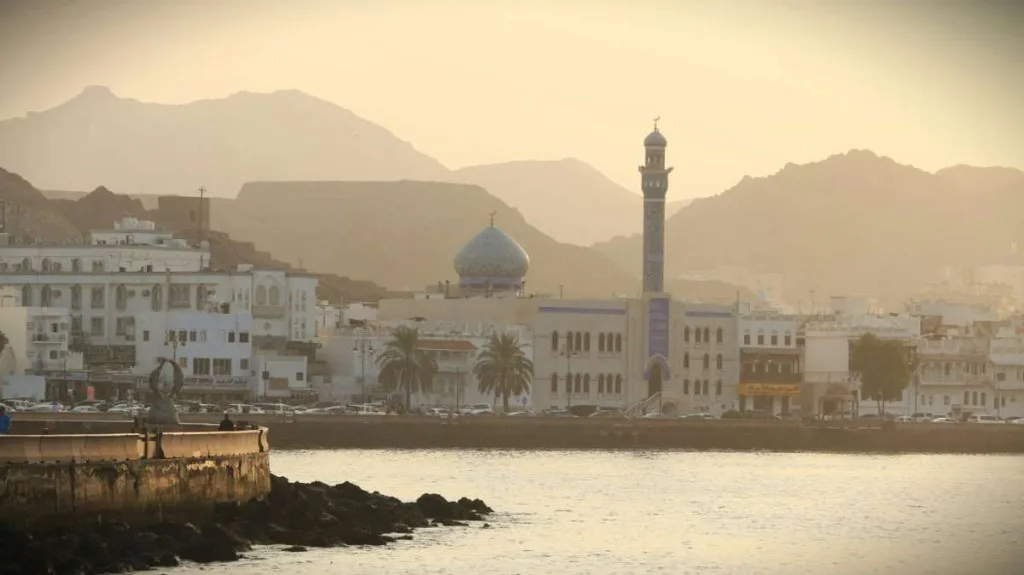
You land in Muscat with 6–8 hours between flights. A private sedan costs OMR 75 (USD 195) for a full day with your own driver, while shared taxis run OMR 3–5 per trip but lock you into fixed routes and waiting schedules. This article compares three transport strategies to maximize your layover at Oman's premier cultural and coastal sites—and shows you which genuinely saves time versus money.
Three Transport Models for Same-Day Muscat Transit
Choosing how to move through Muscat during a layover is not just a cost question—it's about which sites you can realistically reach, how much walking and waiting you'll do, and whether you'll feel rushed or comfortable. Each transport method unlocks different site combinations and dictates your pace.
Private Driver (Full Day) gives you a dedicated sedan or SUV with an English-speaking driver who knows entry protocols at each attraction, can wait while you explore, and adapts your route if one site takes longer than expected. Self-Drive requires an international license, familiarity with Muscat's road layout, and direct payment for fuel and parking. Shared Taxi leverages Muscat's efficient white-and-orange collective system—cheapest upfront but inflexible if you want to spend 90 minutes at the Sultan Qaboos Grand Mosque instead of the standard 30.
Below is a direct side-by-side comparison of cost, logistics, and site access for a typical 7-hour same-day Muscat itinerary (e.g., 10:00 AM arrival to 5:00 PM departure).
| Factor | Private Driver (Sedan) | Self-Drive (Rental Car) | Shared Taxi Network |
|---|---|---|---|
| Vehicle Cost (7 hours) | OMR 75 (USD 195) full day | Contact us for a quote | OMR 15–30 total (~OMR 3–5 per ride) |
| Parking + Fuel | Included | OMR 40/day fuel + OMR 5–10 parking | None |
| Entry Fee Guidance (3 sites) | OMR 45–60 (Sultan Qaboos Grand Mosque, Al Jalali Fort, Mutrah Souk entry) | OMR 45–60 (same) | OMR 45–60 (same) |
| Flexibility to Linger | ✓ Unlimited; driver waits | ✓ Unlimited; you set pace | ✗ Taxis depart on fixed schedules (~15 min intervals) |
| Navigation Required | None; driver knows routes | Yes; maps/GPS essential | Yes; Arabic signage, limited English |
| Total for 7-Hour Itinerary | OMR 120–135 (USD 312–350) | OMR 85–105 (USD 221–272) | OMR 60–75 (USD 156–195) |
Private Driver: Best for Comfort and Time Optimization
A private sedan with driver at OMR 75 (USD 195) for the full day is the highest-cost option in raw transport fees, but the time savings and stress reduction often justify it for European and GCC visitors on tight layovers.
Why choose private transfer:
- No navigation burden — Your driver knows the fastest routes to Sultan Qaboos Grand Mosque (Al Khoudh), the Al Jalali Fort viewpoint (Mutrah harbor), and Mutrah Souk. You avoid wrong turns and dead-end parking hunts.
- Flexible dwell time — Spend 100 minutes inside the Grand Mosque's courtyard without anxiety about taxi schedules. Your driver waits, often with air conditioning and complimentary water.
- Direct airport coordination — Many drivers meet passengers at baggage claim or the arrival lounge, eliminating the 20-minute wait for shared taxi marshaling.
- Cultural briefings — Experienced drivers often offer genuine context about Muscat's neighborhoods, local customs (e.g., modest dress at the mosque), and photo spots that online guides miss.
- Single point of contact — One WhatsApp conversation handles everything: pickup time, site priorities, return timing, and any last-minute changes.
Sample private-driver itinerary (10:30 AM–5:00 PM):
- 10:30 AM: Driver meets you at airport; 20-minute transfer to hotel or luggage storage (OMR 18 airport sedan standard, or included in full-day OMR 75)
- 11:00 AM–12:30 PM: Sultan Qaboos Grand Mosque tour (OMR 15 entry, modest dress required, no photos inside prayer hall)
- 12:45 PM–2:00 PM: Lunch at Mutrah harbor-side café (budget OMR 35 mid-range meal)
- 2:15 PM–3:45 PM: Mutrah Souk wandering, Al Jalali Fort viewpoint, Corniche seaside walk
- 4:00 PM–4:45 PM: Old Muscat (Bait Al-Baraka, Royal Opera House exterior photography)
- 4:50 PM: Return transfer to airport for 6:00 PM check-in
Realistic cost for this itinerary: OMR 75 (driver) + OMR 15 (mosque) + OMR 35 (meal) + OMR 15–20 (optional tips/coffee) = OMR 140–145 (USD 364–377). No hidden fees or taxi-hailing stress.
Self-Drive: Cheapest Long-Term, but Risky for Layovers
Renting a car and driving yourself through Muscat sounds appealing on paper—no driver cost—but for a same-day transit layover, the logistics rarely pay off.
The self-drive case against tight layovers:
- Rental logistics eat time — Car rental desks at Muscat airport transfer are open during normal hours, but paperwork (driving license, credit card authorization, insurance clauses) typically takes 30–45 minutes. For a 6-hour layover, that's 10% of your free time.
- Fuel cost isn't zero — Budget OMR 40 per day for fuel on a typical Muscat circuit (Sultan Qaboos Grand Mosque is ~20 km from the airport; Mutrah harbor another 8 km). Not huge, but real.
- Parking hassle at attractions — The Grand Mosque has a large free parking area, but Mutrah Souk forces you into paid street parking (OMR 2–3 per hour) or metered lots (OMR 5 for a few hours). Overnight parking runs OMR 25, but you won't need that.
- Left-side driving if you're from Europe — Muscat drives on the right, same as mainland Europe, but Oman's road rules (roundabout etiquette, speed enforcement cameras) differ from UK/DE/FR norms. Insurance excess on a rental is often 500–1000 OMR if you're at fault in a minor collision.
- Return the car with time to spare — You'll need 30 minutes to return the rental, finalize paperwork, and get back to the airport. With a 6-hour layover, that leaves only ~4.5 hours for actual sightseeing.
Self-drive is only worth it if: You have 12+ hours in Muscat, want to venture to nearby Nizwa (a 2-hour drive inland) or Qurayyat (mountain views, ~1 hour), or are part of a larger Oman road-trip (e.g., multi-day UAE–Oman loop). For a solo same-day layover, the friction outweighs the savings.
Shared Taxi Network: Cheapest, but Inflexible and Language-Heavy
Muscat's white-and-orange shared taxis (collective taxis) are a cultural experience and genuinely economical at OMR 3–5 per ride. However, for a coordinated same-day itinerary, they introduce three complications.
Shared taxi logistics:
- Fixed routes, not fixed schedules — Taxis run set circuits (e.g., Airport → Mutrah → Qurm), and depart when they have 4–6 passengers. You may wait 5 minutes or 20 minutes depending on passenger flow. This unpredictability kills tight schedules.
- Minimal English signage — Drivers and co-passengers speak Arabic and sometimes Hindi/Urdu. Telling the driver "I want to exit at Sultan Qaboos Grand Mosque" requires either fluent Arabic or pointing at a map on your phone—and even then, miscommunication is common.
- No direct to-and-from routing — You might taxi from the airport to Mutrah (OMR 5), then walk or catch another taxi to the mosque (OMR 3), then another to Souk (OMR 3–5). By contrast, a private driver does a single loop and waits.
- Luggage awkwardness — If you have a checked bag or large carry-on, shared taxis are cramped. You'll be sitting 5 to a row with luggage in your lap.
When shared taxi makes sense: You're a budget backpacker staying overnight in Muscat with no luggage anxiety, or you're a return visitor who speaks enough Arabic to navigate. For first-time European or Gulf-state visitors on a 7-hour layover, the cognitive load and time unpredictability typically outweigh the OMR 50–60 you'd save.
Comparison: Best Transport Choice by Traveler Profile
You should book a private driver if:
- You're arriving from Europe (BA, Lufthansa, KLM, Turkish Airlines) on a same-day connection to India, Thailand, or the Maldives, and want to maximize Muscat sightseeing without stress.
- You're traveling with a partner, elderly parent, or children—dividing the OMR 75 cost among 3–4 people makes it ~OMR 19–25 per person, cheaper than self-drive once you factor in rental, fuel, and parking.
- You're a business traveler on a GCC visa run (Dubai, Abu Dhabi office-based) and want to use the layover productively—a driver lets you answer emails while en route rather than concentrating on navigation.
- You have mid-range luggage (carry-on + personal bag) and don't want to haul it in and out of shared taxis.
You should self-drive if:
- You have 12+ hours in Muscat and want to venture beyond the city (e.g., to Nizwa or Qurayyat).
Frequently Asked Questions
How long do I need for a Muscat transit visit?
A minimum of 6 hours layover is needed for a worthwhile city visit. With 6 hours: Grand Mosque and Mutrah Souq. With 8 hours: add Al Alam Palace and Corniche. With 10 hours: reach Wadi Shab canyon.
Do I need a visa for a Muscat transit tour?
Yes — to leave the airport you must pass through immigration. Most Western passport holders receive visa on arrival for OMR 5 (~$13 USD). Factor 20–30 minutes for immigration on arrival and departure.
What are the best sites to visit in Muscat during a layover?
Grand Mosque (open Sat–Thu 8–11 AM), Mutrah Souq, Al Alam Palace waterfront, and the Corniche. All four can be covered in 5 hours outside the airport with a private driver.
How far is Muscat city from the airport?
35–40 km from Muscat International Airport to Mutrah Souq — approximately 35–45 minutes drive. Grand Mosque is 28 km, approximately 25–35 minutes.
Can I store luggage during a Muscat transit tour?
Yes — your private driver stores all bags in the vehicle throughout the tour. Left-luggage facilities are also available in the Muscat Airport arrivals hall.
What is the best time of year for a Muscat transit visit?
October to April for comfortable temperatures. Summer layovers (June–August) are manageable with air conditioning but the outdoor heat limits enjoyment of sites like the Corniche and Mutrah Souq.
📱 Book Your Tour Online
Get instant confirmation — WhatsApp reply in 15 minutes