The Quick Answer
American passport holders do not need a pre-arranged visa for Oman. Visa on arrival is available at Muscat Airport for OMR 5 (~$13 USD) and allows a 10-day stay extendable to 30 days. Direct flights from the US do not exist — the most common routes connect through London, Doha, Dubai, or Abu Dhabi. Total flight time from the US East Coast is 14-18 hours with one stop. Daily budget in Oman: $80-200 per person depending on travel style.

American travelers planning a trip to Oman need practical insider tips—from visa requirements to transportation, currency exchange, and the best time to visit. This complete guide covers everything you need to know before flying from the USA to Muscat, including how to arrange private airport transfers from OMR 25 (approximately $65 USD) and day tours starting at OMR 45 ($117 USD). Whether you're arriving in Muscat or crossing from Dubai, we'll show you exactly how to navigate Oman like a seasoned traveler.
Oman for American Travelers — Quick Facts
| Detail | Information |
|---|---|
| Visa | On arrival — OMR 5 (~$13 USD) |
| Visa duration | 10 days, extendable to 30 |
| Flight time (NYC) | 14-16 hours with 1 stop |
| Flight time (LA) | 16-18 hours with 1 stop |
| Common connections | London, Doha, Dubai, Abu Dhabi |
| Currency | Omani Rial (OMR) — 1 OMR = ~$2.60 USD |
| Daily budget | $80–200 per person |
| Time zone | GMT+4 (8-11 hours ahead of US) |
| Power plugs | Type G (British) — bring adapter |
| Best months | October to April |
Visa Requirements & Entry for American Citizens Visiting Oman
US passport holders can obtain an Oman visa on arrival at Muscat International Airport or apply for an eVisa online before travel. The tourist visa is valid for 30 days and costs approximately OMR 5 (~$13 USD). American citizens should ensure their passport is valid for at least 6 months beyond their travel dates—this is a standard requirement across the GCC region.
The good news for American travelers: Oman welcomes US citizens warmly, and the visa process is straightforward. You can apply online at evisa.rop.gov.om (eVisa costs OMR 21) or simply get the visa stamp on arrival. Most Americans prefer the eVisa route for convenience. Processing takes 2-3 business days, and you'll receive approval via email. Have a printed copy or digital version ready on your phone when you land at Muscat airport.
Unlike many Middle Eastern destinations, Oman has a reputation for being exceptionally welcoming to Western visitors. There are no restrictions on Americans visiting, and you'll find English widely spoken in hotels, restaurants, and tourist areas throughout Muscat, Nizwa, and Salala.
Best Time to Visit Oman from America: Seasons & Climate
American travelers often ask: when should I visit Oman? The answer depends on your tolerance for heat. The best season for visiting Oman from America is October to March, when temperatures range from 20–28°C (68–82°F). This is when most US visitors arrive, coinciding with winter in North America and Europe.
Summer in Oman (May–September) is extremely hot, with temperatures exceeding 40°C (104°F) in Muscat and the interior. However, if you're interested in the famous Salalah khareef (monsoon season) in July–August, you'll experience cooler temperatures around 25°C (77°F) and misty green mountains—an entirely different side of Oman. European and American tourists who visit during khareef often describe it as magical and photogenic.
For most American first-time visitors, I recommend November through February. During this window, you can comfortably explore Muscat's beaches, hike Wadi Shab without excessive heat, and drive cross-border to Dubai without exhaustion. Peak season is December–January, when flights from the USA are most expensive but weather is perfect (around 25°C/77°F).
Flights from the USA to Muscat: Airlines & Journey Times
Direct flights from the United States to Muscat do not exist; all American travelers must connect through a hub city. The most convenient routing options include:
Via Dubai (most popular): Fly from major US cities (New York, Los Angeles, Chicago, Houston) to Dubai on Emirates or American Airlines (approximately 14–16 hours total travel time with 1–2 hour connection), then take a short 1-hour flight to Muscat. Alternatively, rent a car or book a private transfer for the 5.5-hour scenic drive from Dubai to Muscat (approximately AED 450–650/$123–177 USD for a private car, or start with a Dubai-Muscat taxi transfer at fixed rates through services like OmanTour).
Via Doha: Qatar Airways offers competitive fares from US East Coast cities through Doha to Muscat (approximately 16–18 hours total). This route is ideal if you want to explore Qatar's museums or beaches for a day before heading to Oman.
Via Abu Dhabi: Etihad Airways connects major US hubs to Abu Dhabi with onward flights to Muscat (approximately 15–17 hours total). Abu Dhabi is 120 km (75 miles) from Muscat and can be reached by private transfer in 1.5–2 hours.
For American travelers, budget airlines like Wizz Air and FlyDubai offer cheap connections if you're flexible. A typical round-trip ticket from the USA to Muscat ranges from $700–1,200 USD in economy class during shoulder season (April–May, September–October) and $1,200–1,800 USD during peak winter months (December–February).
Currency, Money & Cost of Living for American Visitors
Oman's currency is the Omani Rial (OMR), with an exchange rate fixed at approximately 1 OMR = 2.60 USD (or 1 USD = 0.38 OMR). Unlike many Middle Eastern countries, the Omani Rial is pegged to the US dollar, which makes it easy for American travelers to calculate costs mentally.
Cost breakdown for American visitors:
- Budget hotel: OMR 20–40 per night ($52–104 USD)
- Mid-range hotel: OMR 60–100 per night ($156–260 USD)
- Luxury 5-star hotel in Muscat: OMR 150–250 per night ($390–650 USD)
- Local restaurant meal: OMR 3–8 ($7.80–21 USD)
- Fine dining: OMR 30–60 per person ($78–156 USD)
- Airport transfer (private car): OMR 25 ($65 USD)
- Full-day tour with driver: OMR 45–120 ($117–312 USD)
- Wadi Shab entrance & guide: OMR 3–5 ($7.80–13 USD)
Oman is moderately priced compared to Dubai and Abu Dhabi but slightly more expensive than other GCC countries. American visitors should budget $100–150 USD per day for mid-range travel (3-star hotel, meals, one activity), or $50–80 USD per day if staying in budget accommodations and eating at local eateries.
ATMs are widely available in Muscat, and most credit cards (Visa, Mastercard, American Express) are accepted. Notify your US bank before traveling to avoid card blocks. Currency exchange rates are best at banks; avoid airport exchange counters when possible.
Getting Around Oman: Transportation Tips for American Travelers
This is where many American visitors make mistakes. Oman is NOT Dubai—public transportation is limited, and renting a self-drive car requires an International Driving Permit (IDP) issued by your US state. Many Americans arrive expecting ride-hailing apps like Uber or Lyft, but these services don't operate in Oman. Instead, here are your actual options:
Option 1: Private Chauffeur Service (Recommended for Americans)
Hiring a private driver for your entire stay is the safest, most comfortable option for American visitors unfamiliar with Middle Eastern driving customs. Drivers like those at OmanTour provide English-speaking professionals, air-conditioned Mercedes vehicles, and fixed rates with no surprises. A private car with driver costs approximately OMR 40–80 per day ($104–208 USD) depending on distance, or OMR 120–150 ($312–390 USD) for a full 8-hour day tour. WhatsApp booking ensures instant confirmation (+968 9468 1176).
Option 2: Self-Drive Rental Car
If you're confident driving in unfamiliar conditions, car rentals are available at Muscat airport from companies like Budget, Hertz, and Enterprise. Expect to pay OMR 30–50 per day ($78–130 USD) for a basic sedan. You'll need your US driver's license plus an International Driving Permit (available from AAA offices in the USA for $20). Omani traffic rules are similar to Europe and the USA: drive on the right side, speed limits are 40 km/h in cities and 120 km/h on highways. Road conditions are excellent, but GPS/Google Maps works well throughout Oman.
Option 3: Taxis & Airport Transfers
Orange and white taxis are available in Muscat and operate on meters (though negotiating a fixed price beforehand is common). A typical city ride costs OMR 5–15 ($13–39 USD). For airport transfers, book through your hotel or use fixed-rate services like OmanTour to avoid confusion with taxi drivers. An airport transfer from Muscat to downtown hotels is typically OMR 25–35 ($65–91 USD) for a shared taxi or OMR 40–60 ($104–156 USD) for a private car.
Option 4: Crossing from Dubai to Muscat (for Americans starting in UAE)
Many American tourists visit Dubai first (shorter flights, cheaper accommodation) then travel to Oman. The border crossing between UAE and Oman at Hatta/Khasab is straightforward. A private transfer from Dubai to Muscat takes 5.5–6 hours and costs AED 450–650 ($122–177 USD) per car. This journey includes border processing time (approximately 30 minutes total). English-speaking drivers from OmanTour specialize in this route and handle all border formalities for American visitors.
What to Pack: American Travelers' Checklist
American visitors often pack incorrectly for Oman—either overpacking for heat or underpacking for cultural sensitivity. Here's what you actually need:
Essential items: Lightweight, breathable clothing (cotton, linen); a lightweight scarf or shawl for modest dress in religious sites; comfortable walking shoes (you'll hike Wadi Shab); high-SPF sunscreen (SPF 50+ is essential—you'll burn quickly); sunglasses; a reusable water bottle (hydration is critical in the desert); a lightweight rain jacket for Salalah khareef season; and medications you use regularly (bring a copy of prescriptions, as pharmacies may not recognize US brand names).
Nice-to-have items: Hiking boots (many wadis require scrambling), a GoPro or drone (check local regulations before using drones), a power bank (phone battery drains fast in hot weather), and a headlamp for exploring caves at night.
DO NOT pack: Revealing clothing (shorts above the knee, sleeveless tops without a covering layer); items with Israeli stamps or markings; or large amounts of cash (ATMs are everywhere).
Best Day Trips & Tours from Muscat for American Visitors
Most American travelers spend 3–5 days in Oman, with 2–3 days based in Muscat. Here are the top experiences, with typical costs and duration:
Wadi Shab (Half-day from Muscat): OMR 45–75 ($117–195 USD)
A stunning canyon with turquoise pools, 1 hour south of Muscat. This is Oman's most photogenic spot. The hike takes 2–3 hours (moderate difficulty), and you'll swim in natural pools. Bring swimwear and waterproof shoes. Book a private guide through OmanTour to skip lines and get insider tips about which pools are deepest and safest.
Nizwa Old Town & Souk (Full-day: OMR 60–100/$156–260 USD)
Nizwa is Oman's ancient heart, 2 hours inland from Muscat. Visit the iconic Nizwa Fort, wander the date and spice souk, and watch traditional silver craftspeople. The National Museum here is excellent for understanding Omani history. Americans love the souk's authentic atmosphere—no theme parks, no crowds, just real Omani life. Hire a driver to handle the mountain roads (winding but safe); you'll see dramatic valley views along the way.
Muscat City Tour (Half-day: OMR 40–60/$104–156 USD)
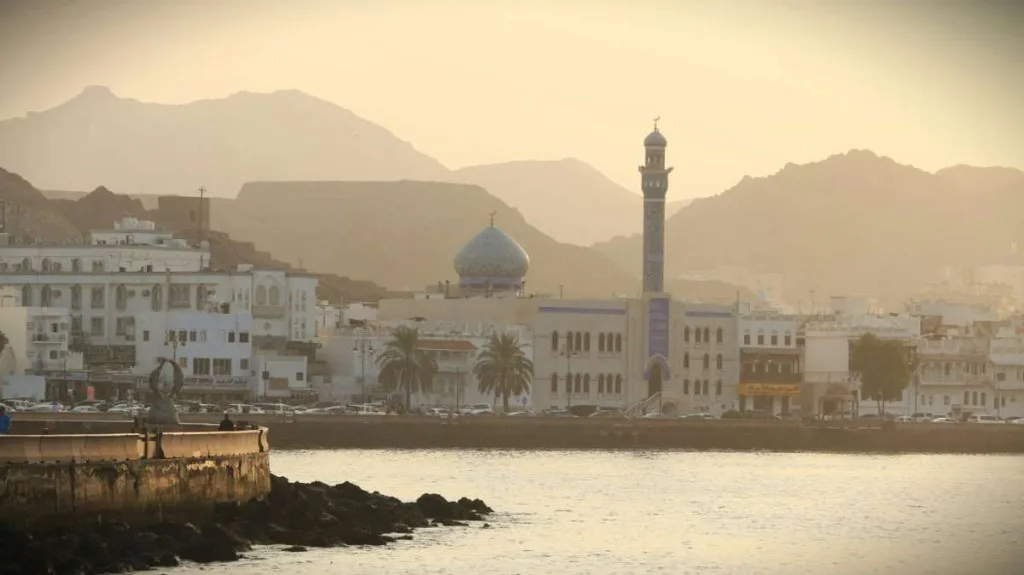
Hit the main highlights: the Grand Mosque (non-Muslims can enter at specific hours; modest dress required), the beautiful waterfront at Mutrah Corniche, Al Alam Palace, and Mutrah Souk (smaller than Nizwa, more tourist-friendly). Most American visitors complete this in 4 hours. Hire an English-speaking driver to explain the history and point out Instagram-worthy angles.
Wadi Bani Awf & Jebel Akhdar (Full-day: OMR 80–120/$208–312 USD)
For more adventurous Americans, the "Green Mountains" offer dramatic scenery, hiking, and pomegranate orchards. The drive is scenic but steep. Only accessible via a high-clearance 4x4 vehicle (not a standard sedan). This is a full 10-hour day, so only do it if you have time and enjoy mountain driving.
Salalah City & Khor Rori Lagoon (2-day trip: OMR 200–300/$520–780 USD)
Salalah, 5 hours south of Muscat, is a completely different Oman—coastal, greener, and with fewer tourists. Perfect for Americans wanting to escape crowds. During khareef season (July–August), the monsoon transforms the mountains into lush, misty landscapes. A 2-day guided trip includes a private car, driver, and overnight hotel. This is a highlight for many American visitors.
Safety, Health & Insurance Tips for Americans
Oman is one of the safest countries in the Middle East and the world. Violent crime against tourists is virtually non-existent. American visitors enjoy a safe, welcoming environment—arguably safer than major US cities. That said, here are practical considerations:
Health & COVID: No vaccinations are currently required for entry to Oman. Travel insurance is recommended for unexpected medical costs, flights delays, or trip cancellations (many US insurers like World Nomads or SafetyWing cover Oman). Pharmacies in Muscat stock most common medications; bring copies of US prescriptions. Tap water in Muscat is safe to drink; in remote areas, stick to bottled water. Heat exhaustion is the main risk in summer—drink constantly, use sunscreen, and rest in air-conditioning during midday.
Women Travelers: American women traveling alone or with friends will find Oman very safe. Dress modestly (covering shoulders, knees in public; loose clothing helps with heat). Harassment is extremely rare. Using ride-sharing and staying in well-reviewed hotels is standard practice. Many American female travelers report Oman as one of the most comfortable Middle Eastern destinations.
Vehicle Safety: Oman has strict traffic laws and excellent road conditions. Driving is safe if you follow speed limits and
Frequently Asked Questions
Do Americans need a visa to visit Oman?
No. US passport holders receive an Oman visa on arrival at Muscat International Airport. The fee is OMR 5 (~ USD) and allows a 10-day stay, extendable to 30 days at an Oman immigration office. No pre-arrangement is needed before travel.
Are there direct flights from the US to Oman?
No direct flights operate between the United States and Oman. The most common routes connect through London Heathrow (British Airways), Doha (Qatar Airways), Dubai (Emirates or flydubai), or Abu Dhabi (Etihad). Total travel time from the US East Coast is 14-16 hours with one stop.
How much does a trip to Oman cost from the USA?
Round-trip flights from the US to Muscat typically cost 0-1,400 depending on the season and connection city. In-country daily costs run -150 for mid-range travel including accommodation, food, and private transport. A 10-day trip from the US costs approximately ,000-3,500 per person all-in.
Is Oman safe for American tourists?
Tourist crime on the usual Muscat and northern routes is uncommon. The US State Department currently rates Oman Level 3 (Reconsider Travel) because of terrorism and armed conflict, and rates the Yemen border region Level 4 (Do Not Travel). These tours stay off that border. Check the advisory for your travel dates.
What is the best time for Americans to visit Oman?
October to April offers the most comfortable temperatures for outdoor activities. February aligns well with US Presidents' Day weekend for a short break. December and January are peak season — book flights and accommodation well in advance for holiday travel.
What should Americans know before visiting Oman?
Key things to know: dress modestly outside beach and resort areas, the currency is the Omani Rial (OMR = .60 USD), Type G British power plugs are standard so bring an adapter, and tipping 10% is appreciated but not mandatory in restaurants.
📱 Book Your Tour Online
Get instant confirmation — WhatsApp reply in 15 minutes